Senior NU Clerics Ask Supreme Court to Oversee Alleged Hajj Quota Corruption Trial
Dozens of senior Nahdlatul Ulama clerics have written to Supreme Court Chief Justice Sunarto asking for oversight of the trial over alleged corruption in additional Hajj quotas.
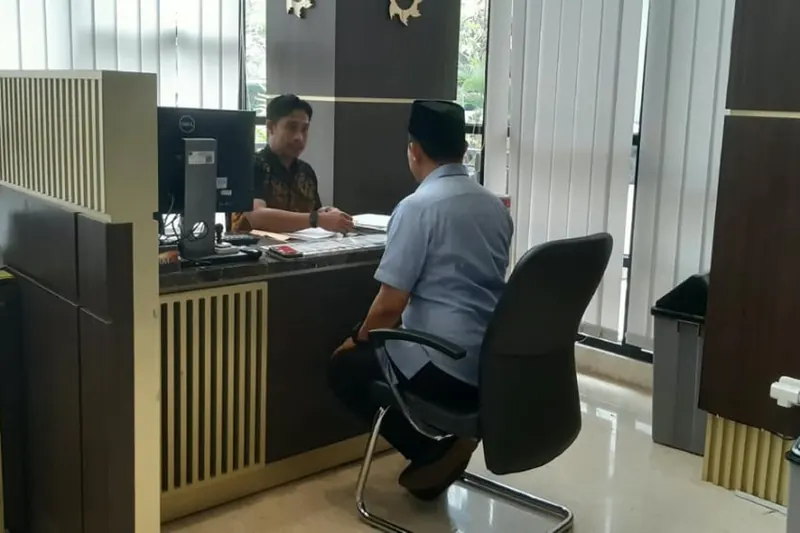
Dozens of senior clerics from Nahdlatul Ulama (NU), one of Indonesia's largest Muslim organizations, wrote to Chief Justice Sunarto of the Supreme Court (Mahkamah Agung, MA) on Friday, 13 November 2026, in Jakarta, asking the court to monitor proceedings in the alleged corruption case over additional Hajj quotas, as reported by SINDOnews.
The letter was submitted by KH Nurul Yaqin Ishaq through the MA's One-Stop Integrated Service (Pelayanan Terpadu Satu Pintu), following a meeting of about 30 senior clerics at Lirboyo Islamic Boarding School in Kediri, East Java, on 21 October 2026. Copies of a similar letter would also be delivered to President Prabowo Subianto, the chairman of the Corruption Eradication Commission (KPK), the KPK's supervisory board, the Judicial Commission (Komisi Yudisial), the Speaker of the House of Representatives (DPR) and the Regional Representative Council (DPD).
The clerics asked the MA to supervise proceedings at the Corruption Court (Pengadilan Tindak Pidana Korupsi) at the Central Jakarta District Court so that they are objective and fair to former Minister of Religious Affairs Yaqut Cholil Qoumas. They assessed that some testimony undermined the indictment, but witnesses who explained the policy of dividing the additional quota 50:50 received an inappropriate reaction from the panel of judges, according to SINDOnews.
The clerics stressed legal ethics in law enforcement, judicial independence, impartiality and the presumption of innocence. KH Nurul Yaqin said he hoped the examination of the case would be objective, fair and based on the facts presented in court.
Role of senior clerics and oversight institutions
Nahdlatul Ulama is one of Indonesia's largest Muslim organizations, so the voices of senior clerics are often read by the public as a moral marker rather than merely personal statements. In religious tradition, senior clerics have legitimacy because of long experience educating Islamic boarding school students, their pesantren networks and their ability to influence the faithful. When they speak about a legal case, the message is usually not a technical defense, but a call for the process to be honest and not wound the public's sense of justice.
From a state governance perspective, the request for the MA to oversee the trial can be understood because the MA is the highest court in the general judiciary. It does not retry corruption cases at first instance, but has authority to supervise the conduct of judicial proceedings, including judges' behavior and the running of trials. That oversight is different from instructing judges how to decide, because judicial independence remains a core principle.
Alleged corruption cases are usually tried at the Corruption Court attached to district courts as the first instance. After a verdict, parties who object may appeal, file a cassation petition or seek judicial review in accordance with legal stages. Under the latest Criminal Procedure Code (KUHAP), witness, suspect, defendant and convicted person have different meanings. A witness gives testimony about events heard, seen or experienced. A suspect is someone reasonably believed to have committed a crime based on at least two pieces of evidence. A defendant is a suspect who is prosecuted and tried in court, while a convicted person is someone sentenced by a final and binding decision.
Therefore, scrutiny of the trial should be read as a request that judicial ethics be maintained, not as a justification for one side. Institutions such as the Judicial Commission oversee judges' conduct, the KPK supervisory board oversees investigators' integrity, and the DPR exercises budgetary and policy oversight functions. But none of these institutions may take over judges' duty to decide cases. A healthy trial needs space for witnesses, evidence, the defendant's objections and a verdict that can be held accountable to the public.
Impact on pilgrims and the public
For readers in Indonesia, the senior clerics' letter is relevant because it touches two matters close to everyday life: trust in the courts and the management of the Hajj pilgrimage. Additional Hajj quotas are not merely administrative numbers. They relate to who departs first, how long pilgrims wait and how travel costs are regulated. If a quota policy is questioned in court, the public is entitled to demand an open explanation.
However, the connection to prices, jobs or health is not direct. The more tangible impact is institutional reputation: whether the MA, the corruption court, the KPK and the Judicial Commission can respond to scrutiny without appearing biased. For Muslims, especially NU members, the attention of senior clerics can reinforce the message that legal proceedings must not ignore a sense of justice.
Readers should watch several developments ahead. First, whether the MA follows up the letter through internal oversight mechanisms. Second, whether the court gives clear space for witnesses and defense. Third, whether other state institutions that receive the letter express a position. Most importantly, all parties should refrain from concluding guilt before a final and binding verdict. In that way, readers can judge whether oversight genuinely improves the quality of the trial or becomes only public pressure.
Related news
- Habiburokhman Soroti Dugaan Penyadapan Ilegal, DPR Dorong RUU
- LaNyalla Usulkan Jalur Independen untuk Anggota DPR RI
- DPR Dorong RUU Satu Data untuk Integrasi Perlindungan dan Informasi