KPK receives 1,105 anti-corruption film entries for ACFFEST 2026
The Corruption Eradication Commission (KPK) received 1,105 anti-corruption film entries for ACFFEST 2026, up from about 600 to 700 entries last year.
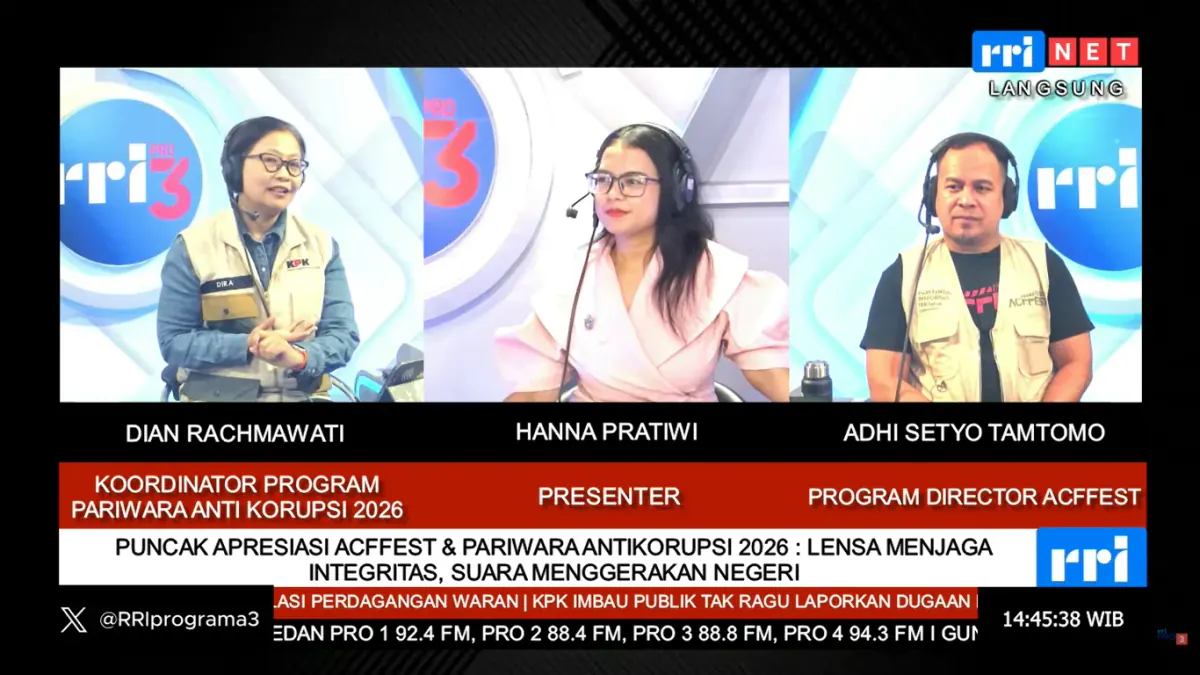
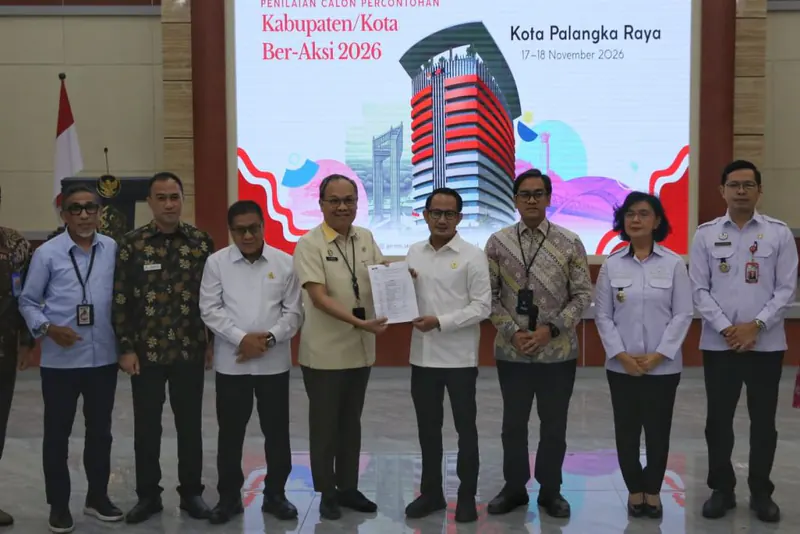
The Corruption Eradication Commission (KPK) received 1,105 entries for the Anti-Corruption Film Festival (ACFFEST) 2026. The announcement was made on Wednesday, 18 November 2026, and all entries will be curated before the awards finale at Taman Ismail Marzuki in Jakarta on Thursday, 26 November 2026.
Adhi Setyo Tamtomo, head of a task force at the KPK's Directorate of Anti-Corruption Socialization and Campaign, said the entries came from five competition categories. He said the number jumped from around 600 to 700 entries in the previous year, as reported by state broadcaster RRI.
The five categories are short-film story ideas, fiction short films, student short films, vertical short films made specifically for ministries or agencies, and short-film story ideas for participants from Sumatra and Kalimantan. For the story-idea categories, participants first submit proposals; the KPK will select the five best ideas for production funding assistance.
According to Adhi, anti-corruption-themed films do not need to show institutions or regions that are free from corruption. The works can highlight honesty, fairness, discipline, responsibility and hard work. In the vertical film category, he said he hoped the anti-corruption message would reach employees' gadgets. "They are used to scrolling, and at the same time they receive anti-corruption education," Adhi said. The ACFFEST 2026 finale was also combined with the 2026 Anti-Corruption Public Communication Campaign (Pariwara Antikorupsi); KPK task force head Dian Rachmawati said local governments needed to be more open in communicating change initiatives and corruption prevention efforts.
The role of short films in anti-corruption education
Short films are often used by public institutions as a communication tool because they are brief, easy to spread through social media and can touch viewers' emotions without bureaucratic jargon. On integrity issues, this approach is useful when a moral message needs to reach young people, employees or citizens who rarely attend formal outreach events. The strength of film also lies in its ability to show concrete situations, rather than simply listing values.
The story-idea competition gives writers space to test issues from angles closer to daily life, such as public service queues, school pocket money, small gratifications or pressure to be dishonest. In this way, anti-corruption is not always understood as major cases, but as repeated behavioral choices in offices, campuses and digital spaces. Participants also learn to formulate conflict, characters and messages without falling into a one-way lecture.
The vertical format adds another layer because it follows how people consume video on their phones. Short content made by agencies can become a visual reminder for employees, while the public assesses whether the message matches the services they receive. At this point, film is not only a contest entry but also part of policy communication that demands consistency between what is shown and what is practiced. If a film displays integrity while services are slow or complicated, the public will lose trust more quickly.
In Indonesia, anti-corruption education also relies on schools, universities and the media. When young filmmakers and local government employees help create content, integrity messages can spread beyond seminar rooms. The challenge is to ensure the works do not stop at ceremony but spark discussion about values being tested in public services. Festivals of this kind can become a bridge between state campaigns and citizens' experiences.
Impact of the competition on employees and regions
For Indonesian readers, the anti-corruption film competition can be read as a signal that corruption prevention is not only carried out through enforcement, but also through the practice of values in public spaces. For employees, short videos appearing on their gadgets can be small reminders about honesty, discipline and the limits of gratifications. For citizens, such works provide a language that is easier to use in assessing services, for example whether staff reject unofficial levies or whether bureaucracy explains procedures honestly.
Its relevance for local governments lies in the push to communicate service improvements openly. When regions are challenged to create audiovisual campaigns, citizens can demand more concrete evidence: easily accessible information, clear procedures and officials who do not cover up mistakes. However, the practical impact depends on follow-up. If the festival only produces screenings without changes at service counters, schools or village offices, the integrity message will be hard to believe.
For everyday readers, what matters is message consistency: whether the films encourage citizens to dare to report, reject small bribes and check information before spreading accusations. Without that, the competition becomes only entertainment content that quickly drowns in social media feeds.