KPK launches International Anti-Corruption Day 2026 journalism contest on corruption’s impact
The Corruption Eradication Commission has opened the International Anti-Corruption Day 2026 journalism contest, themed “Wajah di Balik Korupsi” or “The Faces Behind Corruption”, in two categories.
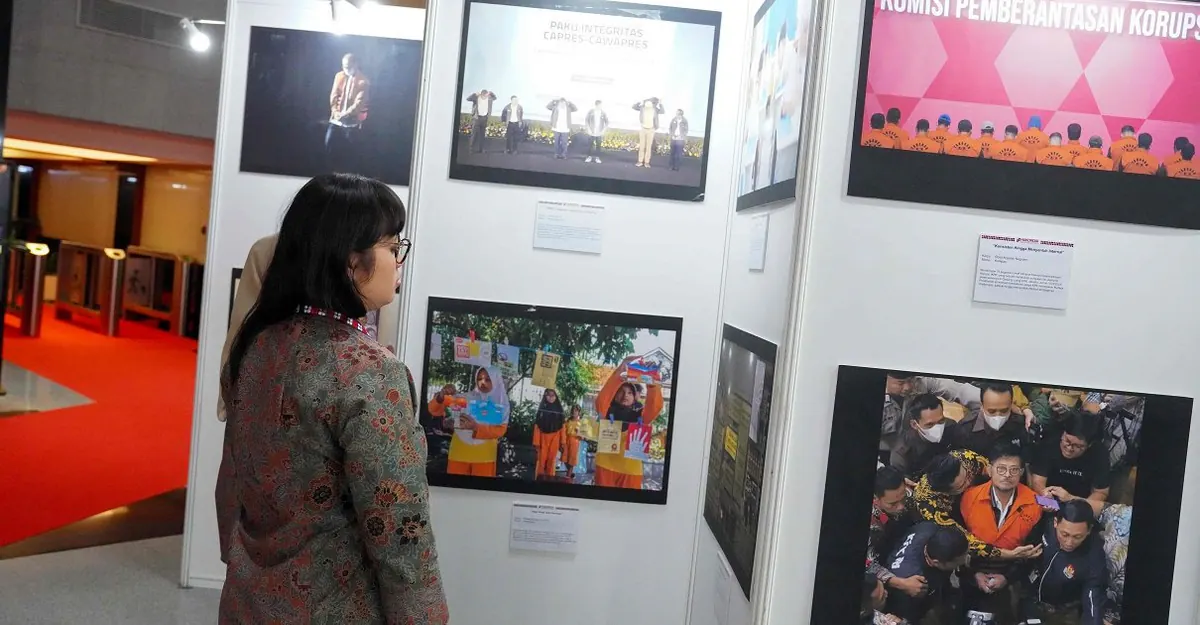
The Corruption Eradication Commission (KPK) has launched an International Anti-Corruption Day 2026 journalism contest, known in Indonesian as HAKORDIA, with the theme “Wajah di Balik Korupsi”, or “The Faces Behind Corruption”, emphasizing the impact of corruption on society, according to the agency’s official information channel.
The agency said the contest is divided into photojournalism and writing categories. It is open to Indonesian journalists working for legally registered media outlets verified by the Press Council (Dewan Pers). Entries must have been published between 1 May and 31 October 2026.
In the photo category, participants may submit up to two original single photographs that have been published and have never won an award. In the writing category, entries must focus on the KPK’s performance in enforcement, prevention or anti-corruption education, and may take the form of an in-depth report, an investigation or a feature.
The submission deadline is 27 November 2026 at 23.59 WIB (Western Indonesian Time). The agency has prepared prizes totalling tens of millions of rupiah, plaques and certificates, while selected works will be displayed as part of the HAKORDIA programme, including a photo exhibition.
Participants must attach an active link for online media or a scan of a dated print page as proof of publication.
The role of the press in the anti-corruption ecosystem
International Anti-Corruption Day is observed every 9 December as a moment to remind the public that corruption is not only a legal violation but also a disruption to public services, social trust and the quality of development. The day also offers a chance to shift attention from simply pursuing perpetrators to understanding collective losses. In that context, the journalism contest is one way the anti-corruption agency involves the press as a partner in public communication.
In Indonesia, corruption reporting usually centres on legal proceedings: status determinations, questioning, indictments, trials and verdicts. That approach is important for accountability, but it does not always show how the losses caused by corruption reach ordinary residents, for example in the quality of roads, schools, health facilities or social assistance. The theme “faces behind corruption” therefore encourages journalists to look for a human angle: affected residents, obstructed services, or the integrity of officials and state administrators.
The requirement that media be verified by the Press Council is relevant because the contest targets professional journalists. Verification signals that a media outlet has a legal entity, an address, a person in charge and compliance with press company standards. With that condition, the works to be judged are expected to come from an accountable editorial process, rather than personal posts without fact-checking mechanisms. Without that signal, the public may find it difficult to assess whether a work was produced by a responsible media outlet.
Photo and writing contests give space to two strengths of journalism: visuals that can quickly capture empathy, and text that can connect cause and effect. In anti-corruption issues, the two complement each other. A photograph can show direct impact, while writing can explain policy, legal processes and public responsibility without simplifying a case. The challenge for journalists is to maintain the presumption of innocence when portraying victims or affected people, and to separate fact from opinion.
What the public and journalists should note
For readers in Indonesia, the contest is not only an internal agenda of the KPK or the press community. Winning and selected works will enter the HAKORDIA programme, giving the public a chance to find reports that explain how corruption affects budgets, basic services and trust in institutions. If those reports are written in accessible language, readers can better assess whether government programmes actually reach citizens.
For journalists, the 27 November 2026 deadline and the publication requirement of 1 May to 31 October 2026 are practical matters. Entries must already be published, not merely coverage plans, so media outlets need to plan reporting from the start of the year. Participants must also prepare clear proof of publication: an active link for online media or a dated print page for print media. Administrative completeness often determines whether a good work still fails to enter the assessment. A delay of a few minutes can cause an entry to be rejected.
The long-term relevance of the contest lies in strengthening an anti-corruption culture. When the press shows the social impact of corruption, readers can connect the issue to daily life, from prices of goods influenced by unofficial costs and infrastructure quality to access to public services. Readers also need to refrain from judging parties who have not been convicted. The presumption of innocence remains an ethical boundary so that reporting does not turn into a public trial.