KPK Detains Suspect in East Java Community Grant Bribery Case
The Corruption Eradication Commission (KPK) has detained BGS, a suspect in the alleged bribery of 2019-2022 Community Groups (Pokmas) grants in East Java, after detaining four other suspects in the same cluster.
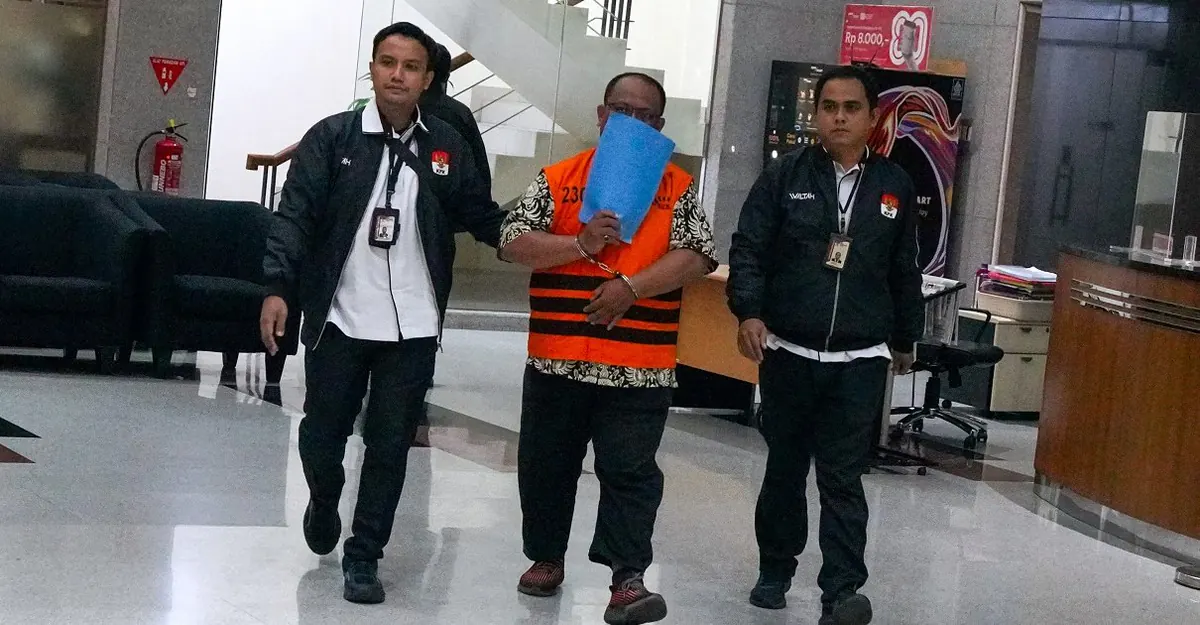
The Corruption Eradication Commission (KPK) has detained one suspect in the alleged bribery of 2019-2022 Community Groups (Pokmas) grants in East Java, according to a statement issued by the KPK in Jakarta on 16 November 2026.
The suspect, identified by the initials BGS, is a staff member of AS, who is described as a member of the East Java Regional People's Representative Council (DPRD) or a private party. BGS was held for the first 20 days at the KPK's Merah Putih Building detention centre from 16 November to 5 December 2026.
Earlier, the KPK detained AY, MF, RWR and MM in the same cluster; their cases are being processed at the Surabaya anti-corruption court.
In the KPK's account of the case, AS allegedly obtained a grant allocation of Rp291.5 billion (about US$18 million) and demanded a commitment fee of 15-20 percent from field coordinators (Korlap) or DPRD members who proposed shifting the allocation. BGS allegedly managed the fee; AS allegedly received Rp41.7 billion (about US$2.6 million), while BGS allegedly received Rp1.26 billion (about US$80,000).
On those allegations, BGS and AS are suspected of violating Article 12(a) or (b) or Article 11 of the 1999 anti-corruption law, Law No. 31 of 1999, read together with Article 55 of the Criminal Code.
The role of Pokmas in local grants
Community Groups, or Pokmas, generally emerge as vehicles for residents to propose small-scale social or infrastructure activities. In local budgets, grants can be given to groups that meet administrative requirements and are judged to match public needs. Because the scheme can reach many small points, the grant route is often seen as quicker to reach residents than large projects that must go through procurement procedures. In many regions, the route is considered close to residents' aspirations because proposals can be submitted through legislators or village officials.
Risks arise when proposals, verification and disbursement are treated not only as technical procedures but also as entry points for deciding who receives allocations. In budget terms, shifting an allocation means moving or adjusting the size of funds from one item to another. The mechanism requires approval and record-keeping, but it can be abused if those handling it turn access to budget items into a commodity. Without oversight, verification can become a tool for deciding who is cleared and who is delayed. Korlap, or field coordinators, can become nodes connecting many proposers.
In alleged corruption cases, a commitment fee usually refers to a promised reward for parties able to push proposals through. Such fees are not legitimate parts of the budget but hidden costs that impose extra pressure on grant recipients or proposers. The more parties involved in coordinating proposals, the blurrier the line between administrative duties and private gain. In practice, fees can also squeeze out groups unable to pay, even when their proposals are more urgent.
The position of DPRD members or staff close to legislators matters because the legislature is involved in discussing and supervising local budgets. When a DPRD member is alleged to have directed grant funds to particular groups, the public has a right to demand an explanation that the choice was based on residents' needs rather than fee arrangements. For that reason, questioning staff and intermediaries is often part of the KPK's effort to unravel bribery networks, while the presumption of innocence remains legally in force until a court rules.
Impact on public budget oversight
For readers in Indonesia, the case shows that budget corruption does not always look like a large physical project. A seemingly simple grant route, such as aid to community groups, can become an entry point for bribery when proposals are handled by networks seeking commissions. The impact is not only state losses but also the quality of assistance received by the public. The public also needs to see whether groups that truly need help can access information without going through intermediaries.
The public should also pay attention to the ongoing legal process. Because the parties remain suspects or defendants, the KPK's statements in its release should be read as allegations being tested, not final conclusions. However, detentions and asset seizures signal that law enforcers believe there is sufficient preliminary evidence to continue the investigation. As a law enforcement agency, the KPK also needs to keep the process transparent so that public trust does not rest solely on detentions.
In the short term, residents and grant recipient groups should be more critical of administrative requirements, the transparency of proposal lists and complaint mechanisms. Going forward, cases like this can prompt local governments to strengthen the digitization of proposals, shorten intermediary chains and separate legislative functions from technical disbursement affairs so that access to budgets is not easily traded. With a more open bureaucratic chain, the chance of unofficial levies can be reduced from the application stage.
Related coverage
Three suspects in alleged corruption case at Karangasem village office; Low secondary-school integrity, KPK strengthens anti-corruption efforts; KPK trains 49 Telkom employees as anti-corruption agents