Semarang mayor strengthens fire prevention at Jatibarang landfill
Semarang Mayor Agustina Wilujeng has strengthened fire mitigation at the Jatibarang final disposal site after receiving firefighting equipment from the Ministry of Environment.
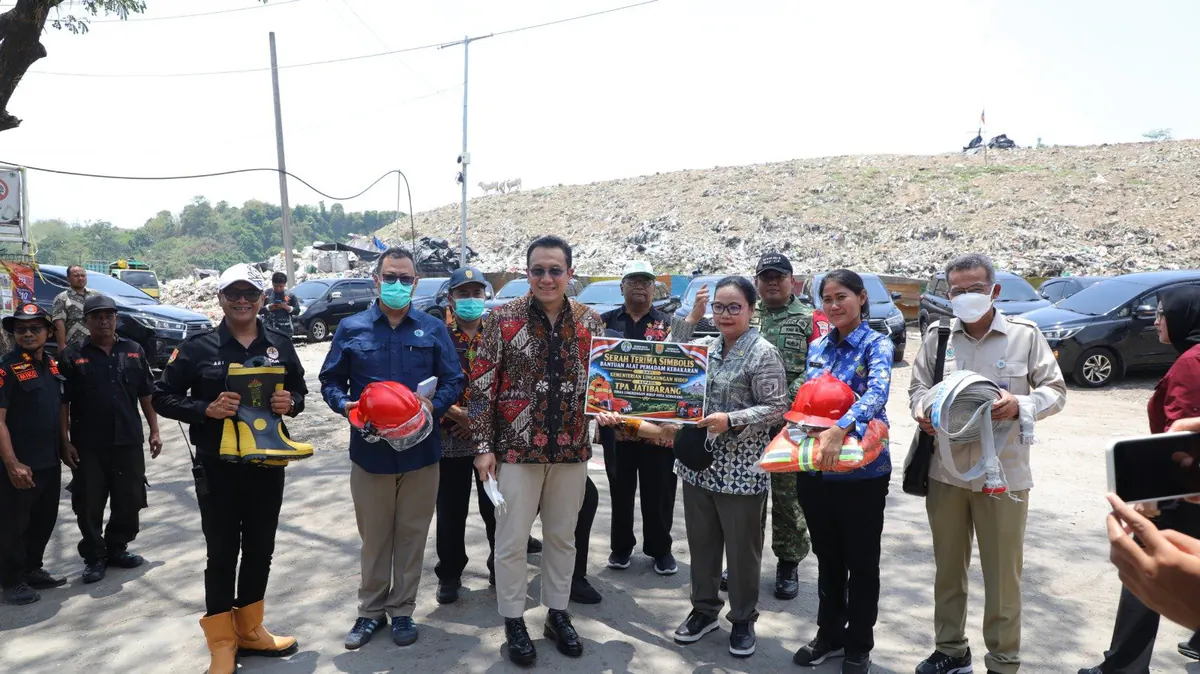
Semarang Mayor Agustina Wilujeng has strengthened fire preparedness at the Jatibarang final disposal site (TPA) after the Ministry of Environment handed over firefighting equipment on Thursday, 12 November 2026.
According to a report by Jateng Pos, the equipment was handed over at the site during the visit. Deputy Environment Minister Diaz Hendropriyono delivered pumps, hoses and peat nozzles that can spray water into the waste pile to reach fires smouldering below the surface.
Diaz said at least 76 TPAs across Indonesia had burned between January and October 2026, while Jatibarang caught fire four times in September 2026. The Environment Minister's Circular No. 11 of 2026 requires periodic watering, cooling and routine patrols; compliance at Jatibarang was assessed at about 90 percent.
Agustina urged faster progress on Waste-to-Energy power generation (PSEL) and a reduction in the waste pile, estimated at 3.7 million tonnes. The pile is expected to grow by about 365,000 tonnes a year. She said support from the central government should help complete PSEL administrative processes by the end of the year.
Why fires can start in waste piles
A final disposal site is not simply an empty yard filled with waste. Inside the pile, organic material continues to decompose and produce methane, a highly flammable gas. Methane forms in organic layers that lack oxygen, while in looser areas air can enter and trigger slow combustion. If the pile is too compacted, heat from decomposition cannot easily escape, allowing hot spots to ignite below the surface. This makes landfill fires difficult to extinguish by spraying only the top layer.
Waste management patterns that still rely on open dumping also increase the risk. Unsorted waste mixes glass, plastic, metal and organic material. During the dry season, a dry top layer can become an initial trigger, while the lower layers continue to hold gas and heat. Some final disposal sites in Indonesia still accept mixed waste under open dumping systems, while more controlled landfill systems are being developed. A good system requires cover layers, gas channels and temperature monitoring. For that reason, patrols, watering and routine cooling are basic measures required of landfill operators.
The presence of a landfill near residential areas adds complexity. Smoke from waste fires can impair visibility and may carry fine particles and odours that affect breathing. Over the long term, methane leaks also contribute to greenhouse gas emissions, making landfill management both an environmental and health issue. In large cities, high daily waste volumes cause piles to grow quickly. When a landfill approaches capacity, management becomes more difficult and environmental risks rise.
More structural solutions usually depend on reducing waste at the source, sorting it and using modern processing. Waste-to-energy technology requires a stable supply chain, environmental permits and acceptance by nearby residents. Without sorting, mixed waste can reduce combustion efficiency and increase the need for pollution control. Household sorting, waste banks and restrictions on certain materials are prerequisites so that processing facilities do not become only temporary dumping sites.
What it means for Semarang residents
Landfill fires are not only a matter for crews on site. For Semarang residents, smoke and odours can disrupt daily activities, especially for children, older people and those with respiratory conditions. If waste collection is disrupted, piles in residential areas can also cause standing water, pests and health complaints. Fire preparedness and reducing the waste pile therefore have a direct effect on quality of life.
Accelerating PSEL needs oversight so it does not stop at planning. Waste-to-energy facilities are only useful if sorted waste supply is stable, environmental permits are met and the results genuinely reduce the pile. For local government, success can lower landfill management costs and open opportunities for energy use. But without monitoring, projects of this kind risk creating new burdens, such as air pollution or community opposition.
Residents also play an important role. Sorting at home, cutting single-use plastics and supporting waste banks can slow the growth of the pile. Residents also need accessible reporting channels for smoke and odours. For readers outside Semarang, this case is a reminder that landfill issues often emerge when cities grow quickly but waste management has not changed. What matters next is consistent patrols, transparent data on waste accumulation and whether PSEL truly reduces waste volume rather than simply shifting the problem.