East Java Police Chief Returns to SMAN 1 Sumberrejo to Motivate Students
Inspector General of Police Dekananto Eko Purwono returned to SMAN 1 Sumberrejo in Bojonegoro Regency to motivate students, 35 years after studying at the school.
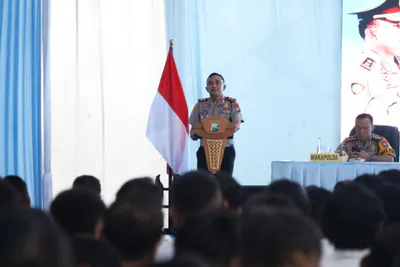
East Java provincial police chief Inspector General of Police (Irjen Pol) Dekananto Eko Purwono visited SMAN 1 Sumberrejo, a state senior high school in Sumberrejo, Bojonegoro Regency, on Wednesday, 18 November 2026, to motivate students.
According to TVRI News, the news service of Indonesia’s state broadcaster, the visit was a special moment because Dekananto returned to his alma mater after 35 years. He told students not to feel inferior for attending school in a rural area.
“Do not feel discouraged about studying in a village,” Dekananto said. He said success was not determined by a school’s location but by the spirit to learn, hard work, prayer and support from parents and teachers.
Maskun, head of the Bojonegoro regional branch of the education office, welcomed the visit and said he hoped alumni would inspire current students. The event closed with symbolic assistance, a group photograph and an inspection of classrooms.
A local alumnus’s motivation in the classroom
A visit by an alumnus who now holds a public office to the senior high school he once attended is often read as a bridge between school experience and the world of work. For students, the presence of a former pupil can make ambitions feel closer because the person’s life path is not entirely unfamiliar. In the context of schools in rural areas, such moments are often used to challenge the assumption that opportunities for progress are available only in big cities.
In many regions, public senior high schools serve as centres of social mobility. Students from families of farmers, traders, workers or labourers often see teachers and alumni as the most concrete examples that education can change the direction of their lives. For that reason, messages emphasising hard work, prayer and support from parents and teachers are not only moral advice but also a way of framing success as the result of a long process.
The term “alma mater” refers to the school or university where a person once studied. Alumni usually maintain ties with their alma mater through reunions, donations, extracurricular activities or official visits. In school events, “tali asih” can be understood as symbolic giving to support operations or facilities, not merely a ceremony. An inspection of classrooms also gives guests a chance to see learning conditions directly.
Messages about character, mental strength and spirituality are also relevant because students today grow up amid academic pressure, social media and competition to enter universities. Character education in Indonesian schools often stresses discipline, respect for teachers, responsibility and emotional management. When a security official invites students to respect parents and teachers, the message touches social aspects that remain pillars of learning success. Such motivation can also strengthen confidence among students who live far from centres of government or major campuses. The use of digital technology also needs to be framed as a learning tool, not merely entertainment. Students can use the internet to find materials, practise questions, create work or learn about professions, while schools must ensure access does not widen the gap between those who have devices and those who do not. An alumni visit can prompt career discussions in class, provided teachers follow it up with planned activities rather than leaving it as a ceremonial event.
What students and parents should note
For readers in rural areas, this visit does not directly change education policy or open jobs. Its relevance is closer to study habits and how schools manage motivation. Students can see that achievement need not begin with luxurious facilities, but with discipline, teacher guidance and family support. Parents are also reminded that polite communication and study support at home remain important factors.
What needs to be watched next is whether motivational messages are followed by more concrete school programmes, such as digital literacy training, career activities or mentoring for students who want to continue to university. Amid changes in the world of work, technology skills, communication and mental resilience are often cited as essential. Therefore, alumni visits should not stop at group photographs but become an entry point to activities accessible to many students.
For the wider public, events like this also remind people that regional public figures can use their positions to bring schools closer to opportunities. However, the impact still depends on follow-up: teachers, school principals, education offices and parents need to ensure the message becomes measurable learning routines. This matters so motivation does not evaporate after the guest leaves.