Wood Pellet Factory Fire in Sragen Causes Rp3 Billion in Losses
A wood pellet factory in Sragen caught fire early Wednesday, destroying machinery and vehicles and causing an estimated Rp3 billion loss, while police investigate a suspected short circuit.
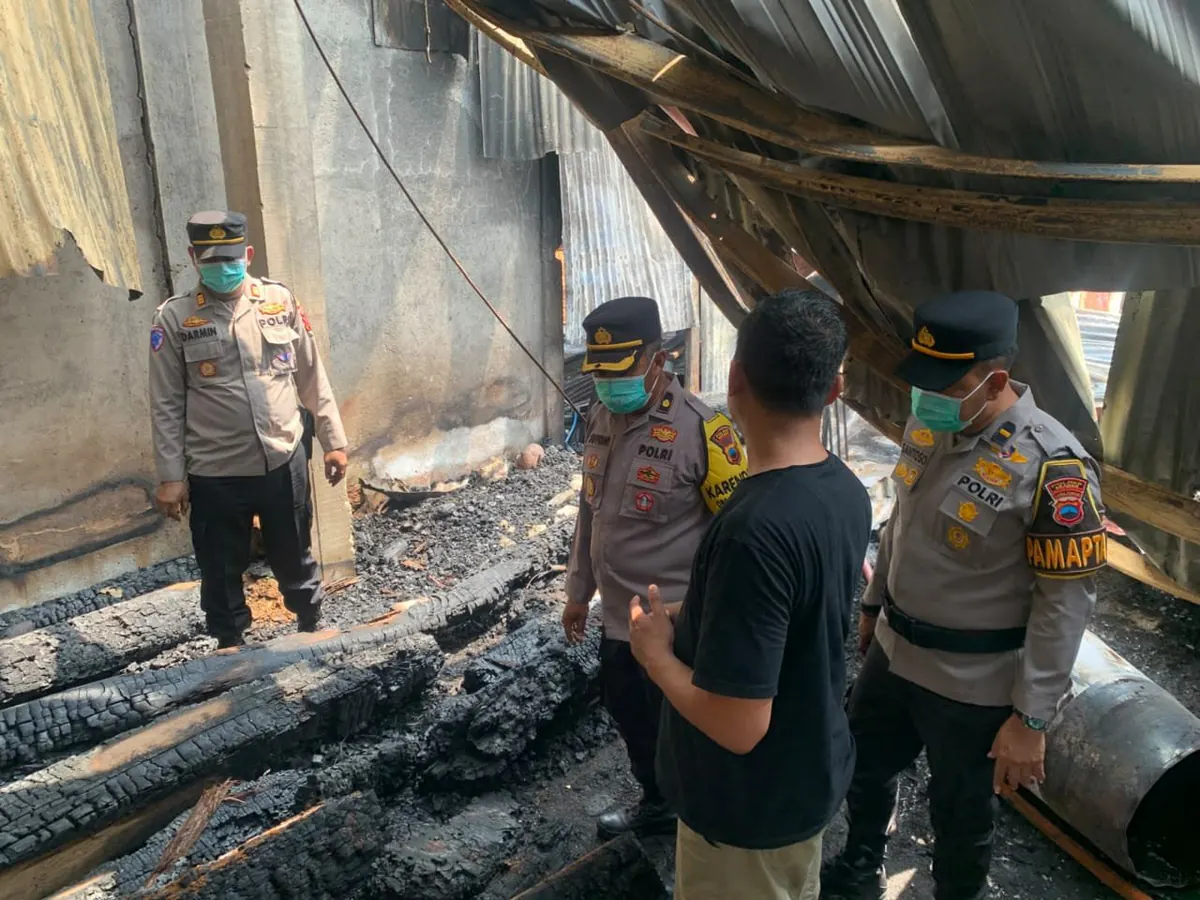
A wood pellet factory owned by Iksan Kurniawan in Banaran hamlet, Banaran village, Kalijambe district, Sragen regency, was engulfed by fire in the early hours of Wednesday, 18 November. According to the local newspaper Jateng Pos, the blaze was discovered at about 03.30 Western Indonesian Time (WIB). Production machines, vehicles and parts of the factory building were damaged, with losses estimated at Rp3 billion (about $185,000).
Supriyanto, a resident living near the factory, said he woke up for the dawn prayer and saw flames coming from the building next to his house. He contacted Sutriyanto, the head of the local neighbourhood unit, and the factory owner. The owner arrived, opened a locked door, and the fire was seen growing in the rear western section.
Firefighters, police and volunteers worked to bring the blaze under control, and it was extinguished at about 11.00 WIB. No casualties were reported, but machinery, two trucks, one Gran Max pickup truck, raw material dust and the factory roof were damaged.
Jateng Pos reported that the forensic identification team of the Sragen police criminal investigation unit examined the site and secured the remains of burnt aluminium cable. Kalijambe police chief AKP Darwin said the investigation was still ongoing. The initial suspicion pointed to an electrical short circuit, but the exact cause remained under investigation.
Fire risk in wood pellet production
Wood pellets are typically made by drying sawdust or other wood waste and compressing it into granules. The product is used as biomass fuel for boilers, power plants and industries seeking to reduce dependence on coal. Because it is made from wood waste, pellet factories are often located near timber processing centres, furniture industries or plantations. Wood pellets are considered a renewable energy source because they use waste material, but their supply chain requires strict quality control and workplace safety.
The fire risk at such facilities is significant. Dry sawdust can ignite easily when exposed to sparks, high temperatures or faulty electrical installations. Dryers, conveyors and raw material storage areas can also become hotspots. If wood dust accumulates, fire can spread quickly because fine particles become suspended in the air. Routine dust cleaning is therefore part of prevention, not merely a matter of keeping the workplace tidy.
For that reason, investigations after a fire usually go beyond the initial suspicion. Police examine electrical routes, machine conditions, stored materials and witness statements. Burnt cable remains can provide clues, but a definitive cause can only be established after forensic laboratory results or technical checks. During that process, suspicion must be kept separate from legal conclusions. Business owners also need to provide fire extinguishers, evacuation routes and emergency power shutdown procedures, along with basic training for workers.
A fire at a business premises close to homes shows that the danger does not stop at one building. It makes fire safety a concern not only for the business owner but also for nearby residents. Road access, water supply, coordination with fire services and the readiness of volunteers determine how quickly a blaze can be handled. The faster water and firefighting equipment reach the scene, the less likely the fire is to spread to other buildings.
Lessons for businesses and residents
The estimated Rp3 billion loss shows how a single fire can halt production, damage assets and affect workers' livelihoods. For small and medium enterprises, a power outage or machine failure is not only a repair cost; it also risks lost orders and damaged customer trust. Business insurance, where available, usually requires evidence that prevention and response procedures were followed.
The incident is a reminder that safety in small and medium industries must be taken seriously. Electrical installations should be inspected regularly, loads should not exceed capacity and power sockets should not be overloaded. Combustible materials such as wood dust should be stored away from heat sources. Fire extinguishers, emergency signage and simple firefighting drills should be available so workers do not panic when flames first appear.
Residents nearby should also identify risk points and evacuation routes. If a fire breaks out, a quick report to the neighbourhood unit head, firefighters or police can reduce losses. The Sragen police investigation will determine whether the cause was truly a short circuit or involved other factors. For local government, workplace safety inspections and spacing between buildings are part of risk mitigation.