Said Didu Says Prabowo Needs Vice President Who Can Speak for the People
Public policy observer M Said Didu says President Prabowo Subianto needs a running mate who understands governance and the people’s economy.
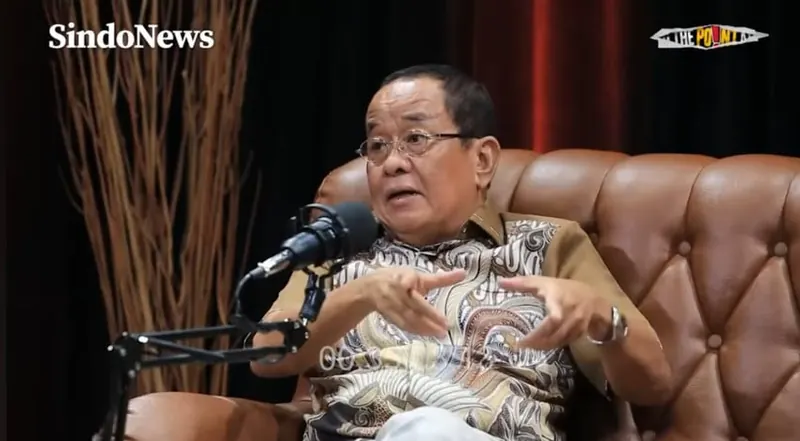
Public policy observer M Said Didu said President Prabowo Subianto needs a vice presidential candidate who can be the voice of the people and a steward of good governance until 2029, as reported by Indonesian news outlet SINDOnews on Saturday, 21 November 2026.
According to Said, the main problems facing the government lie in governance and the economy. He therefore suggested that criteria for the vice president should not rest on political parties, but on an understanding of those two problems.
“Forget about political parties for now,” Said said in the podcast To The Point Aja, aired on SindoNews’s YouTube channel, as quoted by SINDOnews.
He said people are experiencing economic hardship and judged that proposals from parties could trap Prabowo, because 2028 is already entering preparations for the 2029 general election, or Pemilu.
The role of the vice president in a presidential system
Under Indonesia’s presidential system, the vice presidency is not merely a ceremonial post. The vice president is part of a pair elected by the people and holding the same mandate for one term. The debate over the president’s running mate therefore cannot be separated from the question of who shares the burden of governance, not only who helps win the election. In practice, the vice president also signals the president’s priorities. If the president focuses on the economy, a running mate who understands budgeting and bureaucracy is more useful.
Since Indonesia’s Reformasi era, the vice presidential position has often been seen as a balancing tool in the political configuration. Large coalitions usually demand representation, while voters hope the president’s running mate can cover the main candidate’s weaknesses, for example in economic experience, public communication, or closeness to the regions. As a result, the criteria used by parties and the criteria used by the public often differ. Criticism of the politics of dividing posts continues to appear. Parties tend to count seats, while people count rice prices, education costs, and job opportunities.
The governance issue raised by Said Didu is relevant to the internal oversight function. The vice president can help the president monitor policy implementation, but authority depends on the division of tasks. Without clear authority, the post easily becomes symbolic. It should be noted that under Indonesia’s constitution, the presidential and vice presidential pair are elected as one package. The running mate cannot be determined solely by elite lobbying after the election has taken place. If a vacancy occurs, there is a constitutional mechanism, not a direct appointment. Therefore, the post needs to be filled by someone who understands bureaucracy, not merely someone popular.
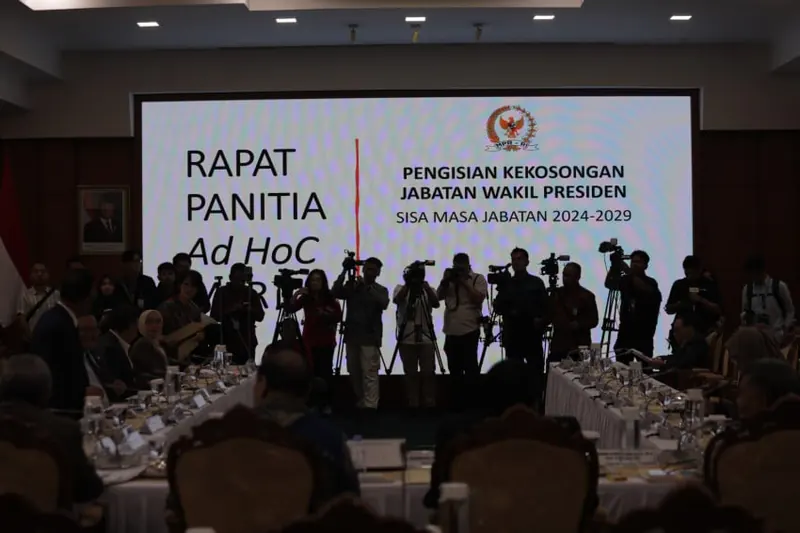
In the context of 2029, talk about the president’s running mate also intersects with political transition and safeguarding public trust. The next general election requires parties to prepare candidates earlier, so proposals for figures from party circles can be read as long-term maneuvers. On the other hand, the public tends to assess whether the figure understands everyday problems, such as staple prices, employment, and basic services. Distrust of transactional politics makes the “non-party” argument sound attractive, although implementing it still requires strong coalition support in Senayan, Indonesia’s parliament, and among the public.
What the public should watch
For readers in Indonesia, this debate is not merely a distant matter for political elites. The vice president helps determine the direction of policy coordination, especially when the president needs a figure able to bridge communication with society. If the running mate is chosen solely for party considerations, the public has the right to worry that the government’s main agenda will shift toward the next election’s agenda.
Conversely, if the chosen figure truly understands governance and the economy, the impact can be felt in the speed of handling problems. Food prices, job creation, social protection, and regional services are issues that do not wait for the political cycle. In this context, the idea of being “the voice of the people” can be tested through the ability to listen, translate complaints, and oversee policy follow-up. The public can see whether such advice appears only in discourse or is reflected in announced policies.
What needs to be watched going forward is whether the non-party discourse remains only normative criticism or pushes parties and the president to negotiate more transparent criteria. Without a clear mechanism, the public will still only receive a pair already concocted by elites. Therefore, discussion about the vice president is important to maintain government accountability until the end of the term. Media and civil society oversight provide pressure so that the process is not closed and remains accountable.