Rieke Diah Pitaloka pushes data sovereignty for government priority programs
Member of Commission XIII of the House of Representatives (DPR) Rieke Diah Pitaloka pushes for government priority programs to be underpinned by reliable data and law-based governance.
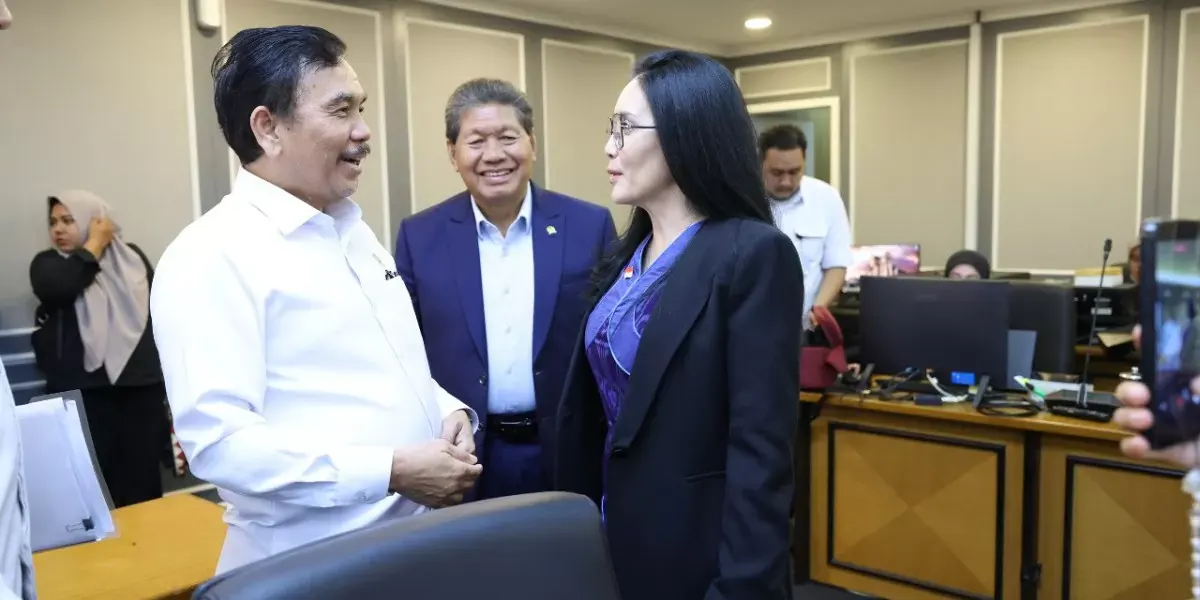
Rieke Diah Pitaloka, a member of Commission XIII of the House of Representatives (DPR), has urged the government to ensure that national priority programs, including Makan Bergizi Gratis (Free Nutritious Meals), are underpinned by accurate data governance and a legal foundation. She made the remarks during a hearing (Rapat Dengar Pendapat) with the Government Communication Agency (Badan Komunikasi Pemerintah, Bakom RI) and the acting head of the Presidential Staff Office (Kantor Staf Presiden, KSP) at the parliament complex in Senayan, Jakarta, on Thursday, 19 November 2026.
According to BeritaParlemen, Rieke said every development policy must have a solid legal basis so that it does not end in audit findings, and must be supported by accurate, up-to-date and relevant data. She asked working partners to examine Presidential Regulation (Perpres) No. 82 of 2023 and Perpres No. 83 of 2025 on digital transformation and institutional matters. The acting head of the KSP, Lieutenant General Ariyo Windutomo of the Indonesian National Armed Forces (TNI), presented the office's performance from January to 16 November 2026: 61 policy recommendation documents, 697 Policy Control and Harmonization Management (MPIH) documents, 563 action plans monitored through the Monitoring and Evaluation System (Sismonev), 175 field verifications, and 1,775 coordination meetings and focus group discussions (FGDs). The KSP's 2026 budget allocation was Rp113.71 billion (about US$7 million), with a realization rate of 82.07 percent.
Data sovereignty in digital policy architecture
The concept of data sovereignty invoked by Rieke refers to the state's ability to control, store and manage information generated by public policy. In Indonesia, the principle has a legal basis in Law No. 27 of 2022 on Personal Data Protection, enacted in October 2022, with a two-year transition period until October 2024. In addition, Perpres No. 82 of 2023 on Accelerating Digital Transformation and Integrating National Digital Services provides the framework for government data architecture, including interoperability among ministries and agencies. Perpres No. 83 of 2025, also mentioned in the hearing, expands the scope toward digital institutional arrangements, making the two regulations complementary pillars.
Makan Bergizi Gratis is a priority program launched in early 2025 that targets tens of millions of beneficiaries, from schoolchildren to pregnant women. The scale of the program makes it one of the largest social spending items in the state budget (Anggaran Pendapatan dan Belanja Negara, APBN). Without a single accurate data reference, budget distribution risks overlap, misdirection or a lack of monitoring. This is where Sismonev, mentioned in the KSP presentation, becomes relevant: the platform is designed to monitor hundreds of cross-agency action plans in an integrated manner.
The KSP functions as a presidential radar guarding the progress of priority programs. MPIH documents produced by the KSP, short for Manajemen Pengendalian dan Harmonisasi Kebijakan, serve as an inter-agency coordination instrument before policies are executed. Meanwhile, Bakom RI, established during the Prabowo-Gibran administration, holds the government's public communication role. Reports of 99 million views on Instagram and TikTok and 502 spokesperson appearances in the media show a massive volume of communication, but not necessarily equivalent to the depth of information received by the public.
Commission XIII of the DPR has a working scope covering communication, informatics and data protection. The hearing with the KSP and Bakom is a routine oversight mechanism to ensure the two agencies do not operate without accountability. Rieke's emphasis on a solid legal basis reflects concern that priority programs rushed without a mature regulatory foundation will generate audit findings from the Audit Board of Indonesia (Badan Pemeriksa Keuangan, BPK) later.
Practical meaning of data sovereignty for citizens
For ordinary citizens, data sovereignty is not merely bureaucratic jargon. When the government collects information for programs such as Makan Bergizi Gratis (MBG), personal data of beneficiaries — name, address and economic condition — are stored in systems that must be protected by regulation. Without clear governance, the risk of data leaks increases, and communities dependent on social assistance become the most vulnerable.
DPR oversight of the KSP and Bakom also affects how policy information reaches the public. With more than 1,000 press releases and 500 spokesperson appearances in five months, the government's communication volume is very high. But without an integrated dashboard planned by Bakom for 2027, the public still has to trace information separately across various channels. The equitable distribution of information in 3T areas — frontier, outermost and underdeveloped regions — marks whether government communication truly reaches all citizens or stops at major cities.
The KSP budget's realization of only 82.07 percent by mid-November 2026, while a proposed additional 2027 budget reaches Rp80.31 billion (about US$5 million), signals that oversight capacity for priority programs still needs strengthening. For taxpayers, these figures mean state money that should safeguard the accountability of social programs has not been fully absorbed, and questions about its effectiveness remain open.
Related news
ATVSI and KPI push for regulatory fairness in the Broadcasting Bill; Senator Destita and Bank Indonesia (BI) push for strengthening the Bengkulu coffee ecosystem; Commission IV of the DPR inspects BPBAT Mandiangin and pushes for preservation of endemic fish.