Mahfud MD and Titi Anggraini warn over vice presidential nomination deadline
Mahfud MD and Titi Anggraini have reminded President Prabowo Subianto and Indonesia's People's Consultative Assembly that the deadline for submitting vice presidential candidates is 14 working days before a plenary session, not 14 calendar days.
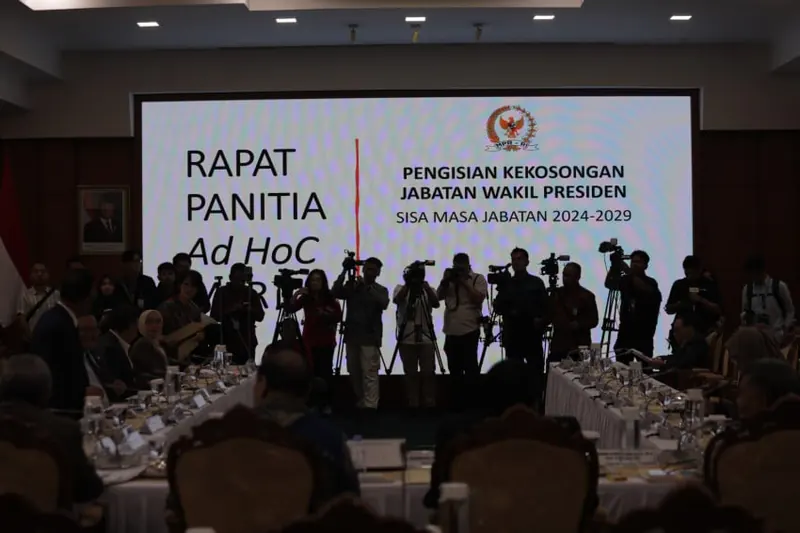
Mahfud MD and Titi Anggraini have reminded President Prabowo Subianto and the People's Consultative Assembly (MPR) that the deadline for submitting vice presidential candidates to the MPR is 14 working days before the MPR plenary session, not 14 calendar days, according to a report by Indonesian news outlet SINDOnews in Jakarta on Friday, 20 November 2026.
On his X account @mohmahfudmd, Mahfud said that if by 19 November 2026 the president had not submitted two names to replace Gibran, the MPR might not be able to convene on 9 December 2026.
Mahfud referred to the 1945 Constitution, the Law on the MPR, House of Representatives, Regional Representative Council and Regional People's Representative Council, known as the MD3 Law, and the MPR rules of procedure, which use a working-day count. He said that if the names were submitted on 20 November 2026, the session should be postponed to 10 December 2026.
Working days versus calendar days in MPR procedure
In Indonesian constitutional law, deadlines often use the word days, and the meaning of that word can vary depending on the source of the rule. Calendar days count every date, including Saturdays, Sundays and national holidays. Working days count only the days when state institutions and parliamentary bodies can carry out their official duties. The distinction becomes important when a session must be prepared, documents must be checked and members must be given time to study the material.
The 1945 Constitution, the MD3 Law and institutional rules of procedure are the main references for determining session procedures. The rules of procedure usually cover technical matters not detailed in the law, such as the submission of proposals, scheduling, quorum and decision-making. Synchronization between the Constitution, the MD3 Law and the MPR rules of procedure therefore helps determine whether a constitutional agenda is valid.
The plenary session is the MPR's highest decision-making forum. In that forum, decisions depend not only on political will but also on the fulfillment of formal requirements. When the vice presidency is vacant, the mechanism for filling the post involves the president and representative institutions. The public can follow the process through official documents, announcements by the MPR leadership and credible media reports.
The process for submitting candidates is not standalone. It involves nomination, verification of requirements and space for candidates to present their visions. In a presidential system, the vice presidency serves as a constitutional backup and the president's partner, so filling a vacancy requires caution to avoid legal questions later. A working-day count also gives the secretariat general and the leadership of parliamentary bodies time to process letters, verify files and coordinate members' schedules. Without a clear deadline, the agenda can change suddenly and interested parties can lose the chance to examine the candidates' names. When a deadline is understood differently, the risk is not only delay but also questions about the validity of decisions. In parliamentary practice, members can request legal explanations, send official letters or postpone discussion until all requirements are met. The MPR leadership therefore needs to ensure that the scheduling of sessions does not exceed the limits set by the rules, while giving candidates space to be known by the public. Open explanations also help prevent misunderstanding between the terms working day and calendar day, and allow the public to assess whether the process is running in an orderly manner.
Procedural clarity and political certainty
For Indonesian readers, the issue does not directly touch prices of staple goods or electricity tariffs. But clarity over the deadline for filling the vice presidency relates to political certainty, institutional legitimacy and smooth coordination of government. When procedures follow the rules, the public receives a signal that the transition of office is orderly and accountable.
The points to watch are whether the president submits candidate names on time, whether the MPR interprets the deadline as working days and whether the session schedule is adjusted. The public can also monitor whether official documents are published and whether the MPR leadership gives open explanations. That way, legal debate does not turn into distrust of the constitutional governance process.
The practical relevance also appears in how citizens follow political news. Readers need to distinguish statements by public figures, media quotations and official decisions by institutions. In a deadline issue, a single term such as working day can change the schedule of a session. Clear sources and explanations of the rules are therefore important so that public discussion does not stop at political interpretation alone. Citizens can also monitor the process by reading official announcements rather than only viral snippets of statements. In politics, incomplete information often makes a deadline look like a conflict, even though the main issue is procedure. The public has a right to know the legal basis clearly.