House Commission III Pushes for Two Bodies in Draft Asset Forfeiture Bill
Commission III of the House of Representatives is pushing for separate management and oversight bodies in the draft asset forfeiture bill to prevent conflicts of interest.

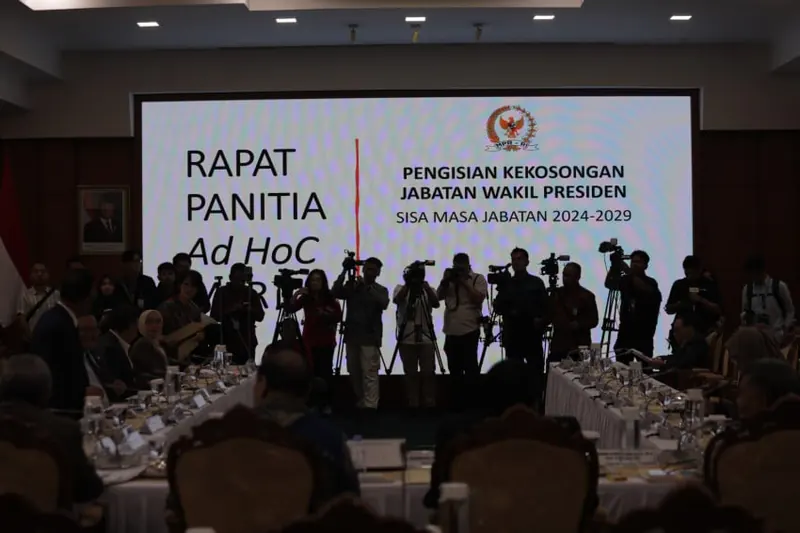
Commission III of the House of Representatives (DPR) is pushing for two dedicated bodies in the draft asset forfeiture bill (RUU Perampasan Aset): a managing body and a supervisory body, to prevent conflicts of interest and abuse of authority. The proposal was made by Commission III chair Habiburokhman at the parliamentary complex in Senayan, Jakarta, on Thursday, 19 November 2026, as reported by BeritaParlemen.
According to BeritaParlemen, separating asset management from law enforcement is important so that investigators do not also manage seized assets. Habiburokhman said the move was meant to avoid a clash of interests. “So there is a conflict of interest,” he said. Commission III also proposed an independent supervisory body to prevent asset forfeiture from becoming a tool of repression or extortion.
Why managing and oversight bodies should be separate
In the governance of seized assets, separating functions is a basic principle. Agencies handling a case usually have an interest in proving that assets can be forfeited, while a managing body has an interest in preserving the value of those assets until a court ruling becomes final and binding. If both roles sit within one institution, there is an incentive to pursue forfeiture targets rather than justice. A professional manager also needs market valuation standards, storage procedures and transparent sale mechanisms.
The draft asset forfeiture bill is generally designed to recover state losses and break the economic chain of crime. For that reason, seized assets need to be managed, maintained, sold or returned in line with court decisions. Without a dedicated manager, vehicles, properties and movable goods can be damaged, lost or depreciated. Without an oversight body, broad powers can be abused. Poor management can also erode public trust in legal processes, especially in cases involving wealthy individuals or officials. At the same time, assets left idle for too long can become a burden because of storage and maintenance costs.
Oversight models are also a concern in the design of state institutions. In Indonesia, the appointment of public officials often involves both the executive and the legislature so that there is mutual control. That pattern has been used for institutions handling sensitive functions, from elections to oversight of judicial conduct. The principle is that authority touching citizens’ property rights must not operate through a single channel without accountability. This allows the public to judge whether an institution works for the law or for politics. Independence does not mean an institution is immune from oversight; it must remain accountable to the public and subject to audit.
But institutional design alone is not enough. Derivative rules, periodic audits, public reporting and channels for objections by affected parties also need to be established. In criminal cases, the presumption of innocence remains in force until a court decision is final and binding, so asset management must be distinguished from punishment. That provision is important so that parties not yet proven guilty do not lose rights unilaterally. Courts should also have room to assess whether seizures and forfeitures were carried out in accordance with procedure.
What it means for legal certainty
For the public, the proposal for two bodies touches on legal certainty. Asset forfeiture can affect a person’s property rights, a household or a business. If governance is orderly, society has assurance that assets will not be managed carelessly, while the state can still recover losses caused by criminal acts. Such certainty matters because the law should not only pursue recovery of losses but also protect the rights of parties not yet proven guilty.
The impact is also felt in law enforcement costs. Well-maintained assets can be returned to the state or sold to cover losses, but damaged assets only add to state spending. Technical rules on storage, valuation and sale therefore need to be supervised so they do not become a new loophole for corruption. Efficient asset management ultimately affects state revenue.
What needs to be watched next is public consultation, the transition period and the objection mechanism. The House of Representatives’ deliberations must ensure that definitions of assets, limits of authority and sanctions for abuse are clearly written. Without that, the managing and supervisory bodies would become only new structures without real protection for citizens.