Roy Suryo Seeks Forensic Test of Jokowi's Diploma at East Jakarta Court
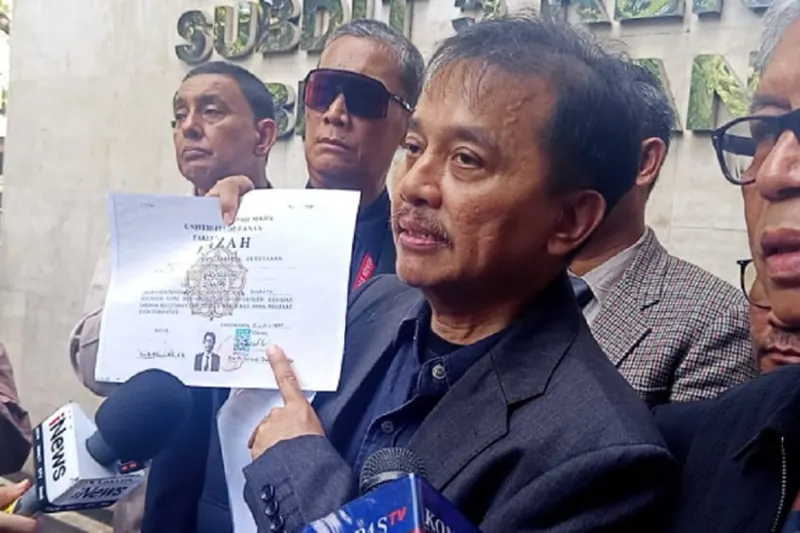
Roy Suryo's legal team has asked the East Jakarta District Court to forensically examine former President Joko Widodo's physical diploma against verified comparison documents.
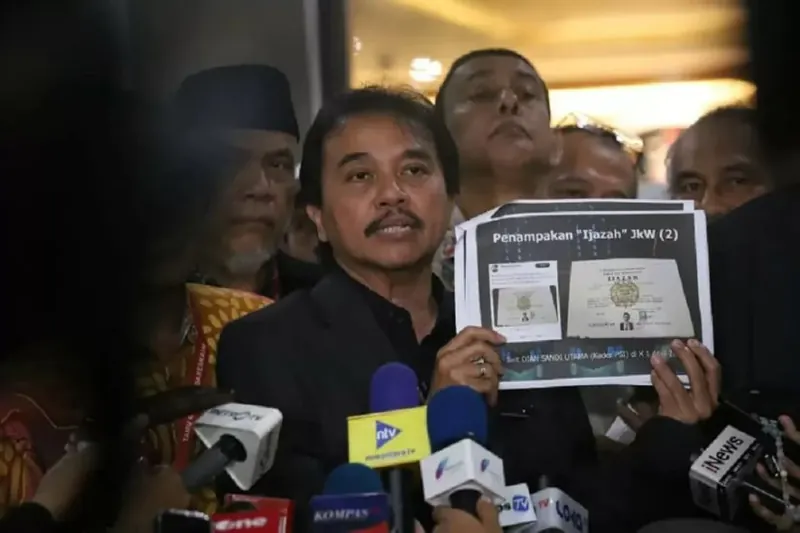
The legal team for Roy Suryo submitted a request to a panel of judges at the East Jakarta District Court (Pengadilan Negeri Jakarta Timur) on Wednesday, 11 November 2026, asking for a forensic examination of former President Joko Widodo's physical diploma, according to a report by SINDOnews. The request was filed during a trial over alleged defamation concerning the diploma.
The application asks that Jokowi's diploma be compared with at least three verified comparison diplomas issued in November 1985. Refly Harun, a lawyer for Roy Suryo, was quoted by SINDOnews as saying: “Forensic testing must use authentic comparators.”
The request was also copied to the President, the Chief Justice of the Supreme Court (Mahkamah Agung), the chair of the Judicial Commission (Komisi Yudisial), an oversight body for judges, and the chair of Commission III of the People's Representative Council (DPR RI), which oversees legal affairs and human rights. It was also copied to the Attorney General (Jaksa Agung), the chair of the Ombudsman, a public service oversight body, and the leadership of the East Jakarta District Court. Refly said the case centered on a social media post by Dian Sandi, rather than a direct attack on the physical diploma.
Why forensic document testing matters
Forensic document testing is a scientific examination of a document's physical characteristics, not simply a reading of its text. In practice, experts can assess the type of paper, ink composition, the shape of signatures, stamps, numbering, printing, spacing and other materials commonly used at the time of publication. Such examinations are used to determine whether a document is genuine, fake or has been altered. Their findings are usually set out in an expert opinion that can be cross-examined in court.
The evidentiary value of a physical document becomes important when a dispute goes beyond the interpretation of words. A diploma can be compared with other records from the same institution and period. If the comparison documents are verified and lawfully accessible, the findings are easier to test in court. Without clear comparators, a forensic conclusion risks becoming a fragile sole reference. The request for comparison documents also tests the caution of investigators and prosecutors. The more documents that are disputed, the greater the need for reliable archives. For that reason, the validity of the comparison archives matters as much as the test result itself.
Questions about a head of state's diploma are not new in Indonesian politics. Queries about education, the legality of records and the authenticity of documents often surface in public debate, especially during election periods. But the law separates conversation in the public sphere from proof in the courtroom. Witness statements, documents, expert opinions and other evidence must be assessed through judicial mechanisms. This is where legal arguments often intersect with public political perception. Cases of this kind also test the boundary between criticism of officials and accusations that must be proven.
Within that framework, the presumption of innocence remains a guiding principle. A person who is suspected, arrested, detained, prosecuted or tried must be regarded as innocent until a court issues a final and binding ruling. The word “alleged” is therefore not a journalistic courtesy but a sign that the case is still in the examination stage. The public has the right to follow the process, but the final conclusion belongs to the judges. The judges also need to ensure that requests for additional examinations are not used to delay the judicial process.
What it means for public oversight
For Indonesian readers, the case shows that documents belonging to public officials can become the object of legal scrutiny, not merely material for political conversation. The public may demand transparency, but the process must still follow criminal procedural rules. That makes the request for forensic testing an important path to proof, rather than a justification for spreading accusations freely. Transparency does not mean that all parties may decide for themselves whether a document is authentic without an evidentiary basis.
The practical impact is felt more in the quality of public debate. When a diploma issue arises, citizens need to distinguish between opinion, evidence and a verdict. Media outlets, politicians and internet users should refer to official statements from the trial and respect the presumption of innocence. Without that, unproven information can trigger new defamation. Forensic testing can also help separate claims that can be examined from rumors that rely only on fragments of images.
In the period ahead, attention will focus on whether the panel of judges grants the forensic testing request, how the comparison documents are obtained and whether the examination results can be held to scientific standards. The public will also need to see whether copies sent to state institutions are merely administrative or lead to real oversight. In addition, society should wait for official court statements before deciding which side is correct. All of these factors will determine whether the case remains a legal dispute or becomes a precedent for the oversight of public documents.