Senator Destita and Bank Indonesia push to strengthen Bengkulu coffee ecosystem
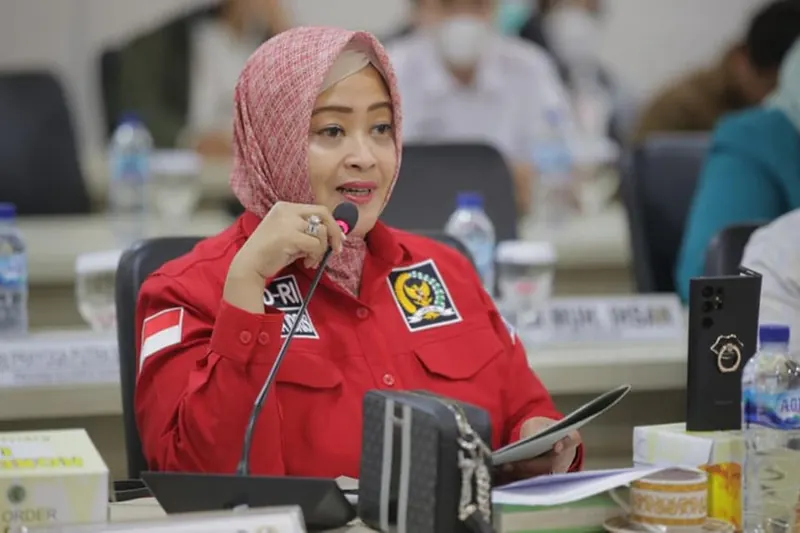
A Regional Representative Council senator from Bengkulu and Bank Indonesia are pushing coffee downstreaming, or value addition, so local beans can compete in national and global markets.
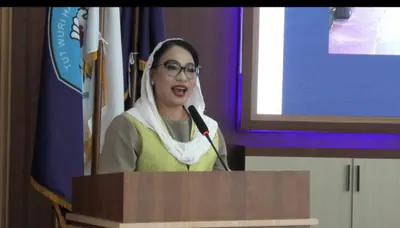
Efforts to strengthen the value chain of Bengkulu coffee were discussed by Destita Khairilisani, a member of the Regional Representative Council (DPD RI) from Bengkulu, together with the central bank Bank Indonesia (BI) during a public lecture at Universitas Hazairin (UNIHAZ) in Bengkulu. Both sides pushed for local coffee to gain added value and greater competitiveness in national and global markets, according to TVRI News.
The forum, which involved hundreds of students, farmers and coffee micro, small and medium enterprises (MSMEs), was opened by UNIHAZ Rector Arifah Hidayati. She emphasized that coffee development cannot stop at cultivation and must reach postharvest processing and marketing so farmers can obtain better value. Destita added that transforming the coffee ecosystem must involve farmers, academics, government, banks and businesses at the same time.
Head of the Bank Indonesia Bengkulu Provincial Representation Office, Wahyu Yuwana Hidayat, outlined three paths for strengthening the sector: mentoring, digitalization and wider market access. He said product traceability from farm to consumer is key to buyer trust, including in export markets such as Italy.
Bengkulu coffee in the supply chain
Bengkulu coffee sits in the middle of a major shift in Indonesia's coffee industry. Until now, most farmers have sold coffee beans in simple form, so the prices they receive depend heavily on auction markets, weather and the needs of middlemen or exporters. When the supply chain is not transparent, much of the added value from roasting, packaging and branding is captured by businesses in big cities or abroad. Strengthening the ecosystem therefore means improving every link: seedlings, farm care, harvest, processing, storage and access to buyers.
Traceability has become important because global buyers increasingly demand proof of origin, responsible farming practices and consistent taste. Record-keeping can show the variety, farm location, processing method and farmer group involved. For farmers, those records can become a negotiation tool so quality is rewarded more fairly. For MSMEs, traceability helps build a brand story. For local governments and universities, orderly data makes it easier to map problems such as low productivity, crop age or limited capital.
The role of universities also cannot be underestimated. Agriculture faculties can act as bridges for research, quality testing, postharvest training and mentoring for farmer groups. But success is not determined by seminars alone. It requires consistent quality standards, financing support, processing infrastructure and cooperation with exporters willing to buy products at prices based on quality. Without that, ideas about a coffee ecosystem remain annual talking points. Regional universities can also help test flavor profiles, set quality standards and train market literacy so farmers do not rely only on middlemen. Cooperation with local governments and banks is important to provide financing that does not burden farmers, for example through cooperative or farmer cluster schemes.
At the global level, coffee competition is no longer just about volume. Buyers are looking for flavor identity, sustainability and direct relationships with farmers. Robusta coffee, once seen as a cheap commodity, now has a chance through better processing, such as controlled fermentation, even drying and storage that preserves quality. If farmers and MSMEs can maintain consistency, Bengkulu coffee can move up from raw material to a product with higher selling value.
What it means for local farmers and MSMEs
For farmers, strengthening the coffee ecosystem can mean more stable prices if quality can be proven. When farms, harvests and processing are recorded, farmers are not only selling raw goods but also helping determine the value of the product. That matters because global coffee price fluctuations are often not felt directly by farmers at the grassroots level. For MSMEs, traceability and local brands can open opportunities in cafes, souvenir shops, online markets and with export buyers seeking product origin stories. For consumers, traceable products are easier to trust in terms of origin and quality, even if prices may be higher.
The impact also extends to job creation in the region, from sorters, roasters, baristas and packers to logistics and digital finance workers. If market access expands, young farmers may become more interested in managing their farms in modern ways. However, readers should note that the benefits are not automatic. They require consistent quality, capital, mentoring and trust from exporters. Without such readiness, the push for exports will only benefit groups that already have capacity.
Related news
Semarang mayor eyes the city as Central Java coffee business hub; Demak regent pushes women to be technology-adaptive and empowered; the Indonesian Anti-Corruption Movement (MAKI) urges Riza Chalid to be tried in absentia.