Fahira Idris backs Sufmi Dasco Ahmad for vice president
Jakarta senator Fahira Idris backs Sufmi Dasco Ahmad as vice president, calling him a unifying figure and a bridge for regional aspirations.
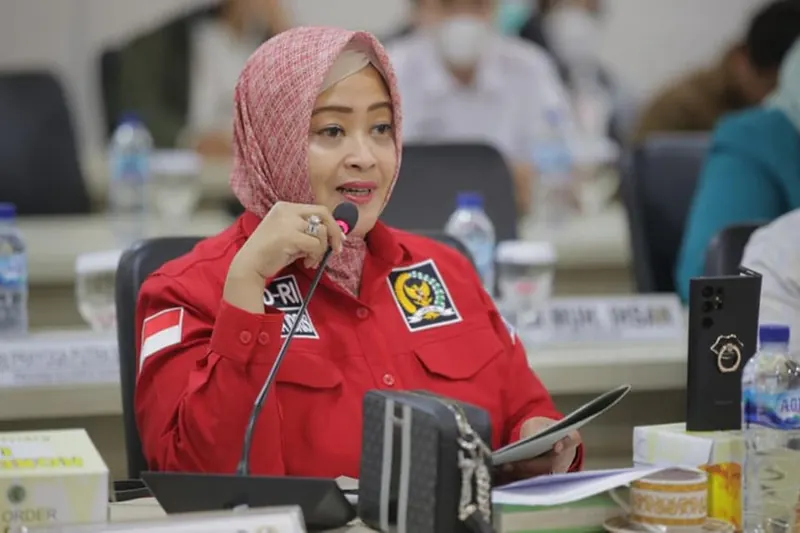
Senator Fahira Idris, a member of the Regional Representative Council (DPD) for the Jakarta Special Capital Region (DKI Jakarta), declared support for Sufmi Dasco Ahmad as a vice presidential candidate on Tuesday, 17 November 2026, in Jakarta, while the process to fill the vice presidency is under way.
According to a report by SINDOnews, Fahira said Dasco’s experience in law, parliament and inter-institutional communication made him an asset to work alongside President Prabowo Subianto and strengthen ties between the central government and the regions. Dasco’s tenure as deputy speaker of the House of Representatives (DPR) is seen as giving him an understanding of legislation, oversight and relations among state institutions. “Prof. Sufmi Dasco Ahmad is the right figure to fill the position of vice president,” Fahira said.
The endorsement came after Vice President Gibran Rakabuming Raka resigned on 12 November 2026. Under Article 8, paragraph 2, of the 1945 Constitution, the president proposes two vice presidential candidates for election by the People’s Consultative Assembly (MPR), with the vote scheduled for 2 December 2026.
Constitutional path to filling the vice presidency
The vacancy in the vice presidency is not a matter that can be settled by one institution alone. The 1945 Constitution gives the MPR the task of electing candidates proposed by the president when the second-highest state office is vacant. For that reason, expressions of support from DPD members, lawmakers, political parties or civic groups are better read as political input rather than a final decision. The process also requires a balance between the president’s prerogative and institutional considerations. In Indonesia’s constitutional history, filling senior state offices often sparks debate over eligibility, procedure and the direction of leadership, even though the outcome is determined by the authorized body.
The DPD, the chamber from which Fahira Idris comes, represents regional aspirations. Its members are elected from provinces, including DKI Jakarta. In Indonesia’s constitutional system, the DPD does not carry out legislative functions as broadly as the DPR, but it provides considerations and delivers views on regional affairs, centre-region relations and issues that cut across regions. Support from a regional senator can therefore be read as an emphasis that the vice presidency should take account of concerns beyond the presidential circle.
Regional autonomy is important because Indonesia is a unitary state that devolves government functions to the regions. The central government retains absolute affairs such as defence, foreign policy, monetary and fiscal matters, while regions manage many public services, local development and policy adjustments to local conditions. The vice presidency, according to the rule cited in the report, is linked to the Regional Autonomy Advisory Council. That link signals that the office can serve as a coordination node between central and regional policy.
In that context, a figure described as a “unifier” is usually expected to bridge the interests of the centre and the regions, state institutions and various stakeholders. Experience in parliament, law and cross-party communication is considered relevant because the vice presidency is not merely a ceremonial post but part of the government’s coordination machinery. At the same time, the public should also recognise that support from one senator does not automatically determine the president’s choice or the outcome of the MPR session. That keeps political backing within the constitutional framework.
What regional publics should watch
For readers in Indonesia, a vice presidential election does not always have an immediate effect on the price of staple goods or public service tariffs. But the office can influence the speed of policy coordination, especially when regional problems require solutions across ministries, provincial governments and regency or city governments. If the vice president acts as an active coordination node, programmes such as infrastructure improvement, health services, education and poverty reduction can be better targeted.
What matters going forward is which candidates the president proposes, how the MPR votes and whether regional autonomy policy receives attention on the vice president’s agenda. Regional publics can also monitor whether the forum for advising on regional policy actually functions, rather than remaining an administrative structure. Transparency in the process will help the public assess candidates’ capacity. In the short term, Fahira Idris’s support is more relevant as a signal that regional aspirations want to enter the discussion over filling the vice presidency.
The impact on everyday life may not be visible quickly. But when centre-region coordination works well, communities can feel the difference in the quality of public services, the certainty of regional budgets and the government’s response to disasters or residents’ complaints. Readers should therefore judge the filling of the vice presidency by the ability to deliver coordination, not by popularity or support from one side alone.
Related coverage
Home Affairs Minister urges regions to support digital registration for the Perlinsos social protection programme
Commission X of the House of Representatives supports senior high school specialisation with in-depth study
MPR schedules vice presidential election to replace Gibran on 2 December 2026