Rokhmat Ardiyan Urges Kuningan Students to Monitor Climate Change Bill
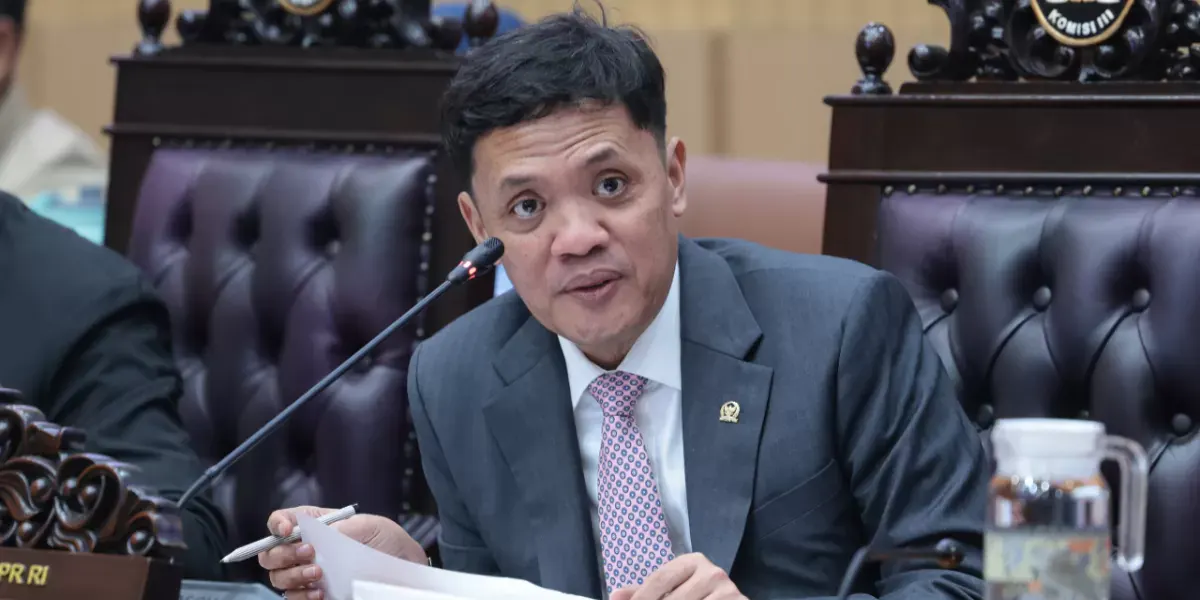
Rokhmat Ardiyan, a member of the House of Representatives (DPR), invited students at SMA Negeri 3 Kuningan in Jawa Barat to monitor environmental policy and the Climate Change Bill during an Edu Day parliamentary literacy programme run by the DPR Library.
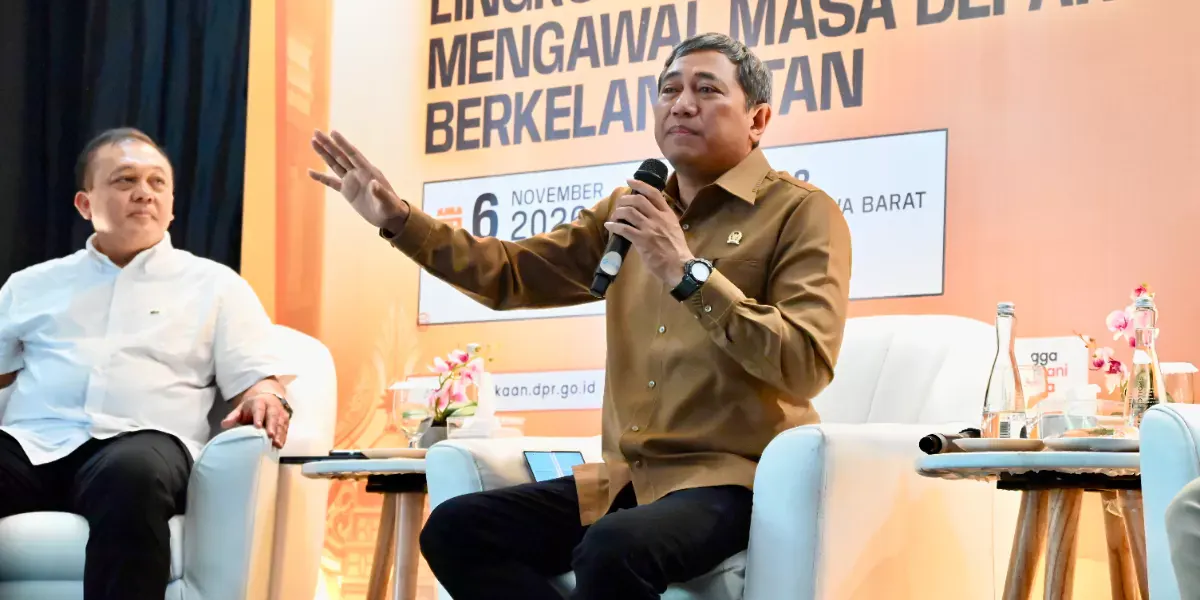
Rokhmat Ardiyan, a member of Commission XII of the House of Representatives (DPR), urged students at SMA Negeri 3 Kuningan, a public senior high school in Jawa Barat, to monitor environmental policy and the Climate Change Bill (Rancangan Undang-Undang Perubahan Iklim). He made the call during an Edu Day parliamentary literacy programme run by the DPR Library on Friday, 6 November 2026.
According to a report by BeritaParlemen, the event, themed 'Young Generation Cares for the Environment, Parliament Guards a Sustainable Future', served as a dialogue space for students to understand the DPR's functions.
Rokhmat said student input was relevant because the DPR was drafting the Climate Change Bill. Nining Cartini, the acting principal of SMA Negeri 3 Kuningan, said environmental concern had already become part of the school's culture, reflected in its green environment, cleanliness and status as a model school.
Parliament's Role in Climate Policy
In Indonesia, climate change has entered legal policy through many instruments, from national commitments to reduce emissions to implementing environmental regulations. Once an issue becomes a bill, the process does not stop at a single meeting. Academic drafts, harmonisation, cross-faction deliberation and public input all help shape the direction of the clauses. Youth involvement can therefore be read as strengthening social oversight, not merely a ceremonial school activity. Climate issues also intersect with energy, food, transport and finance. One clause on adaptation can affect budgets, project permits or environmental funding.
The DPR's functions closest to the public are legislation, budgeting and oversight. On environmental issues, oversight can mean summoning agencies, reviewing programme implementation or ensuring budgets do not stop at planning. The phrase 'guarding policy' usually refers to monitoring promises, rules and implementation so they do not remain on paper. Students who understand this route have more precise language when voicing aspirations: not only asking for action, but pointing to policy entry points. On the other hand, climate legislation often faces a dilemma between economic growth, social justice and environmental carrying capacity.
Dialogue between parliament and schools can also be seen as part of more practical civic education. Parliament is often considered distant because it works through sessions, public hearings and commissions. When a DPR member visits a school, that distance shrinks. Students see that aspirations can enter through formal mechanisms, while parliament receives feedback from residents who will feel the impact of environmental rules. Such dialogue also introduces terms such as commission, faction and public hearing in a more understandable context.
The added value of such dialogue lies in continuity. A single visit does not automatically change behaviour or policy. But if schools, public institutions and relevant commissions build routine input channels, student voices can become more measurable material. In climate issues, input from regions also matters because environmental impacts are often local: floods, droughts, pollution or ecosystem damage felt in daily life. In this way, schools produce not only caring students, but also citizens who know how to test public promises. Continuity also matters because climate rules will be evaluated periodically.
What Students Should Monitor
For Indonesian readers, this parliament-school dialogue is relevant because climate policy does not operate only at the global level. Rules born from the legislative process can touch electricity tariffs, business permits, waste management, transport, agriculture and local spatial planning. The impact can be felt in staple prices, air quality and disaster risk that affect residents' mobility. In regions, it can also influence waste management policy, green open space and flood and landslide preparedness.
What matters going forward is whether student input actually enters the deliberation of the Climate Change Bill or remains only an event note. The public can monitor whether there are public hearings, whether relevant commissions receive youth organisations, and whether academic drafts include citizen participation mechanisms. Document transparency and meeting minutes help the public assess the seriousness of the deliberation. Without such channels, calls to monitor policy can easily turn into slogans.
For students, the simplest step is to make environmental issues a documented habit: recording problems around the school, asking data-based questions, and using official channels such as letters to commissions, public consultations or regional forums. Schools can add brief notes about environmental problems in their area. In this way, parliamentary education does not stop at a one-day visit, but continues as more concrete civic practice.