MPR calls for stronger prevention system against academic ability test violations
Vice Chair of the People's Consultative Assembly (MPR) Lestari Moerdijat is pushing for a stronger prevention system for violations of the senior high school Academic Ability Test (TKA), not just sanctions.
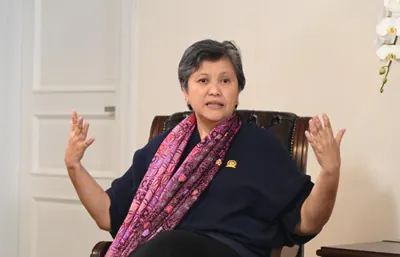
Vice Chair of the People's Consultative Assembly (MPR) Lestari Moerdijat has called for a stronger prevention system against violations of the senior high school Academic Ability Test (Tes Kemampuan Akademik, TKA), according to a report by the MPR on Thursday, 5 November 2026, after alleged cheating was found at 308 schools in the first wave.
According to data from the Ministry of Basic and Secondary Education cited by the MPR, the alleged violations were spread across 32 provinces, with 13 of them under strong suspicion and still under investigation.
Reported methods included photographing exam screens, live streaming during the test and alleged use of ghostwriters. Reports came in through social media and the ministry's complaint channel.
Lestari said administrative sanctions alone were not enough. She urged strengthening the integrity of supervisors, training for staff, better assessment governance and technology-based monitoring so that cheating would not recur.
The second wave of the TKA, scheduled for 2–5 November 2026, was planned to be taken by 1,338,684 students on the first day. Lestari warned that high participation had to be matched by integrity in implementation.
She said, “What is needed now is a systematic prevention approach.”
According to her, honest participants are the most harmed because manipulated data can affect education policy in many regions.
Data integrity in education assessment
Large-scale tests such as the TKA do not only produce scores for students; they also serve as a basis for mapping learning quality. When implementation is manipulated, the data collected loses its diagnostic value. The government, education offices and schools can misread real needs, from teacher quality and facilities to inter-regional gaps. As a result, budget assistance, teacher training or remedial programs could be allocated to areas that are not the most in need, while regions with serious problems remain left behind.
In the assessment ecosystem, the integrity of supervisors, technicians and participants is equally important. Open cheating, such as through screenshots or live streaming, shows that security gaps and field discipline can be exploited. Technical procedures therefore need to be complemented by ethics training, safe reporting mechanisms and random audits to detect anomalies. Technology-based monitoring, such as device activity tracking and identity verification, can help but must be accompanied by human accountability so that unfounded accusations are not made.
The issue also touches on learning culture. If scores are considered more important than the process, some parties will look for shortcuts. Schools, families and social media play a role in shaping norms. Enforcing rules alone is not enough if the social environment still tolerates cheating as a survival strategy. Character education needs to be tested in practice, for example through exams that emphasize honesty, transparent questions and clear, proportionate consequences for violators.
From an institutional perspective, national education issues are often discussed across agencies. The ministry designs policy, the House of Representatives (DPR) oversees budgets and regulations, while the MPR can raise strategic themes on human resource quality. When an MPR official voices prevention, the message is that improving assessment is not merely a technical matter but part of state governance. Cross-institution oversight is also important so that recommendations do not remain as circulars but are followed by consistent changes in procedures, budgets and sanctions. Transparency in investigation results is also important. The public needs to know whether violations stem from individuals, networks or systemic weaknesses. With clear information, schools are not easily collectively accused, while stakeholders can fix the most risky weak points. Oversight by the DPR and the MPR can ensure that ministry recommendations are followed up in budgets and regulations.
What it means for students, teachers and parents
For students and parents, the issue relates directly to fairness. If some participants take shortcuts, those who study honestly risk being overtaken in quality mapping, program acceptance or assessments that use national data. For teachers and principals, clean data helps determine improvement priorities: literacy, numeracy, training or facilities. Without assessment integrity, school-level decisions can miss the mark.
For society at large, education quality determines future workforce competitiveness. Accurate data is important so that education budgets, operational assistance and teacher programs are allocated based on real needs, not mere administrative claims. Violations in the TKA also serve as a warning that digital oversight needs to be strengthened, because social media can amplify cheating at particular schools into a national problem.
What needs to be watched going forward is the government's follow-up: whether security procedures are improved, staff receive adequate training, complaint channels are protected and sanctions are applied proportionally without punishing students who are only victims of the system. For readers, the main message is simple: assessment results are useful only if the process is honest.