Lestari Moerdijat Calls for Cross-Sector Dialogue at Bosphorus Summit
Lestari Moerdijat calls for three-sector dialogue at the Bosphorus Summit in Istanbul to address global challenges.
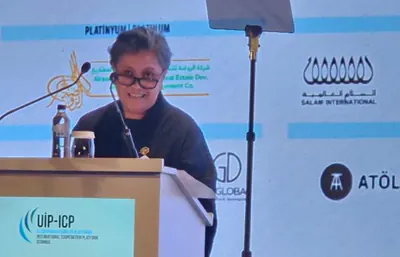
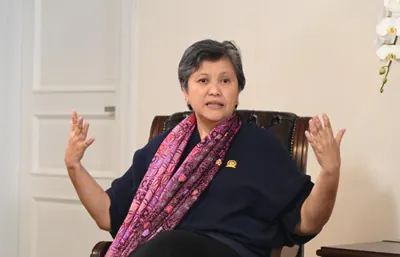
Deputy Speaker of the People's Consultative Assembly (MPR RI) Lestari Moerdijat called for dialogue and cross-sector collaboration to confront global challenges in a speech at the 17th Bosphorus Summit in Istanbul, Turkey, on Thursday, 5 November 2026, according to an MPR RI report.
In the report, Lestari stressed cooperation among government, including parliament, the business world and civil society. She said stability that is imposed is easily shaken, while stability born of trust is more resilient to change.
At the forum, she invited participants to resolve differences through deliberation rather than the loudest voice. Lestari also referred to the deliberative tradition of the MPR RI and the national motto Bhinneka Tunggal Ika, meaning Unity in Diversity, as a basis for viewing diversity as a strength.
She outlined three pillars of collaboration: government providing public leadership and protective policies, business contributing innovation and economic opportunities, and civil society building participation and trust. Lestari also urged cooperation on disaster resilience, education, and the involvement of women and young people.
MPR's role in parliamentary diplomacy
The MPR RI is a state institution whose members include those of the House of Representatives (DPR) and the Regional Representative Council (DPD). In Indonesia's constitutional system, it carries out functions related to amending the Constitution, inaugurating the president and vice president, and strengthening national consensus. Therefore, when an MPR leader appears at an international forum, the message is read not only as a personal speech but also as part of parliamentary diplomacy that can influence Indonesia's political image.
Cross-sector dialogue is often described as a way to narrow the gap between policymakers, economic actors and citizens. Government has the authority to set rules, business controls capital and innovation, while civil society brings direct experience from the grassroots. When the three sit together, policies that emerge tend to be more acceptable because they consider different needs and open space for citizens to oversee implementation. Citizen involvement in deliberation also helps reduce misunderstandings that often arise when policies are seen as coming only from elites. Dialogue can therefore serve as a bridge between public aspirations and state decisions.
Indonesia has a tradition of deliberation close to everyday political practice. In many forums, decisions are not determined solely by majority vote but are pursued through discussion until a point of agreement is found. The motto Bhinneka Tunggal Ika also reminds that a country with many ethnic groups, languages and religions needs mechanisms that preserve unity without erasing differences, making dialogue a tool for managing diversity.
At the global level, forums such as summits often serve as spaces to bring together ideas from leaders, academics and practitioners. The issues discussed usually cross borders, such as climate change, conflict, economic inequality and disaster risk. Therefore, international cooperation cannot stop at joint statements; it must be followed by policies that each state institution can implement. Parliaments can connect international commitments with domestic budget oversight.
Implications for public policy
For readers in Indonesia, the call for cross-sector dialogue is a reminder that public policy is not determined by a single institution. Outcomes of overseas meetings usually do not immediately change prices or daily services. But such messages can become a reference when parliament debates budgets, oversight of education programs, disaster management, and policies touching women and young people, and can provide material for periodic public evaluation.
Disaster resilience is also relevant because Indonesia lies in an area exposed to earthquakes, tsunamis and floods. Cooperation on early warning, mitigation and recovery can mean faster coordination among agencies, more drills in regions, and information systems that are easier for citizens to understand. In such situations, public trust becomes an important asset so safety appeals are followed. If that cooperation is realized in joint drills and tested warning systems, citizens can be better prepared for emergencies without relying on conflicting information.
The participation of women and young people also has practical meaning. If international forums encourage both to take part in crafting solutions, the public can assess whether consultation spaces in regions are truly open to those groups. In this way, dialogue is not merely a slogan but a measure of whether policy is closer to citizens' needs.