Habiburokhman flags alleged illegal wiretapping, House commission pushes for wiretapping bill
Commission III of the House of Representatives is pushing for a wiretapping bill after allegations of illegal wiretapping targeting the president and lawmakers.
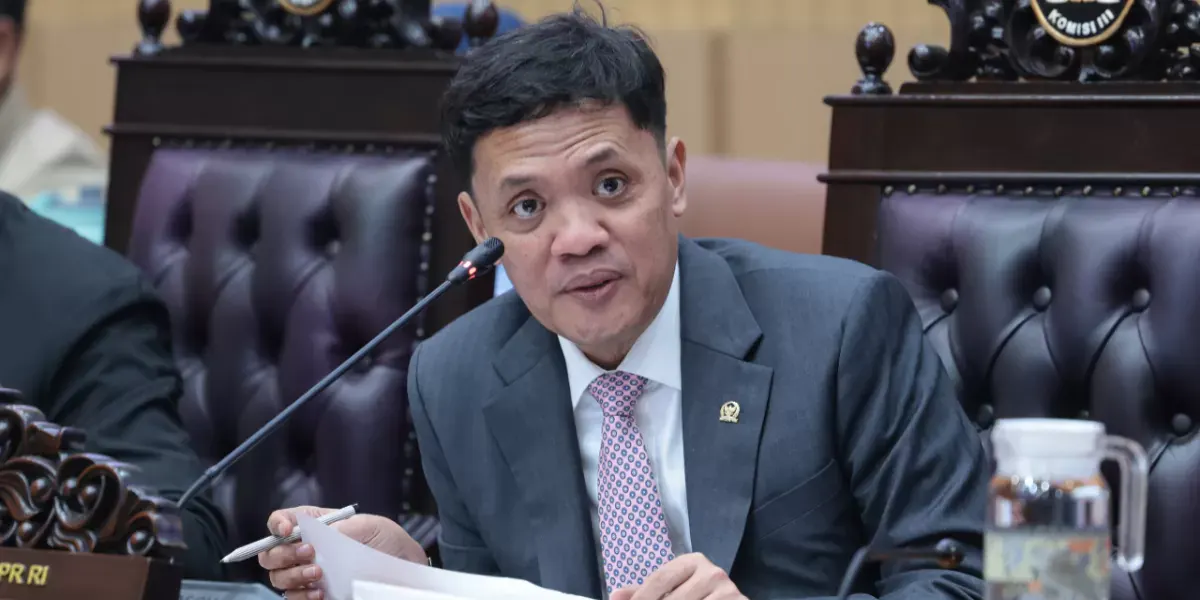
Habiburokhman, chair of Commission III of the House of Representatives (DPR RI), said allegations that several police generals illegally wiretapped the president, political figures and Commission III leaders and members must be investigated thoroughly. He made the remarks at the Nusantara II building of the DPR in Senayan, Jakarta, on Thursday, 5 November 2026, as reported by BeritaParlemen.
He said he was surprised by the information. “If we really were wiretapped illegally, we would naturally be disappointed,” Habiburokhman said. According to him, if wiretapping is carried out without a legal basis, the matter must be processed under the law, including if allegations of insubordination emerge.
Commission III urged a swift, open and transparent investigation. Investigators were asked to uncover the motive, whether it was to read the political map, secure positions, or serve other interests.
Habiburokhman also urged that the draft law on wiretapping (RUU Penyadapan) be discussed after the draft law on asset forfeiture (RUU Perampasan Aset). The rules are expected to protect the president, state officials and all citizens from wiretapping without a legal basis.
Legal framework for wiretapping in Indonesia
Wiretapping is the act of monitoring, recording or intercepting another person's communications. In modern legal practice, it is considered an interference with privacy rights. For that reason, states usually restrict wiretapping to law enforcement, subject to statutory authority, a clear purpose, court permission, oversight and time limits.
In Indonesia, wiretapping rules are not consolidated under a single umbrella. Certain authorities have been attached to law enforcement institutions, while protection of electronic communications also touches provisions on electronic information, cybersecurity and personal data protection. Without a specific umbrella law, interpretations of authority can differ, especially as communication technology changes faster than regulation. This makes questions about who may wiretap, under whose order and how intercepted data is stored often contested.
The draft wiretapping law emerged as a response to that gap. The bill is being discussed publicly because it seeks to provide legal certainty not only for law enforcers but also for citizens. Oversight of wiretapping tools is also important so that evidence produced does not automatically become inadmissible in court. Without detailed rules, wiretapping can be abused for political purposes, extortion or surveillance of the opposition. Conversely, without clear mechanisms, law enforcers also struggle to prove the involvement of perpetrators of serious crimes. In parliament, Commission III of the DPR oversees law, human rights and security. Therefore, the push for the wiretapping bill falls within the same working area as oversight of law enforcement agencies.
The term insubordination that has emerged in this issue needs to be understood separately from the alleged wiretapping. Insubordination refers to refusal to obey a superior or a lawful order in a hierarchical institution such as the military or police. In the context of law enforcers, such an allegation is sensitive because it can touch internal discipline, the chain of command and civilian-military relations. However, a person's legal status remains subject to the presumption of innocence until there is a final and binding court decision. Therefore, the term must not be used to conclude guilt before the legal process goes further. Clarification and independent audits can also help maintain public trust.
What it means for citizens' privacy rights
For Indonesian readers, this issue touches everyday habits that depend on digital conversations. Messages in applications, phone calls, emails and work data can become valuable traces for authorities or parties seeking to spy. This is relevant for workers, journalists, activists and users of digital financial services. If wiretapping is carried out without clear rules, citizens lose certainty that their communications are protected, while law enforcers working within the law also find it difficult to distinguish lawful action from abuse.
A good draft wiretapping law needs to include strict conditions, for example court orders, categories of crime that may be wiretapped, time limits, data storage and data destruction. The rules must also provide complaint and compensation mechanisms for people who believe they have been illegally wiretapped. Without that, regulation risks becoming a new instrument of legitimacy rather than protection, and can be held publicly accountable.
What needs attention going forward is whether discussions of the bill involve civil society, cybersecurity experts and oversight institutions. The public also needs to monitor whether the alleged wiretapping case now under scrutiny is resolved through a transparent legal process, rather than becoming mere political bargaining, and whether citizens' rights are truly protected.