Prosecutors raid six Jakarta sites, seize Rp11.795 billion in nickel corruption probe
The Attorney General's Office searched six locations in Jakarta and seized Rp11.795 billion in cash in a probe into alleged corruption in nickel mining governance in Southeast Sulawesi.
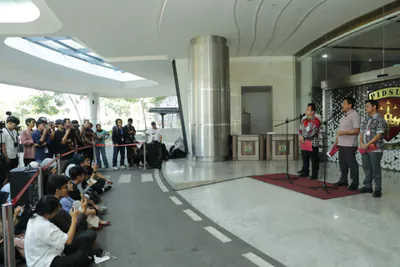
The Attorney General's Office (Kejaksaan Agung) searched six locations in Jakarta on Thursday, 5 November 2026, as part of an investigation into alleged corruption in nickel mining governance in Southeast Sulawesi from 2013 to 2025, and seized Rp11.795 billion in cash believed to be linked to the case, TVRI News reported.
The head of the Legal Information Center of the Attorney General's Office, Anang Supriatna, said the searches were carried out by investigators from the Investigation Directorate of the Deputy Attorney General for Special Crimes (JAM PIDSUS) together with a digital forensics team. Investigators found mining operational documents, electronic evidence, and Rp11.2 billion and Rp595 million in cash stored in one office.
The investigation was opened under an order from JAM PIDSUS. Preliminary findings suggest that a person with the initials AK allegedly acted as controller and beneficiary of several nickel mining companies in Southeast Sulawesi, including PT BSJ, PT KAA, PT ANI, PT AMI, PT AMID and PT HJ, which were controlled through PT DDA together with LEI.
Investigators also focused on alleged abuse of authority in the extension of exploration mining business licenses (IUP) for PT BSJ and PT KAA, which expired in 2015 but were extended through a suspension scheme. There were also allegations that payments were made to state officials to manipulate approval of work plans and budgets (RKAB). State losses are still being calculated by auditors.
The six sites were in South Jakarta and Central Jakarta and included residences, company offices and the offices of PT DDR at Mid Plaza and in the Sudirman Central Business District (SCBD). The Attorney General's Office said the investigation continued to respect the presumption of innocence. Investigators also questioned people who worked at the companies.
Nickel licensing governance comes under scrutiny
Cases involving nickel mines usually center on the licensing chain, from permit areas and exploration to feasibility studies, production operations and annual reporting. The mining business license, or IUP, is the gateway because it determines who may manage a mining area. In practice, decisions by local and central governments in the energy and mineral resources sector often involve many parties, so oversight gaps can appear when documents are not checked consistently.
The suspension scheme needs to be understood because it often appears in mining cases. A suspension is not a new permit but a temporary halt to activities that can be used to maintain the status of a permit area. If suspensions are used repeatedly without a clear technical basis, the state risks losing control over areas that should be returned. Audits of licensing documents, agency decisions and transaction flows are therefore an important part of the investigation.
RKAB is another key term. The work plan and budget is used to assess the viability of mining activities from technical, environmental and financial perspectives. Approval of an RKAB that does not meet requirements can open the way for illegal production. In corporate cases, investigators usually trace whether decisions were influenced by money, business relationships or hidden ownership structures through parent companies and affiliates.
The role of the Attorney General's Office in cases like this is not only to enforce criminal law but also to recover state losses. Loss calculations usually wait for auditors because they must separate the value of permits, production, royalties, taxes and non-tax state revenue. Until a ruling becomes legally binding, all parties named in the investigation must be presumed innocent. Asset tracing and electronic transactions have become routine because money trails often move through company accounts and digital devices.
What readers should watch
For Indonesian readers, the case matters because nickel is more than an export commodity. It is a raw material for stainless steel, electric vehicle batteries and downstream industries that employ workers. When mining permit governance is questioned, the public is entitled to demand that state revenue, environmental safety and business certainty are not sacrificed to unlawful practices.
The direct impact on nickel prices or royalties cannot yet be determined while the investigation is ongoing. But cases like this can affect investor confidence in the licensing process, especially if affiliated companies are also examined. Readers should watch three things: the audit of state losses, any suspect designations, and asset seizure steps to restore state finances.
At the local level, oversight of mining permits also affects nearby residents. Unregulated nickel activities can trigger land disputes, pollution and workplace safety risks. Transparent law enforcement is therefore important so that communities do not only bear environmental impacts but also benefit from state revenue. The public should follow developments through official statements by investigators rather than social media speculation.
Related coverage
Related stories include the Corruption Eradication Commission (KPK) appointing seven strategic anti-corruption officials, the KPK strengthening global cooperation to promote corruption asset recovery, and the KPK reinforcing oversight of the South Sulawesi regional budget (APBD), focusing on Pokir, or members' aspirational programmes, and procurement.