Prodem says Dasco represents civilian leadership for Prabowo's vice presidential ticket
The Pro Democracy Activists Network says Sufmi Dasco Ahmad represents civilian leadership as a possible vice president for Prabowo, citing cross-party and civil society support.
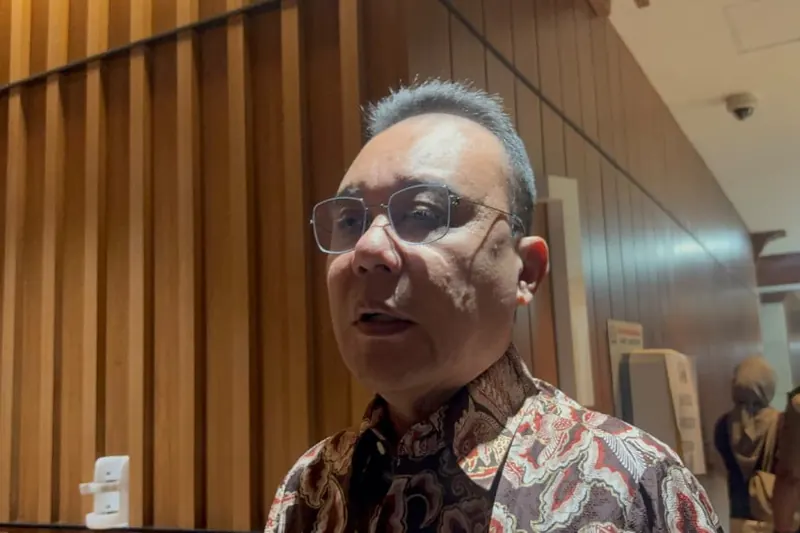
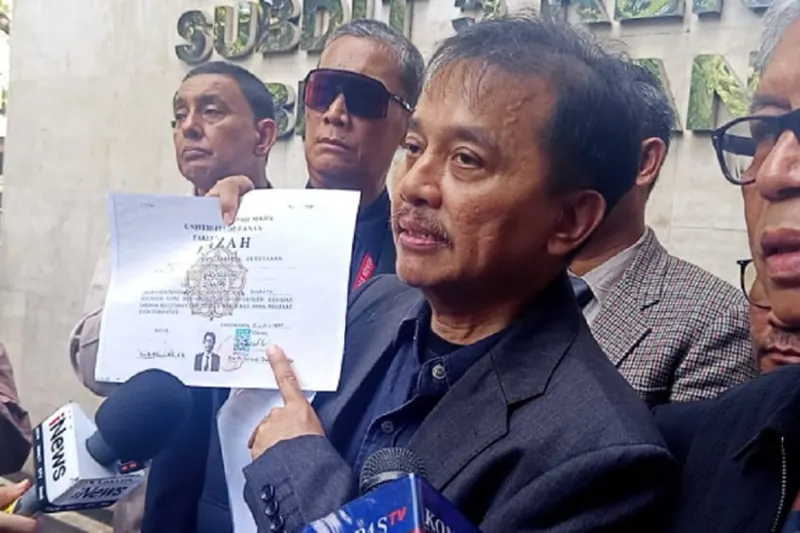
Iwan Sumule, chairman of the Pro Democracy Activists Network (Prodem) assembly, said that Sufmi Dasco Ahmad, deputy speaker of the House of Representatives (DPR RI) and day-to-day chairman of the Gerindra Party, is a civilian figure worth considering as vice president to accompany President Prabowo. In a SINDOnews report on 17 November 2026, the assessment emerged as Dasco's name surfaced in speculation over vice presidential candidates.
Iwan said Dasco had the capacity to safeguard the mandate of the 1998 Reform era. The former reform activist said Dasco could mediate between the interests of the people and the state while seeking solutions to national challenges.
According to Iwan, support for Dasco came not only from within the Gerindra Party but also from other political parties and civil society groups. He said Dasco's record in political communication was important for maintaining government stability.
The vice presidency in Indonesia's presidential system
Indonesia uses a presidential system. The president and vice president are elected by voters as a single ticket, not chosen through separate parliamentary votes after the election. As a result, the vice presidential candidate is usually part of a party or coalition's political calculation well in advance. The role is not merely symbolic; the vice president is also the successor to the head of state if the president is permanently unable to serve. In practice, the selection of a vice president is also subject to age, citizenship and other legal requirements. Those rules mean the search for a vice presidential figure is not only about popularity.
The vice president's role also includes assisting the president in running the government. In Indonesian political practice, vice presidential figures are often chosen to balance electoral bases, add legitimacy or reduce friction between parties. That makes communication skills, closeness to political elites and a record in state institutions important considerations, especially when a government faces legislative and budget oversight agendas in the DPR. The vice president also often acts as a bridge when relations between the president and parliament become tense.
The deputy speaker of the DPR is a strategic position in the legislature. The holder is involved in the DPR's committee apparatus, scheduling discussions of bills and political communication among parliamentary leadership, the government and party factions. When a deputy speaker is mentioned in the vice presidential race, the public usually assesses whether he can keep executive-legislative relations stable. The term civilian leadership in Indonesian political discourse is also often used to highlight figures from political and governmental backgrounds rather than military ones. The position also requires the ability to maintain political rhythm so government programs are not stalled.
Since the 1998 Reform era, Indonesian political discourse has often stressed civilian supremacy. The aim is to strengthen civilian control over state policy, expand public participation and keep democratic institutions functioning. In that context, describing a figure as a representation of civilian leadership means treating experience in parliament, party politics and political mediation as key assets. But such assessments remain subjective, because the public also pays attention to policy capacity, integrity and the ability to manage differences.
What it means for the public and policy
For readers, speculation about vice presidential candidates does not automatically change the prices of basic necessities, jobs or health services. The impact is usually indirect. If political elites are busy negotiating positions, legislative work and budget oversight can slow down. Conversely, if interparty communication runs smoothly, discussions of policies touching state spending, subsidies and social programs can become more stable. Coverage of candidate speculation can also absorb media and public attention, risking that more technical policy issues such as education, employment or health are pushed aside.
What matters is whether vice presidential speculation is accompanied by explanations of programs, track records and work plans. The public has the right to assess not only names but also capacity. In the future, this dynamic could shape coalition direction, cabinet composition and economic and political policy priorities. Readers should therefore wait for official statements from parties or coalitions rather than mere speculation. In that way, democratic quality is measured by how openly parties explain candidate criteria and the programs they bring.
Political stability is also linked to market perceptions. Investors tend to monitor certainty in fiscal policy, infrastructure projects and the business climate. If a change in national leadership is discussed in an orderly way, the public can more easily predict budget direction, which ultimately affects jobs, prices and public services. Prolonged uncertainty, for example, can hold back investment decisions that affect job absorption.
Related coverage: Prabowo asked to consider leaders of the Regional Representative Council (DPD) as vice president; Prabowo to determine the vice presidential replacement for Gibran after the Asia-Pacific Economic Cooperation (APEC) forum; the People's Consultative Assembly (MPR) schedules a vice presidential election to replace Gibran on 2 December 2026.