Prabowo Urged to Consider Regional Council Leadership for Vice President
A political analyst says Prabowo Subianto could strengthen ties between the government and Indonesia's regions by considering a leader of the Regional Representative Council as vice president.
President Prabowo Subianto has yet to submit two vice presidential candidates to the People's Consultative Assembly (MPR), and plans to decide after attending the Asia-Pacific Economic Cooperation (APEC) summit in Shenzhen, China, on 18–19 November 2026, SINDOnews reported.
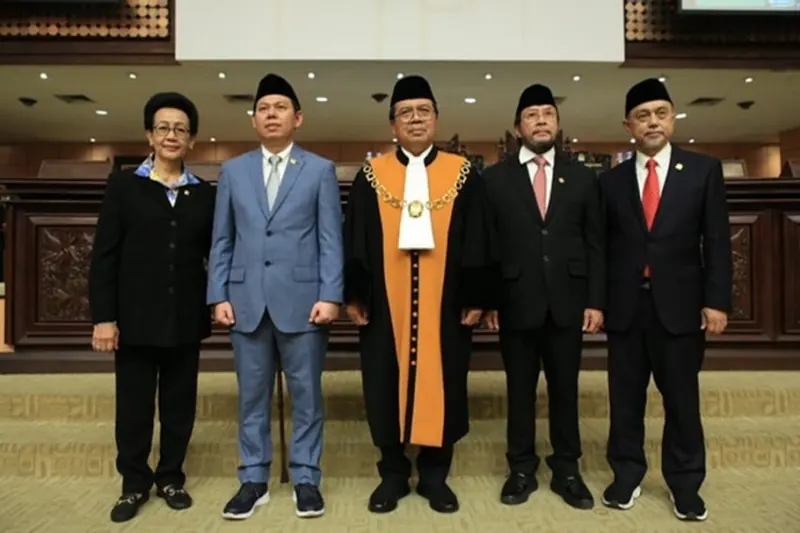
Sunardi Panjaitan, a political analyst at Arah Institute, said the selection of Gibran Rakabuming Raka's replacement was an opportunity to strengthen ties between the center and the regions. He urged Prabowo to consider a leader of the Regional Representative Council (DPD) as a vice presidential candidate.
According to Sunardi, the DPD is a state institution representing the interests of Indonesia's 38 provinces, making its leadership worthy of consideration. “It is worth President Prabowo considering a vice president from the official representation of the regions,” Sunardi told SINDOnews.
The DPD's role in Indonesia's constitutional system
The proposal that a DPD leader be considered for vice president does not come out of nowhere. In Indonesia's constitutional structure, the DPD represents regional interests, while the president and vice president are elected nationally. As a result, the vice presidential position is often read as a space to balance national political representation with regional interests, a balance considered important in a vast archipelagic state.
The DPD's functions are tied to the regions. It can submit bills to the House of Representatives (DPR) on regional autonomy, center-regional relations, the creation, expansion or merger of regions, natural resource management, and fiscal balance between the center and the regions. The council is also a component of the MPR. With that composition, the DPD can act as a bridge between regional aspirations and national politics.
When the vice presidency becomes vacant, the constitution allows the president to propose two names to the MPR, which then chooses one. That rule makes the president's decision more than a private matter or party bargaining; it is also read by the public as a signal of the government's direction. The chosen name can shape perceptions of who is seen as able to win over the regions, maintain political stability and help the president carry out programs. The process also requires public explanation of the reasons for the choice, so the decision is not judged only on political closeness and capacity.
If DPD leaders enter the race, the discussion can be read as an attempt to strengthen regional legitimacy in the executive. But the choice remains with the president and the political considerations of the MPR. The public will examine candidates' track records, coordination capacity and ability to work with the DPR, local governments and communities. In that context, Sunardi's proposal is not only about a name, but also about the future direction of center-regional relations. DPD leaders are also elected by and from DPD members, so they are seen as directly understanding regional dynamics. If the president considers such a name, the public can judge whether regional legislative experience is an executive asset or merely a symbol of representation.
What the vice presidential race means for the regions
For Indonesian readers, the vice presidential race is not only about who will sit in the number two seat. The position matters for policy coordination, especially when national programs must be implemented across provinces and regencies or cities. A vice president close to the regions can help the president understand administrative obstacles, differences in fiscal capacity, and infrastructure and public service needs in areas far from Jakarta.
If the idea of a DPD leader becoming vice president gains traction, the public can expect debate over whether regional representation would really change how policies are made. The impact could be visible in budget priorities, the speed of regional permits, efforts to reduce interregional inequality, and political communication between the central and local governments. Readers should also watch whether the chosen candidate has networks in the regions, not just national popularity, because that will shape regional expectations.
Two things will matter going forward. First, whether the president submits two names according to the schedule he has announced. Second, whether the MPR processes the selection openly and in line with the constitution. From that, the public can judge whether strengthening center-regional ties is only rhetoric or is truly reflected in the government's composition.
Related coverage
Prabowo is expected to decide on a vice presidential replacement for Gibran after the APEC summit; the DPR is to process a motion invoking its right to express opinion (Hak Menyatakan Pendapat, or HMP) to impeach Vice President Gibran; and the MPR has scheduled the election of Gibran's replacement for 2 December 2026.