Prabowo to Choose Gibran’s Vice-Presidential Replacement After APEC Summit
President Prabowo Subianto says he will decide on a replacement vice president for Gibran Rakabuming Raka after the 33rd APEC summit in Shenzhen, China, according to SINDOnews.
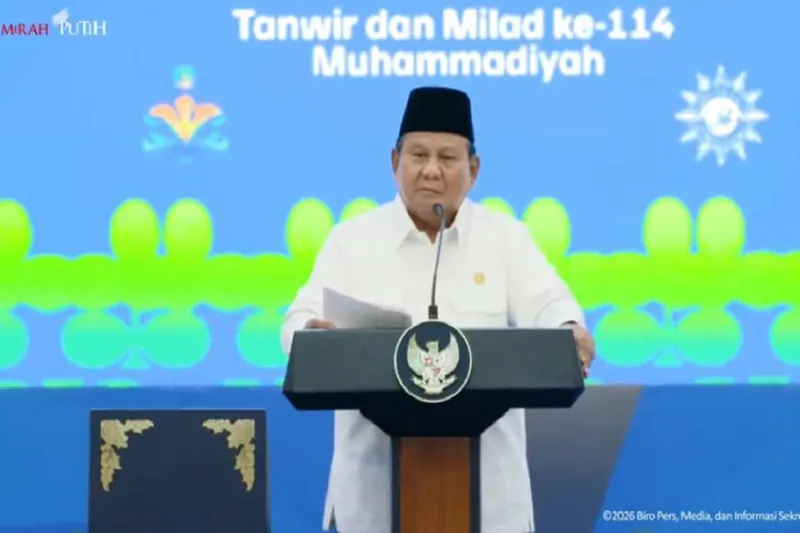
Indonesian President Prabowo Subianto has said he will decide on a replacement vice president for Gibran Rakabuming Raka after attending the 33rd Asia-Pacific Economic Cooperation (APEC) summit in Shenzhen, China. He made the statement in Palu on Saturday, 14 November 2026, as reported by SINDOnews.
Speaking at a national leadership conference (Tanwir) and the 114th anniversary of the Islamic organisation Muhammadiyah, Prabowo said his foreign agenda meant he had not yet been able to choose his vice-presidential partner. He said he would have to look for a vice-presidential replacement after returning from Manila and Shenzhen.
“I must receive a whisper from the Almighty,” Prabowo said, as quoted by SINDOnews.
Constitutional Mechanism for Filling the Vice-Presidency
In Indonesia’s constitutional system, the vice presidency is not merely a ceremonial post. The 1945 Constitution says the vice president assists the president in running the government. If the vice-presidential office becomes vacant because of resignation, death or dismissal, the president must submit two candidates to the People’s Consultative Assembly (MPR), a body comprising members of the House of Representatives (DPR) and the Regional Representative Council (DPD), for election within two months. The MPR then convenes to choose one of them. The vacancy is not filled by the president alone; parliament takes part in the decision. Under this rule, the MPR closes the vacancy rather than simply recording the president’s choice.
The mechanism means parliamentary politics also shape the outcome. A vice-presidential candidate generally must be acceptable to the coalition controlling the MPR, or at least not trigger a deadlock. Because MPR members come from the DPR and DPD, the composition of factions and regional groups becomes decisive. In practice, a president tends to choose a candidate who maintains a balance among parties, regions and support bases. The constitution, however, does not require the candidate to come from a particular party. The DPD, which represents the regions, can act as a counterweight, especially if a candidate is seen as too tilted toward one political group.
The process also differs from the election of the president and vice president. Since amendments to the 1945 Constitution, candidate pairs are submitted by parties or party coalitions that meet certain requirements, then chosen by voters. The MPR can elect a vice president from two candidates proposed by the president, and can elect both a president and a vice president if both are permanently incapacitated at the same time. Replacing a vice president during a term therefore tests Indonesia’s checks and balances, while showing that parliament still has a strategic political function even though it no longer routinely elects the head of state. The public can judge whether the system works as designed under the constitution or becomes a closed arena for elite negotiation. The process also requires the president to be accountable for the candidates he puts forward.
Filling the vice presidency mid-term also carries a dimension of political ethics. The names proposed will be assessed by MPR members not only for party support but also for capacity and constitutional track record. If the process drags on, the public may lose certainty about who would step in for the president during a temporary incapacity. In normal circumstances, citizens do not elect a vice president, but they are entitled to an open explanation of why the post is being replaced and why a candidate is fit. Speed and transparency therefore become important measures of constitutional practice.
What the Public Should Watch
For readers in Indonesia, replacing the vice president does not directly change prices, salaries or public services. The post matters because the vice president assists the president in governing and can take over if the president is incapacitated. Whoever fills the role can therefore affect cabinet coordination, the handling of social issues, and the government’s relations with regions and parliament. The public is also entitled to know whether the appointment process is meeting deadlines, is open, and is not creating new questions.
Key questions are whether the president submits a name that can win majority support in the MPR. If parliamentary politics run smoothly, the vacancy can be filled quickly without disrupting the government’s agenda. But if a candidate faces rejection, or party interests pull in different directions, the public may face prolonged uncertainty. A delay could also affect the government’s image among investors and international partners, though it would not automatically move domestic market prices. Honest political communication from the government and parties is therefore important to damp speculation.
Indirect effects can also be felt on policies waiting for a presidential decision, such as social assistance programmes, infrastructure, or political messaging ahead of national agendas that require full government legitimacy. Readers should watch three things: the candidates put forward, the positions of MPR factions, and whether the election session takes place within the constitutional deadline. If those three elements are clear, the public can judge whether the vice-presidential replacement is a healthy constitutional process or merely an elite compromise. That scrutiny matters because the MPR’s decision can shape the face of the government until the end of the term.