PKS says Gibran should resign, parliament can use right to express opinion
Prosperous Justice Party president Almuzzammil Yusuf said Vice President Gibran Rakabuming Raka should resign, adding that the House of Representatives may need to exercise its right to express opinion if he does not.

Almuzzammil Yusuf, president of the Prosperous Justice Party (PKS), said Vice President Gibran Rakabuming Raka should resign from his post. If he does not, the House of Representatives (DPR) would need to exercise its constitutional right to express opinion (Hak Menyatakan Pendapat, or HMP), according to SINDOnews on Tuesday, 10 November 2026, in Jakarta.
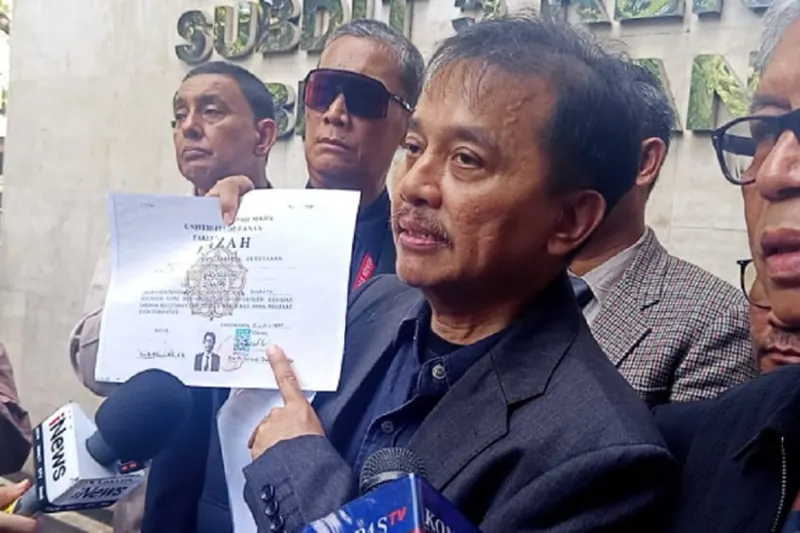
He said the step was relevant after rulings by the Constitutional Court (Mahkamah Konstitusi) and the Supreme Court (Mahkamah Agung) concerning Gibran's diploma, as reported by SINDOnews. He stressed that PKS could not act alone and needed to build understanding across parliamentary factions so that the process would be open, based on law and safeguarding the national interest.
He also emphasized that the DPR's rights must be used collectively through institutional mechanisms, not by one party alone, so that public aspirations could be discussed openly and responsibly.
The report did not include a response from Gibran or the presidential palace.
How the right to express opinion works
The right to express opinion is one of the DPR's constitutional rights, alongside the right to interpellation and the right of inquiry. In parliamentary practice, it is usually used to declare a political stance on government policy or important events considered to have broad impact. Unlike the right to interpellation, which focuses on questions to the government, the HMP is closer to a collective conclusion of the representative body after an issue has been discussed through internal mechanisms. The process is designed to keep political stances within constitutional channels.
For questions about removing a president or vice president, the constitution places the DPR as the institution that can submit a proposal to the People's Consultative Assembly (MPR). The process is not automatic: the proposal must pass political and legal considerations, and it may involve the Constitutional Court to examine alleged violations that form the basis of the proposal. Therefore, the HMP is not a verdict, but a statement of institutional position that can open space for constitutional follow-up.
The PKS statement on Gibran comes amid a sensitive context because the vice presidency is not merely an administrative post. The vice president is part of the executive branch, elected as one package with the president, and has a constitutional role in government. As a result, calls for resignation from a parliamentary party are usually read as political pressure rather than a single legal step that can directly change the status of the office.
In parliament, the success of the DPR's rights depends heavily on the composition of factions and cross-party agreement. One party can raise an idea, but serious discussion usually requires majority support in the deliberative body or in a plenary session. In a multiparty system, an issue like this also tests relations between the governing coalition and opposition parties, because every step will be assessed on its legal basis, political motive and impact on the stability of state institutions.
Impact on political stability
The issue matters in Indonesia because the vice presidency is connected to the government's agenda, policy coordination and the image of state legitimacy. If debate over the HMP stops at a political statement, the impact will be mostly in the public space: pressure on parties, questions about coalition loyalty and debate on social media. But if the proposal is genuinely discussed across factions, the parliamentary agenda can shift from routine legislation and oversight to identity politics or a legitimacy conflict.
The practical impact also touches public trust in state institutions. People do not assess only one individual; they also watch whether constitutional mechanisms are carried out with evidence, procedure and equality before the law. Therefore, what needs to be watched going forward is whether PKS and other factions submit official documents, whether the DPR leadership processes them, and whether there is space for those named to provide clarification. Without procedural clarity, HMP discourse risks becoming political pressure that clouds the situation without providing a final legal answer.
For the public, the most important signal is whether this process will proceed in an orderly manner or instead trigger polarization. A strong parliament not only dares to express opinion but also ensures that every step has a legal basis, evidence and space for defense for those named. That way, readers can judge the issue not by who shouts the loudest, but by whether state institutions treat high office fairly and in line with the constitution. Transparency, accountability and space for clarification are key. Without them, public trust can easily decline.
Clarification from relevant parties is also important so the public does not judge from one side.