PKS Lawmaker Raises 'Mas Gibran Step Down' Poster After DPR Plenary as Party Pushes Right to State Opinion
A lawmaker from the Prosperous Justice Party (PKS) raised a poster reading 'Mas Gibran step down or be made to step down' after a plenary session of the House of Representatives (DPR) on Tuesday, 10 November.
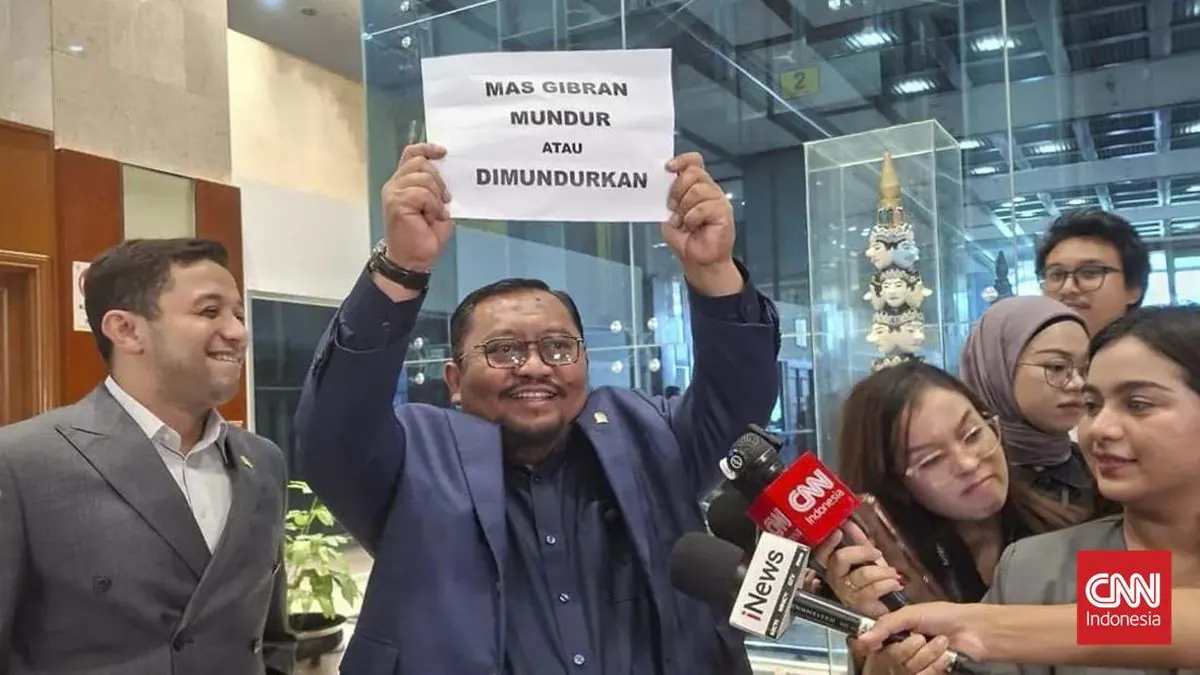
Yanuar Arif Wibowo, a PKS lawmaker in Commission XIII of the House of Representatives (DPR), raised a poster reading 'Mas Gibran step down or be made to step down' at the Parliament Complex in Jakarta on Tuesday, 10 November, after a plenary session had ended. The action referred to Vice President Gibran Rakabuming Raka, addressed with the Indonesian honorific Mas, after rulings by the Constitutional Court (MK) and the Supreme Court (MA) concerning diplomas as a requirement for candidacy in the 2024 presidential election.
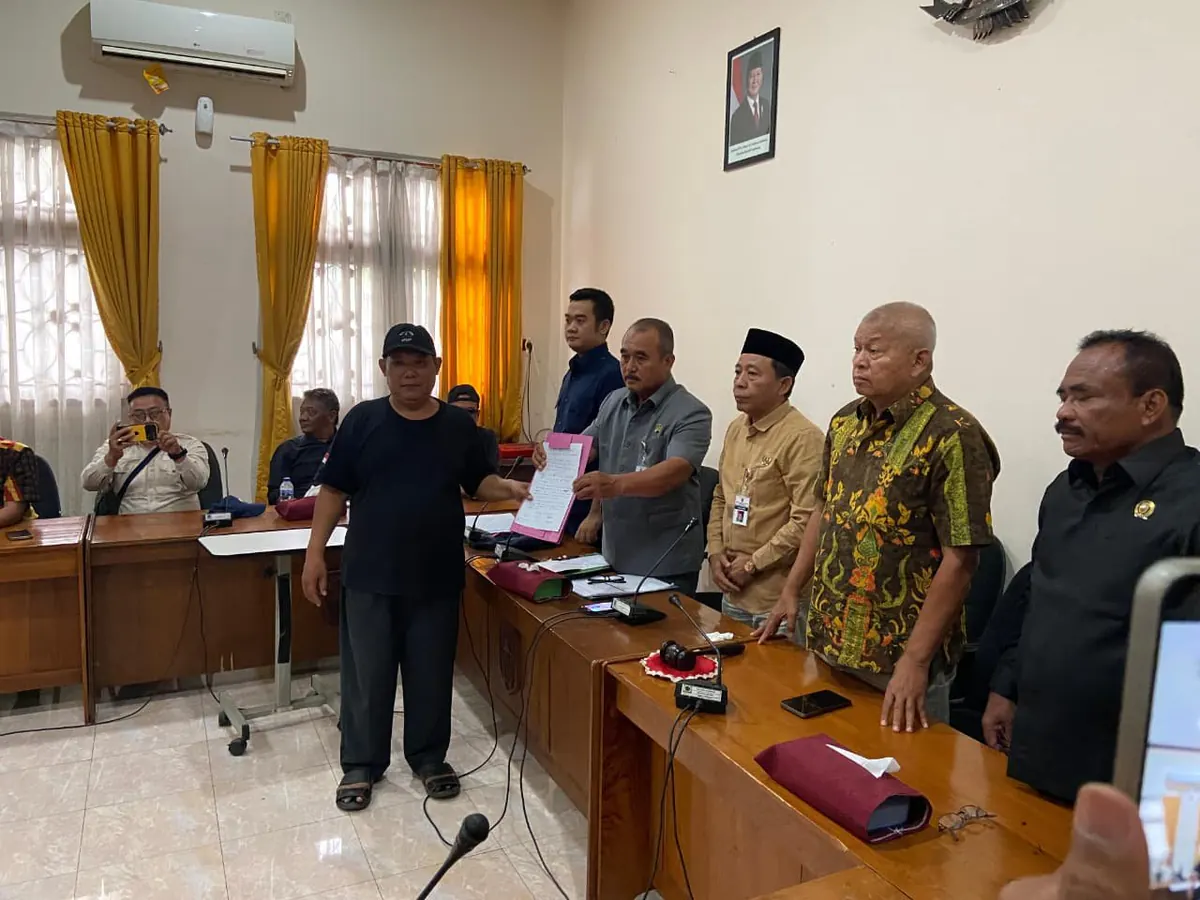
According to CNN Indonesia, Yanuar said he had not been given a chance to interrupt the plenary session. He described his action as a public aspiration and a reflection of impeachment discourse growing in the public sphere. Yanuar said he had signed a document invoking the right to state opinion (HMP) as the 12th member from the PKS faction.
He said the total number of signatories to the HMP document had reached 25 members, the minimum threshold set by DPR rules of procedure. Yanuar assessed the proposal as valid and said it was now awaiting approval from the DPR leadership. Besides PKS, he said other parties had also signed the document.
Indonesian Democratic Party of Struggle (PDIP) Secretary General Hasto Kristiyanto said his party had accepted a proposal from community groups to file an HMP because it was considered the most rational choice. Meanwhile, DPR member from the Golkar faction Ahmad Doli Kurnia proposed using the HMP instead of the right to interpellation or the right of investigation, arguing that the MA and MK rulings had produced clear legal facts.
Impeachment process for vice president under the constitution
Indonesia recognizes an impeachment mechanism for the president and vice president under Article 7B of the amended 1945 Constitution. The process begins with a DPR initiative that must be proposed by at least one-third of its members. The DPR then forms a special committee to investigate and conclude whether there is a legal violation, betrayal of the state, corruption, bribery, a serious crime, disgraceful conduct, or a failure to continue meeting the requirements to serve as president or vice president.
If the DPR concludes that a violation has occurred, an impeachment proposal is sent to the MK for review. The MK has 90 days to decide. After that, the People's Consultative Assembly (MPR) convenes to decide on dismissal. The mechanism has not been fully tested under Article 7B, although the MPR once dismissed a president during the Reformasi transition. The process is long and requires very large political consensus.
The HMP is one of the constitutional rights of DPR members regulated in the law governing the MPR, DPR, Regional Representative Council (DPD) and regional legislatures (UU MD3). It differs from the right to interpellation, which means asking questions, and the right of investigation, which means conducting an inquiry. The HMP is usually used to state the DPR's political position on a policy or event, including issues that already have court rulings.
The PKS faction has often positioned itself as a critical opposition in parliament. The party has several times used symbolic actions at the Parliament Complex to highlight issues it considers to have no space in the official agenda. Yanuar's action with a sheet of paper bearing a short message followed a similar pattern once used by lawmakers from various factions.
What impeachment discourse means for political stability
For the Indonesian public, the discourse on impeaching the vice president is not merely parliamentary drama. The constitutional process could affect government stability, especially in the final years of a term that should end in 2029. Political uncertainty could potentially affect the investment climate and market confidence in the continuity of the government's economic policy.
The public needs to understand that symbolic action in parliament is different from a legal process. The poster raised by Yanuar is a political expression by a lawmaker, not a court ruling. Until an official mechanism is underway, Gibran remains the legitimate vice president. Readers need to watch developments at the DPR leadership and MK levels before drawing final conclusions about the political direction.
The diploma and candidacy requirement issue also touches public trust in the integrity of the election process. Court rulings considered controversial can trigger broader questions about legal independence. In this context, the DPR action becomes one formal channel for voicing dissatisfaction without taking to the streets.
Related news
- Giring, Raja Juli, and Isyana Resign from PSI
- Prabowo Scheduled to Announce National Hero Title Recipients Today
- Yusril: Government Scrutinizes Alleged Eavesdropping on President Prabowo