Defense Minister Sjafrie declines to comment on Sugiono vice-presidential speculation
Defense Minister Sjafrie Sjamsoeddin has declined to answer questions about reports that he supports Human Development and Culture Affairs Coordinating Minister and Gerindra Party Secretary-General Sugiono as vice president.
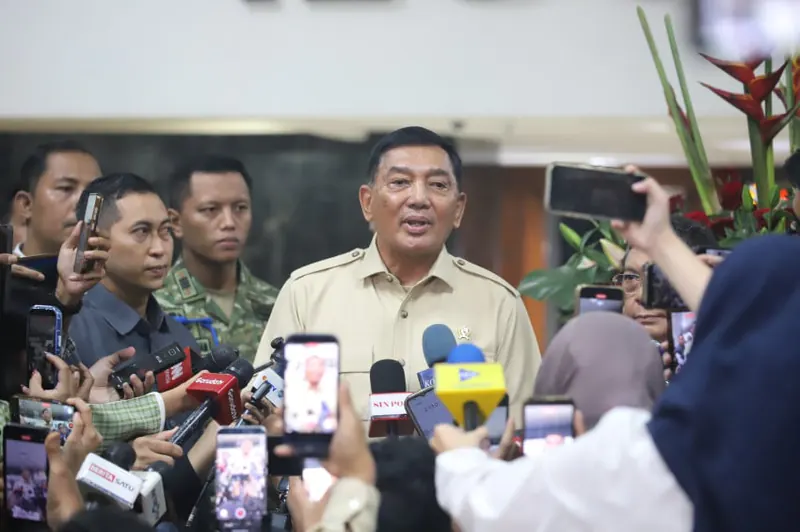
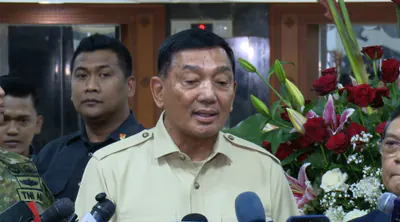
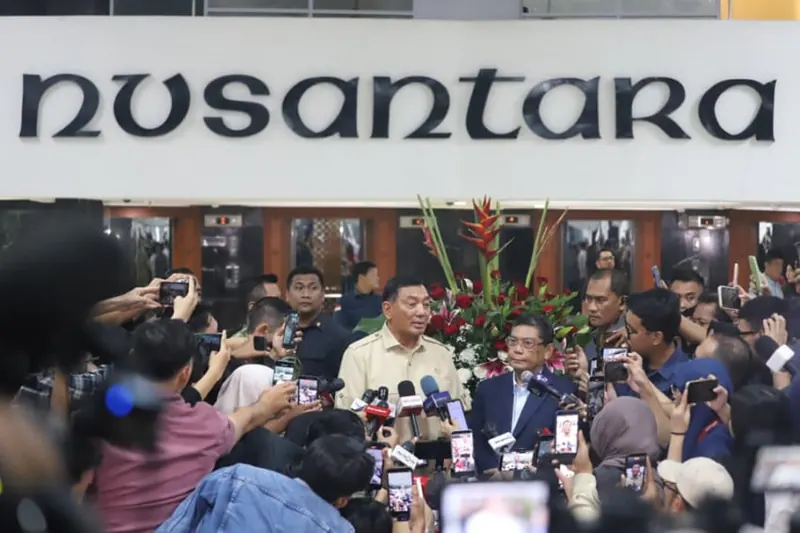
Defense Minister Sjafrie Sjamsoeddin declined to answer questions about reports that he supports Human Development and Culture Affairs Coordinating Minister and Gerindra Party Secretary-General Sugiono as vice president, when he was met at the parliamentary complex in Senayan, Jakarta, on Thursday, 19 November 2026.
According to a SINDOnews report, Sjafrie said he did not have the standing to discuss politics, particularly vice-presidential candidates, and asked the media not to ask about matters outside his duties and functions.
"I have already said that I am a president's aide," Sjafrie said.
He also said he did not discuss vice-presidential candidates when he met Deputy Speaker of the House of Representatives (DPR) Sufmi Dasco Ahmad at Senayan. Dasco's name entered vice-presidential speculation after Gibran Rakabuming Raka stepped down from the vice presidency on 12 November 2026.
The political mechanics behind vice-presidential speculation
The vice presidency in Indonesia is not a position that can be filled by anyone without a mechanism. In a presidential system, presidential and vice-presidential candidates are proposed by a party or coalition and then elected by the public as a single package. Therefore, the emergence of a vice-presidential candidate's name is usually read as a coalition signal rather than a matter of personal preference. The term vice-presidential speculation should also be read as a space for public discussion, not an official list approved by state institutions. The public needs to see whether there is a decree, an official forum, or a statement from party leadership.
When the vice-presidential seat falls vacant, the constitution sets out a narrower route than during a general election. The president proposes two candidates, and the DPR then chooses one of them. This rule means that names mentioned publicly must have enough political support in parliament, not merely closeness to the head of state. While that process has not begun, all names mentioned by the media remain speculation. Parties with a large number of seats in the DPR will find it easier to push a name forward.
Names that emerge from cabinet circles are usually read in two ways. On one hand, government experience is seen as providing technical grounding and loyalty. On the other hand, a coordinating minister or party secretary-general role can make a person appear close to the centre of power. These perceptions make support issues among officials easy to turn into speculation. If a minister says they support a particular figure, the statement can be interpreted as official government support, even though the cabinet is not a party vehicle. Therefore, officials need to separate administrative responsibility from political ambition.
In Indonesian politics, officials who speak about vice-presidential candidates are often seen as sending a message to a party, a coalition, or voters. For that reason, many ministers choose to keep their distance from such talk. Restraint is not only a matter of bureaucratic ethics; it is also a way to avoid accusations of taking sides before an official decision is made. In this way, officials keep their working environment focused on assigned tasks. If all parties exercise restraint, public discussion can remain healthy.
What it means for a public watching politics
For readers, this issue does not directly touch the prices of basic goods, wages, or health services. But vice-presidential speculation can change the direction of policy if the candidate is later elected. The coalition that takes shape today often determines budget priorities, ministerial positions, and the government's communication style in the next period. A change in the vice presidency can also affect relations between the central and regional governments, especially in social programs. Citizens may also feel the impact on bureaucratic speed and inter-agency coordination. Social assistance programs and the distribution of regional budgets can also change.
What the public should watch for is clarity about the mechanism and evidence of official support. As long as a party or coalition has not decided, citizens should treat circulating names as possibilities, not certainties. That attitude helps readers avoid being easily provoked by snippets of officials' statements. This is important ahead of an official decision. Readers should also wait for official statements from parties, the DPR, or the president. Names mentioned without official documents should not be used as the basis for assessment.
In the short term, the most noticeable impact is on news-consumption habits. Vice-presidential speculation leads the public to search more often for officials' statements, read rumors, and compare names. Therefore, media and readers need to distinguish official information, personal opinion, and political speculation. Without that distinction, political issues can become noisy. If the public is accustomed to checking sources, politics does not become merely a spectacle. It also keeps the space for discussion grounded. That way, readers can filter out unclear political news.
Related news
- Prabowo asked to consider leaders of the Regional Representative Council (DPD) as vice president
- People's Consultative Assembly (MPR) schedules vice-presidential election to replace Gibran on 2 December 2026
- Fahira Idris supports Sufmi Dasco Ahmad as vice president