Defense Minister Sjafrie Meets House of Representatives Leaders to Discuss State Defense Law Revision
Defense Minister Sjafrie Sjamsoeddin met House of Representatives leaders to discuss refining the State Defense Law, not the issue of a vice presidential candidate to replace Gibran Rakabuming Raka.
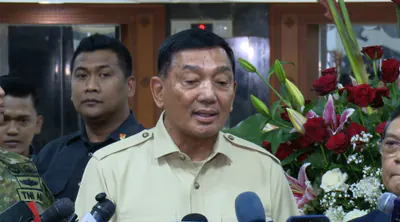
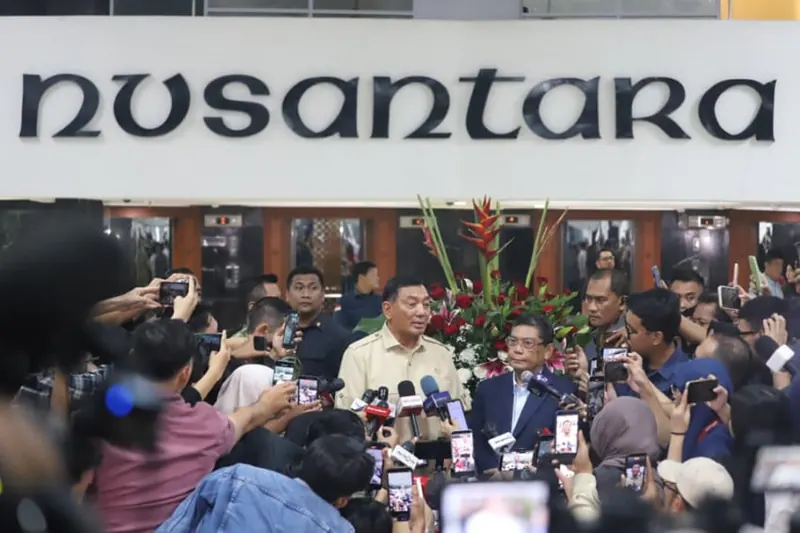
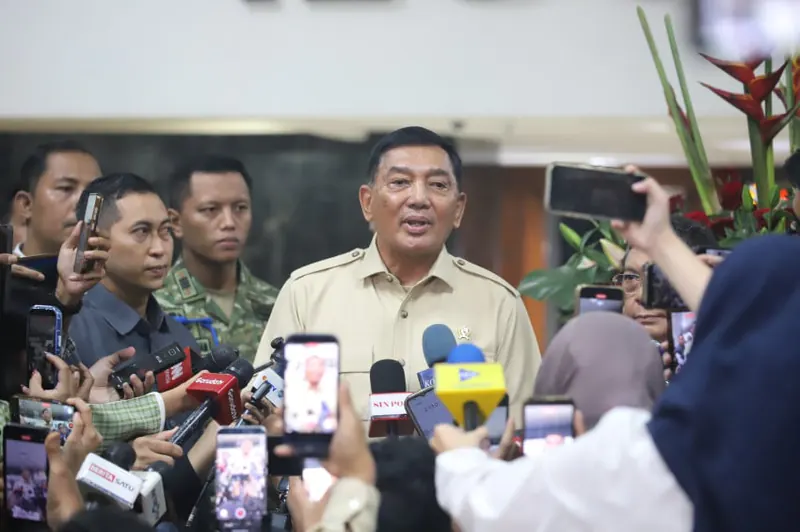
Defense Minister Sjafrie Sjamsoeddin met Deputy Speaker of the House of Representatives (DPR) Sufmi Dasco Ahmad and Utut Adianto, chairman of the DPR's Commission I, which oversees defense, at the parliamentary complex in Senayan, Jakarta, on Thursday, 19 November 2026, to discuss defense-sector communication and plans to refine Law No. 3 of 2002 on State Defense. According to state television outlet TVRI News, the meeting confirmed an official agenda separate from the issue of a vice presidential candidate to replace Gibran Rakabuming Raka.
Sjafrie said the meeting was held in his capacity as defense minister and executive chair of the National Defense Council. He said coordination with DPR leadership was part of his duties and functions in defense, including consultation with Commission I.
He said state defense regulations needed to be reviewed because they had not been refined for a long time. Sjafrie also compared the situation with the law on the Indonesian National Armed Forces (TNI), which has undergone revision.
Asked about support for Sugiono as a vice presidential candidate to replace Gibran, Sjafrie said, “There was no discussion on that matter.”
Keeping Defense Regulations Relevant
The State Defense Law is one of the main pillars of Indonesia's defense policy. The law provides a framework for managing state defense, from policy formulation and interagency coordination to relations between civilian institutions and the armed forces. Because it was drafted in the early reform era, the regulation emerged from the need to reorganize defense after the New Order, when the military's role in public life and government came under scrutiny.
In Indonesia's constitutional system, the government cannot refine a law on its own. It must bring a policy draft to the DPR, especially the commission that oversees defense, for discussion, scrutiny and approval. This is why the position of the chairman of Commission I matters: the commission carries out legislative, budget and oversight functions in the defense sector. The defense minister's meeting with DPR leaders can therefore be read as part of an early process to keep political communication intact before technical discussions move into the House's working bodies.
The comparison with the revision of the TNI law is also relevant. The TNI, as the country's main defense force, has its own law, and updating military regulations usually raises broader questions: whether state defense needs to be reorganized to match modern threats, defense industry needs and the principle of civilian supremacy. The issues are not only about provisions, but also about balancing operational effectiveness, public accountability and citizens' rights.
The agenda to refine defense regulations is also linked to coordination institutions. In general, defense coordination forums are meant to align policies across sectors, including strategic planning, resource management and responses to threats that cross regions. If the defense law is updated, that coordination role could be strengthened so policies do not run separately among agencies. In other words, updating defense law touches the architecture of national security as a whole.
Implications for Budget and Public Security
For readers in Indonesia, revising a defense law may seem far from daily life. But the defense sector is directly tied to public money, government spending priorities and a sense of security. Each change to the legal framework can affect how the government allocates the defense budget, buys major weapons systems, develops domestic industry and regulates the involvement of reserve components in emergencies. Changes can also affect readiness standards, training and personnel governance. The impact is not immediate, but it is usually felt through budget policies discussed each year.
The refinement process is also a test for democratic oversight. The public needs to see whether discussions are open, involve experts and keep the TNI and defense apparatus under civilian control. If a revision is discussed quickly without public explanation, trust in defense policy can erode. Conversely, if communication between the government and the DPR is orderly, the public can gain certainty that defense is being strengthened without sacrificing accountability.
In the short term, the defense minister's meeting with DPR leaders is better read as a signal of coordination, not a final decision. What to watch next is whether the discussions enter the national legislation program, who is included in the drafting team, and which provisions will be changed and monitored by the public. From there, the public can assess whether the update to defense law truly answers Indonesia's current security needs.
Related news
- Indonesia and UAE Develop AI-Based Mangrove Restoration
- Madiun Immigration Oversees 974 Foreigners, Malaysian Islamic Boarding School Students Most Numerous
- Ministry of Agriculture Reaffirms Palm Oil Partnerships for National Productivity