Defence Minister Sjafrie Denies Plan to Replace TNI Commander
Defence Minister Sjafrie Sjamsoeddin says there is no government plan to replace Indonesian National Armed Forces (TNI) Commander General Agus Subiyanto, responding to speculation about a presidential letter to the House of Representatives (DPR).
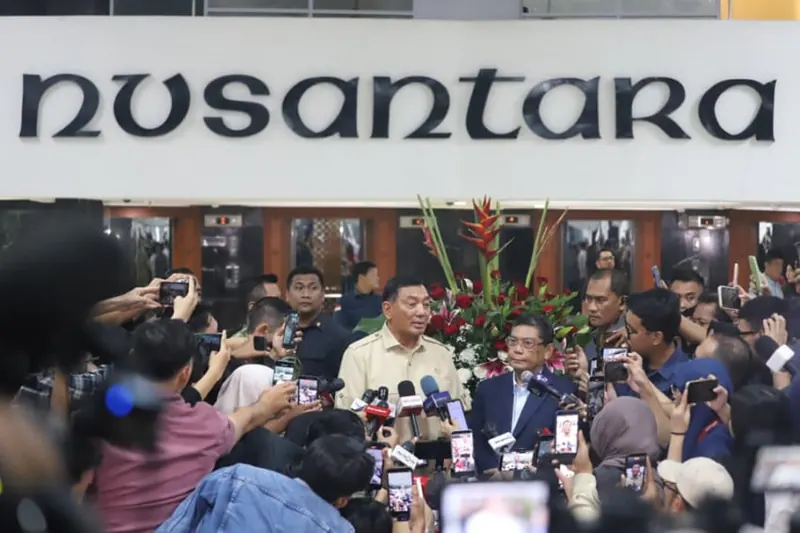
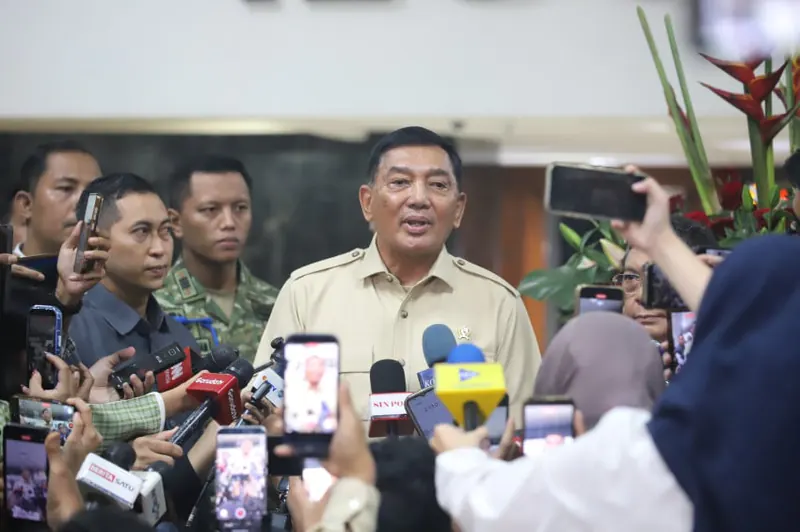
Defence Minister Sjafrie Sjamsoeddin said the government had no plan to replace Indonesian National Armed Forces (TNI) Commander General Agus Subiyanto, as reported by SINDOnews, after meeting Deputy Speaker of the House of Representatives (DPR) Sufmi Dasco Ahmad at the parliamentary complex in Senayan, Jakarta, on Thursday, 19 November 2026. The statement was made in response to speculation about a presidential letter, or Surpres, on replacing the commander.
"There is none," Sjafrie said. He added that all defence portfolios were running according to their respective duties. When asked again about whether a Surpres existed, he remained silent. The issue emerged after the chief of the Indonesian National Police (Polri), General Listyo Sigit Prabowo, was replaced by General Suyudi Ario Seto on 1 October 2026.
Political process behind the TNI commander role
Replacing the TNI commander is not merely a military personnel move. The commander leads the three service branches and is the main reference point for national defence policy. Any signal of replacement is therefore read as a possible change in security priorities, because a change at the top of the military can affect defence equipment modernisation, force posture and responses to hybrid threats. In Indonesia's constitutional system, the position sits at the intersection of executive authority, legislative consideration and the need to maintain the professionalism of the armed forces. The head of state has the authority to determine military leadership, but the process cannot be separated from the political legitimacy built through parliament.
A presidential letter is the initial marker when the executive wants to bring an issue to the DPR. Without that letter, public discussion usually remains in the realm of speculation. Once the letter is submitted, discussion shifts to formal mechanisms: review, consideration and a political decision that can reshape the national security leadership map. The DPR is usually involved to ensure the process follows constitutional channels, not merely as a test of political strength. The absence of a Surpres therefore keeps the issue in the realm of discourse, while an official letter would move the debate into the constitutional arena.
Rumours of personnel shifts also grow easily when several key security positions change close together. The public tends to read such a sequence as a signal of a new direction, even though each institution has its own internal logic. In parliamentary politics, questions about a Surpres are often a quick way to test whether an issue has a formal basis. Social media speeds up interpretation, but it can also confuse the public when official information is delayed. This is where officials' communication becomes important to calm readings that go beyond the official process.
For the TNI, leadership stability affects operational continuity, personnel management and relations with the civilian government. Changes that are too frequent without a clear basis can raise questions about the consistency of defence policy. For that reason, official statements that close off room for interpretation are often part of efforts to maintain public trust in security institutions. In that context, parliament plays a role in ensuring that leadership changes are not read as unilateral steps without a legal and political basis. That trust matters because the TNI operates in sensitive areas: security operations, disaster response and safeguarding sovereignty.
What the public should watch
For Indonesian readers, the issue has no direct impact on prices, public services or daily work as long as there is no official step. However, the TNI commander's position is linked to the direction of national security, so the public should watch four things. First, whether the government actually sends a presidential letter to the DPR. Second, whether there is an open explanation of the reasons for any replacement, not only denials outside formal processes. Third, whether the DPR carries out its consideration function proportionally. Fourth, whether officials' statements can be followed by verifiable official documents.
The indirect impact lies in public trust in security stability. If a replacement is carried out suddenly without a clear mechanism, the public may question the consistency of defence policy, especially when the country faces threats that require coordination across service branches. Conversely, a well-ordered process strengthens the impression that civilian-military relations are following the rules. If a replacement occurs, the public also needs to see whether defence policy continues to serve the people's needs, such as disaster response, border protection and maritime security.
For now, the defence minister's statement closes the door to speculation that there is an official plan. Nevertheless, readers still need to await developments from the relevant institutions. The defence minister's denial is important as a reassurance, but it is not the end of political oversight. Political security issues often move quickly when one official signal appears, so it is important to distinguish carefully between rumours and decisions.