PKS advances late former Bandung mayor Oded's wife for mayoral election
Siti Muntamah, wife of the late former Bandung mayor Oded M Danial, is being prepared by the Prosperous Justice Party (PKS) as a prospective mayoral candidate.
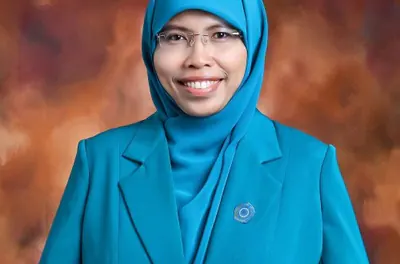
Siti Muntamah, the wife of the late former Bandung mayor Oded M Danial, has declared her readiness to run in the city's election for mayor and deputy mayor, according to a report by Republika. She is among the prospective candidates proposed by the Bandung City branch of the Prosperous Justice Party (PKS), known as DPD PKS Kota Bandung, to the party's central leadership, or DPP PKS.
In remarks quoted by Republika, Siti, widely known as Ummi Oded, said she would fulfil the responsibility of the nomination as best she could. She said she had received many expressions of hope during the legislative election campaign that Bandung would be led by a woman.
Ummi Oded said she would continue programmes she viewed as effective, put transparency and integrity first, and prioritise health, education and the economy. Ahmad Rahmat Purnama, chairman of the Bandung City branch of PKS, said the party had proposed two names to the central leadership and asked them to introduce themselves to voters, adding that the party was aiming for the mayoral post rather than the deputy mayor's post.
Bandung politics and PKS's role
Mayoral elections in Indonesia are part of direct regional head elections, known as pilkada, which choose heads of city-level governments. Bandung, the capital of Jawa Barat province, is an attractive arena for parties because of its large population, dense economic activity and symbolic weight in the province's political map. Candidates there are often tested by urban voters who demand fast public services, livable space and open city management. The city is also an education, tourism and creative-economy hub, requiring consistent spatial planning and transport policies.
PKS is known as a party rooted in Islamic outreach, or dakwah, and cadre-building that is active in major cities. In regional elections, candidate decisions usually move upward from city or regency branches, known as DPD, to provincial branches, known as DPW, and then to the central party leadership, known as DPP. A party can field a candidate pair on its own only if it meets the required share of votes or seats in the local legislative council, known as DPRD, or it must form a coalition. For that reason, a prospective candidate's declaration of readiness should still be read as part of the selection process, not a confirmed election ticket. Parties also need to build local political machines, witness networks and digital communications as young urban voters become more decisive.
The participation of women in regional executive office is also under scrutiny. Legislative election rules encourage female representation on candidate lists, but they do not impose a special quota for regional head candidates. As a result, the emergence of a female candidate is often seen as a chance to broaden representation, while also testing whether voters judge capacity and track record above gender identity. Nominating parties typically calculate the votes of loyal supporters, undecided voters and community networks. Voters, for their part, assess whether a candidate can communicate across groups and keep city government stable.
The family name of a former regional leader can also shape public perception. Recognition through social ties, networks and memories of a previous administration can become an electoral asset. But that asset also demands a concrete programme, because urban voters tend to judge performance through everyday services rather than historical symbols. In a highly educated city, integrity and transparency are frequent benchmarks in public debate. Without them, popularity can fade quickly.
What Bandung voters are weighing
For residents, a city election is not only a change of figurehead but also a decision on budget direction and daily services. The mayor sets local spending priorities together with the DPRD, coordinates transport, manages waste, oversees small business permits and influences the quality of community health centres, known as puskesmas, and schools. Promises on transparency, health, education and the economy therefore need to be tested through measurable programmes rather than slogans. Voters can also monitor whether budget targets and performance indicators are set out from the start.
Traffic congestion, waste, flooding, clean water and jobs also touch everyday routines. Motorists, traders, workers and young families feel the effects of parking policy, public transport, waste collection, drainage and social assistance when they are implemented or neglected. A female candidate may bring an added perspective, but voters still need to assess the capacity to lead a city bureaucracy. Slow policy can directly affect residents' daily cost of living.
The next points to watch are whether this candidacy actually receives a ticket from PKS's central leadership and coalition parties, how programmes are arranged and financed, the support map of other parties and possible candidate pairings. Until the process is final, readers should wait for the official list of candidate pairs and comparable visions and missions.