Kupang City Election Commission Partners with TVRI NTT to Expand Voter Education
The Kupang City KPU and the TVRI Nusa Tenggara Timur station have signed a cooperation agreement to broaden voter education ahead of the 2027 general election stages.
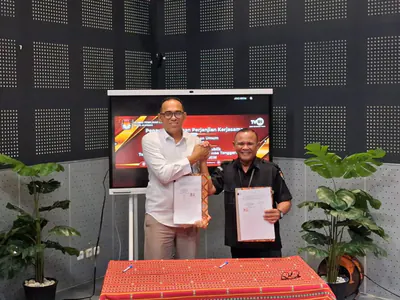
The Kupang City General Elections Commission (KPU) has partnered with the TVRI Nusa Tenggara Timur (NTT) station, part of Indonesia's public broadcaster, to broaden election outreach and voter education. The cooperation was marked by the signing of a cooperation agreement (PKS) at the DBS building of the TVRI NTT station on Wednesday, 18 November 2026.
According to TVRI News, Kupang City KPU Chair Ismael Manoe said TVRI's involvement was an important step to prepare the public for the general election stages planned to begin in mid-2027, if there is no change to the schedule. Ismael said TVRI's wide broadcast reach was the main reason for choosing the partner.
Jefri, head of the public broadcasting institution (LPP) at the TVRI NTT station, said the two institutions shared the same goal of providing information and education to the public, especially on democracy. He stressed that electoral education was important because general elections concern the rights and participation of all citizens.
In its initial phase, the cooperation will be implemented without funding, or on a non-budgeting basis. However, opportunities for collaboration with budget support remain open for upcoming stages of general elections and regional head elections, in accordance with prevailing laws and regulations.
Role of Public Media in Voter Education
TVRI is Indonesia's first public broadcasting institution, on air since 1962, and now reaches almost the entire country through a network of regional stations. As a public broadcasting institution (LPP), TVRI is mandated to provide balanced and educational information, unlike private television stations that depend on advertising. In the electoral context, that position makes TVRI a strategic partner for election organizers, especially in regions where social media penetration is uneven.
In Indonesia's election administration structure, regional KPU offices act as the front line for outreach because they are closest to voters. While the national KPU sets policy, regency and city KPU offices formulate local strategies suited to the characteristics of each area. Regional KPU offices are also responsible for facilitating voters with disabilities and other vulnerable groups, so outreach materials need to be designed in inclusive and accessible language. In NTT, where the population is spread across islands and mainland areas, a public broadcast approach is one realistic option for reaching voters evenly.
Voter education itself covers understanding the right to vote, voting procedures, the schedule of stages, and mechanisms for objecting to election results. In recent election cycles, organizers in many regions have also faced the challenge of hoaxes circulating in closed chat groups. Misinformation about voting dates, voter requirements, or quick count results often causes confusion and lowers public trust in the democratic process. On the other hand, public media have an advantage because their content is overseen by a supervisory board and subject to broadcasting standards, making it harder for systematically misleading narratives to infiltrate.
A non-budgeting cooperation model like the one run by the Kupang City KPU and TVRI NTT is not new. Many regional election organizers use public broadcast slots as educational space without having to allocate a special budget, especially when election stages have not yet entered the campaign period that requires larger information spending. This approach allows organizers to save resources while maintaining the presence of official information in the public space, and builds a collaborative image between state institutions and public-owned media.
Access to Election Information for Voters in the Regions
For voters in Nusa Tenggara Timur, election information delivered through public broadcasts means access to a verifiable reference, especially in areas where residents rely on television as their main source of news. The cooperation has the potential to reduce the information gap between urban voters who are active on social media and voters in regions who depend more on linear broadcasting. In many subdistricts, television remains the most affordable source of information compared with paid internet subscriptions.
The practical impact can be seen in making it easier for residents to know the schedule of voter data updates, polling station locations, and their rights during the voting process. When such information is presented routinely in broadcast programs, the public no longer needs to rely on chain messages that may not be accurate. This is also important to curb abstention, because voters who do not understand the stages tend not to go to polling stations.
Going forward, the success of the cooperation will be determined by the consistency of programs and a joint evaluation mechanism. Without follow-up in the form of a clear broadcast schedule and materials tailored to local needs, the signing of the PKS risks stopping as an administrative ceremony. Voters in Kupang City and surrounding areas need to monitor whether the information they receive truly comes from official election organizers, not from parties claiming to represent state institutions. Active citizen involvement in confirming information through official KPU channels is also the last line of defense against disinformation.