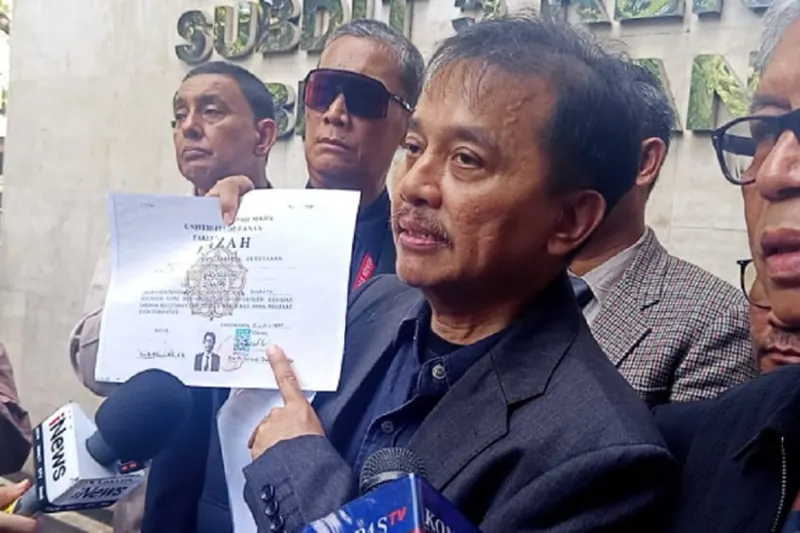
PDIP urges House to use right to express opinion over Gibran's diploma
PDIP Secretary General Hasto Kristiyanto has urged the House of Representatives to use its constitutional right to express opinion over the diploma controversy involving Vice President Gibran Rakabuming Raka.
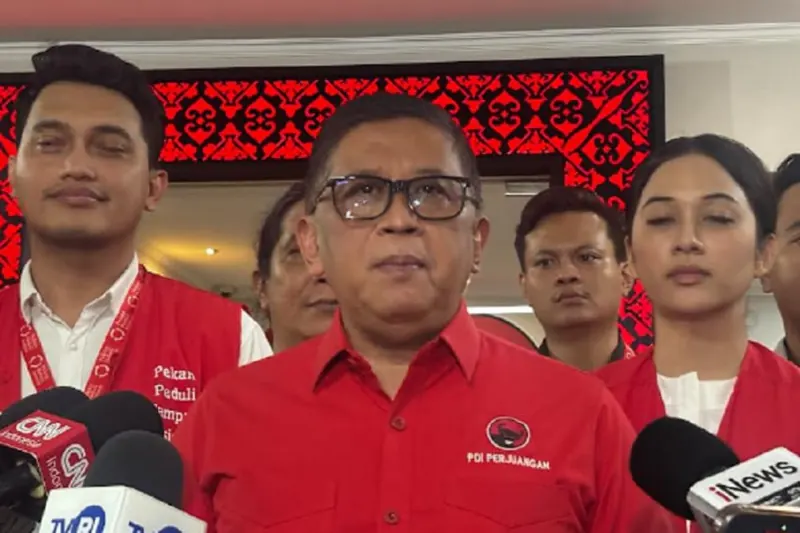
The Indonesian Democratic Party of Struggle (PDIP) has urged the House of Representatives (DPR) to use its right to express opinion, or Hak Menyatakan Pendapat (HMP), to respond to the controversy over Vice President Gibran Rakabuming Raka's diploma. Secretary General Hasto Kristiyanto made the call at the PDIP Party School in South Jakarta on Monday, 9 November 2026, as reported by SINDOnews.
Hasto described HMP as the most rational option after the party absorbed aspirations from academics and civil society and engaged in cross-faction communication. “The right to express opinion is currently the most rational choice,” he said.
He referred to Constitutional Court (Mahkamah Konstitusi, MK) Decision No. 90 of 2023 on the age limit for vice-presidential candidates, the controversy over the minimum high school diploma requirement, and alleged abuse of power. PDIP said the DPR's oversight function must be rooted in the will of the people.
How the right to express opinion works in parliament
The right to express opinion is a constitutional power of the House to state a view on government policy or a legal event deemed important and strategic. Under the law governing the People's Consultative Assembly (MPR), the House of Representatives (DPR), the Regional Representative Council (DPD) and Regional People's Representative Councils (DPRD), it is usually used after findings or an earlier political process, such as a right to investigate (hak angket) or an examination by a parliamentary committee. It differs from the right to interpellation, which only seeks an explanation, and from the right to investigate, which is meant to probe a policy.
In Indonesian politics, HMP is often understood as a gateway to a more serious discussion in the MPR, especially if the House's view concerns alleged legal violations or eligibility requirements involving state officials. But it remains a political instrument, not a substitute for court proceedings. Parties named in the controversy cannot be considered guilty before a final, binding court decision. In some periods, the right has been invoked amid controversial executive policies or alleged ethical breaches by officials. Although it does not automatically lead to impeachment, its deliberation can affect the government's image.
Debates over diplomas and candidacy requirements usually touch three domains at once: administrative, constitutional and political. The administrative domain concerns education documents verified by election organisers. The constitutional domain involves interpretations of age, education and the right to be elected. The political domain determines whether the legislature sees the issue as a threat to democratic integrity. When all three meet, the use of a parliamentary oversight right becomes a symbolically loaded step, drawing in many factions and public opinion.
PDIP's position in the discourse also needs to be read within the parliamentary map. As a large party, PDIP can shape cross-faction discussion, but HMP cannot be carried by one group alone. Support across factions, the composition of parliamentary committees and the dynamics of relations with the government will determine whether the proposal becomes an official DPR agenda or remains political pressure. In other words, PDIP's push can be read as an attempt to move the controversy from social media into formal parliamentary mechanisms, while signalling that the party does not want the issue to remain mere public chatter.
What readers should watch
For readers in Indonesia, the issue does not directly affect basic commodity prices, wages or health services. The more tangible impact is on political certainty: whether state institutions carry out oversight in an orderly way, and whether elites can resolve public disputes without sacrificing legislative and budget agendas. Prolonged political tension can influence investor confidence, the rupiah exchange rate and the pace of economic decision-making, although the cause-and-effect path is not simple.
What to watch next is whether the HMP proposal is actually brought to a formal DPR forum or remains a political statement. The public also needs to separate two things: an administrative examination of education documents and political allegations about the candidacy process. Until there is a final, binding court decision, all parties named must be treated as innocent.
For general readers, the clearest signals are the consistency of parliamentary factions, the schedule of legislative body meetings and the stance of the House leadership. If the process is open, the issue can become an example of healthy oversight. If it turns into mutual accusations without evidence, the biggest risk is a decline in public trust in state institutions. That will also determine whether the diploma controversy can be resolved with data, or becomes fuel for political tension.
Related coverage
Related coverage: the Ministry of Population Development and Family (Kemendukbangga) and the House of Representatives (DPR) socialise Bangga Kencana in Depok; the government says the list of issues (DIM) of the Broadcasting Bill protects creators and micro, small and medium enterprises (UMKM).