Pati Police Suspect Subsidised Diesel Abused via Fishermen's Barcodes
Pati City Police say 1,800 litres of subsidised diesel may have been bought using fishermen's barcodes, prompting a probe into distribution channels.
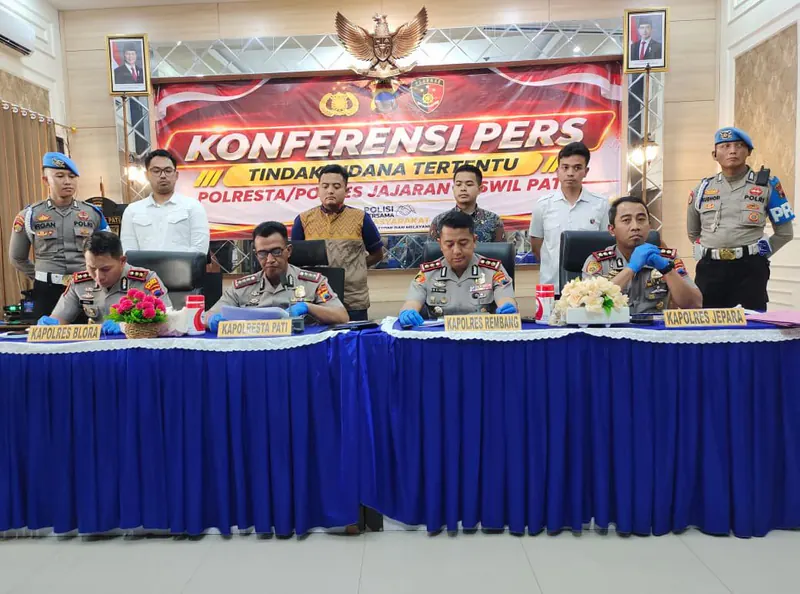
Pati City Police (Polresta Pati) have disclosed an alleged misuse of subsidised diesel in Pati Regency. The case involves two vehicles and 1,800 litres of subsidised fuel believed to have been purchased using fishermen's barcodes, as reported by Jateng Pos on Friday, 13 November 2025.
The case was disclosed at a press conference at Pati City Police headquarters. The incident occurred on Thursday, 29 October 2025, around 03:00 Western Indonesian Time (WIB). The disclosure took place in Dukuhseti and Juwana subdistricts. Pati City Police chief Kombes Pol Sigit led the activity, accompanied by the police chiefs of Rembang, Blora and Jepara.
The head of the criminal investigation unit at Pati City Police, Kompol Dika Hadiyan Widya Wiratama, said the two seized vehicles were believed to have been used to transport diesel purchased from public fuel stations (SPBU). One vehicle held about 600 litres, while a motorised trishaw (becak bermotor, or Tosa) held about 1,200 litres. Other evidence included mobile phones and jerrycans.
Police said one suspect was still at large and had been placed on a wanted list (DPO). The investigation is focused on the subsidised diesel distribution route and possible involvement of other parties. The suspect is alleged to have violated Article 55 of Law No. 22 of 2001 on Oil and Gas, as amended by Law No. 6 of 2023 on Job Creation.
Gap in subsidised fuel verification
Subsidised diesel is fuel whose price is capped by the government to keep it affordable for eligible groups, including fishermen and drivers of certain vehicles. Because the price gap between subsidised and non-subsidised fuel can be large, oversight at public fuel stations is important. In the modern purchase system, consumers usually show an identity or code linked to their right to buy a subsidised quota. The code is meant to ensure transactions are recorded and cannot easily be transferred to ineligible parties.
The modus operandi reported in Pati shows a gap at the verification stage, rather than in the physical vehicles or jerrycans. Fishermen's barcodes that should be tied to one buyer's entitlement can be collected into a single device and then used repeatedly at several gas stations. Such a practice turns the function of an identity code from a quota limiter into a means of pooling purchases. If one person buys under many numbers, the volume collected can exceed the real needs of fishermen on the ground.
Abuse of subsidised fuel is not new in coastal areas and transport hubs. Subsidised diesel is widely used in small boat engines, trucks, heavy equipment and operational vehicles that move around ports, markets and goods distribution routes. For that reason, vulnerable points usually emerge between public fuel stations and final use locations: transport, storage and resale. Investigators generally trace purchase patterns, vehicle owners and recipients of proceeds from sales to determine whether the practice stands alone or is part of a network.
In the legal framework, the alleged abuse of the transport and trade of subsidised fuel falls under Article 55 of Law No. 22 of 2001 on Oil and Gas, as amended by Law No. 6 of 2023 on Job Creation. That article covers criminal acts in the oil and gas sector, including trade or transport activities that do not comply with regulations. A person's legal status remains subject to the presumption of innocence until a final and binding court decision.
Impact on fishermen and local prices
For local readers, cases like this touch on two things that are rarely visible directly: the availability of subsidised fuel and the certainty that quotas reach their target groups. If subsidised diesel is diverted to vehicles or collectors, eligible fishermen may have to queue more often, run out of stock or be forced to buy at higher prices in the black market. The losses do not always become major news, but they are felt in sailing costs, fish prices and coastal household incomes.
At the policy level, the disclosure is a reminder that oversight based on identity codes needs to be complemented by field verification. Gas stations can check whether the barcode, vehicle and purchase pattern match, while authorities trace the end beneficiaries. For gas station operators, failure to limit repeated transactions can become a legal and reputational risk. For consumers, changes in procedure in one area may mean stricter queues or requests for more documents when filling up with subsidised diesel.
What needs attention going forward is consistent law enforcement without prejudging suspects, as well as transparency by Pertamina and local governments in improving the barcode mechanism. If the distribution route for subsidised diesel is more tightly controlled, leakage of the subsidy budget can be reduced. Conversely, if only vehicles and jerrycans are seized without tracing final buyers, similar practices risk reappearing in other locations.