PAN Parliamentary Group Urges Government to Improve Tapera Outreach and Fairness
The PAN parliamentary group in Indonesia's House of Representatives said outreach on the Tapera housing savings scheme has not been effective and warned the policy could be unfair to workers earning below the minimum wage.

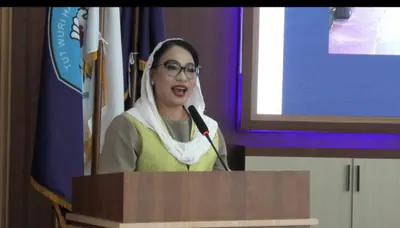
The parliamentary group of the National Mandate Party (PAN) in the House of Representatives (DPR) said outreach on the Tabungan Perumahan Rakyat (Tapera) housing savings scheme has not been effective and urged the government to ensure all segments of society understand the program before its implementation is expanded.
According to a report by the Indonesian news outlet Republika, PAN group chair Saleh Partaonan Daulay raised four critical points. First, he said Tapera participants are limited to workers with incomes above the minimum wage, which he said could be unfair to low-wage residents who also need housing. Second, he noted a maximum seven-year deadline for registration from the time the rule was set and urged the government to conduct a comprehensive study so the program does not trigger social unrest.
Third, the PAN parliamentary group said it had noted the possibility of rejection by some workers and urged the government to open dialogue and accommodate their aspirations. Fourth, Saleh said Tapera adds to payroll deductions already split between BPJS Kesehatan, Indonesia's state-run health insurance agency, and BPJS Ketenagakerjaan, its employment social security agency. He described the 2.5 percent contribution as an employer obligation that risks squeezing worker incentives.
Tapera's regulatory trail since 2016
Tabungan Perumahan Rakyat is not a new idea. The scheme was first mandated by Law No. 4 of 2016, which required the establishment of a management body and a mandatory savings mechanism for workers to finance housing. However, its implementing regulation, Government Regulation No. 21 of 2023, was only issued after the president signed it in May 2023. The seven-year gap between the law and the implementing regulation has led many to say outreach was never completed from the beginning.
In terms of mechanism, Tapera works like a mandatory savings scheme. Workers and employers each bear part of a contribution of 2.5 percent of wages. The funds are managed by Badan Pengelola Tapera, or BP Tapera, and can be withdrawn for housing purposes such as buying a house, building one or renovating. Participants who never use their funds until retirement are entitled to receive their savings back together with investment returns.
The program sits alongside other housing schemes already known to the public, such as Fasilitas Likuiditas Pembiayaan Perumahan, or FLPP, and interest subsidies. The difference is that FLPP and subsidies are direct assistance from the state budget, while Tapera relies on collecting funds from participants. This fundamental difference often confuses the public: many assume Tapera is a new subsidy, when it is a mandatory savings scheme that cuts wages.
Since the government regulation was issued, criticism has come from various directions. Labor unions have questioned the readiness of infrastructure and transparency in fund management. Labor observers have warned that when stacked with deductions for BPJS Kesehatan, BPJS Ketenagakerjaan and PPh, or income tax, the amount deducted from workers' wages can reach a significant level. The government, for its part, argues that without a mandatory savings scheme, the gap between housing needs and purchasing power will continue to widen.
What workers should watch next
For workers in Indonesia, the most practical question raised by the policy is simple: how much pay is left in hand after all deductions? Tapera contributions are mandatory only for workers with income above the minimum wage, but for those who qualify, an additional 2.5 percent deduction from wages is not a small number. A worker earning Rp5 million, or about US$300, for example, would lose Rp125,000, or about US$8, per month for this item, in addition to BPJS Kesehatan, BPJS Ketenagakerjaan and PPh deductions already taken.
The next question is when the funds can be accessed and for what purposes. If Tapera's goal is to help workers own their first home, then withdrawal conditions, the types of property that can be purchased and the investment mechanism must be fully transparent. Without that clarity, the public will continue to see Tapera as a deduction without tangible benefit.
In the coming months, the issue to watch is whether the government follows up on calls for dialogue made by the PAN parliamentary group. The seven-year transition period gives space to improve outreach, refine technical rules and accommodate informal workers who have long been outside the formal protection net. If that space is not used, a program designed for the long term risks losing legitimacy in the eyes of the workers it is meant to protect.