Maruarar Sirait Says Free Land Certificates Give Residents Legal Certainty
Housing and Settlement Areas Minister Maruarar Sirait says free land certificates help low-income residents obtain legal certainty over their land.
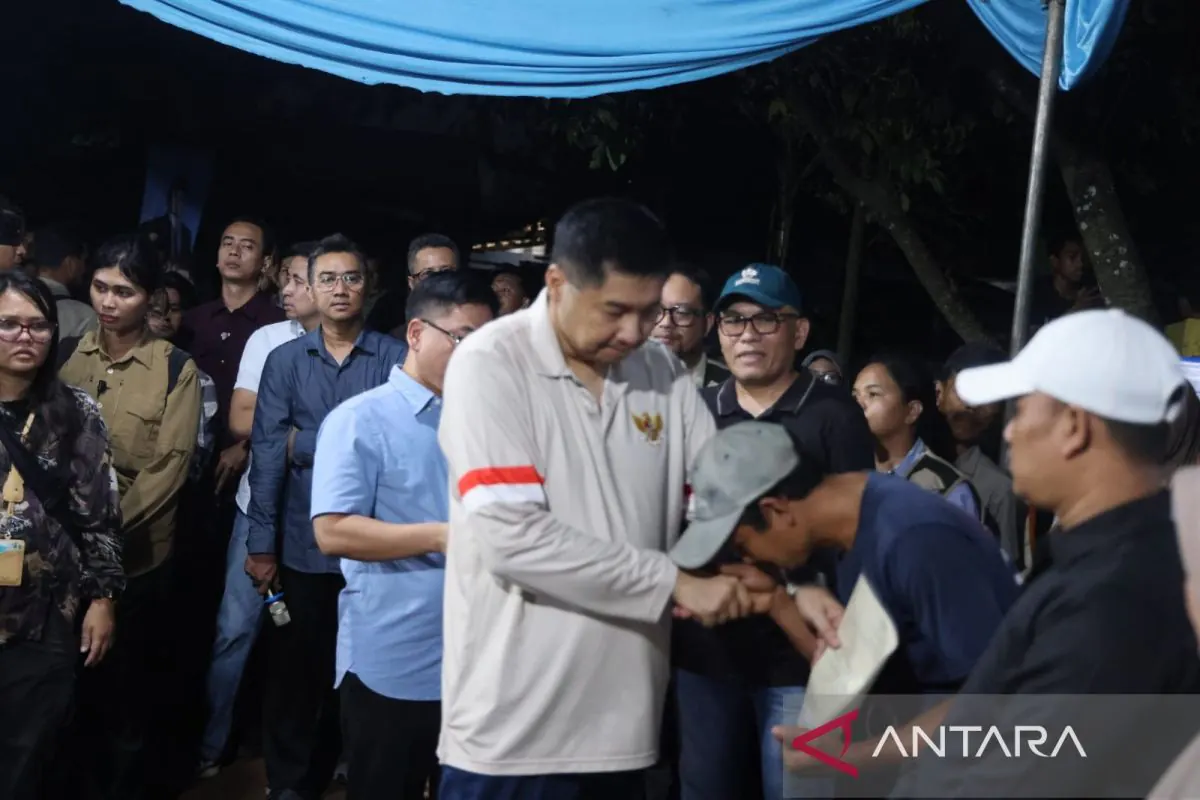
Housing and Settlement Areas Minister Maruarar Sirait said the free land certificate program helps low-income residents obtain legal certainty over their land. He made the remarks during a visit to Pesona Kahuripan 15 housing complex in Cileungsi, Bogor Regency, West Java, on Sunday, according to the state news agency ANTARA.
According to ANTARA, Maruarar said many residents had occupied land for 10 years or even decades but did not yet have certificates. He linked the program to President Prabowo's target of distributing one million free certificates this year.
Alongside the certificates, he outlined other housing policies for low-income groups, including home renovation, KUR Perumahan (Kredit Usaha Rakyat Perumahan, a housing credit program), and a reduction in financing interest rates at PT Permodalan Nasional Madani (PNM), a financing institution, from 22 percent to 8 percent.
He said the home renovation target in Bogor Regency would rise from 1,346 units in 2025 to 10,000 units in 2026, while the target for West Java would increase from 6,347 units to 40,000 units.
He said subsidized housing for low-income residents used a 5 percent annual interest rate and a 1 percent down payment, as well as exemptions from BPHTB (land and building acquisition duty) and PBG (building approval) fees in line with regulations.
Why land ownership proof matters
A land certificate is proof of a right over land issued after the land is registered. In Indonesia's agrarian legal system, land registration is the basis for recognition, protection and legal certainty over land rights. Without a certificate, physical possession alone often makes it difficult for residents to prove their rights before state institutions, banks or other parties.
Mass land registration programs usually operate through systematic schemes involving land affairs agencies, local governments and residents who process documents. The stages include measurement, checking land history, determining rights, issuing the certificate and recording it in the land book. A certificate is therefore not merely paper, but part of state administration that determines the legal position of a plot of land.
In housing policy, certificates also relate to access to financing. Banks and financial institutions generally require clear proof of rights before disbursing credit. For low-income households, clarity over land status can determine whether they can obtain formal loans, repair their homes or use subsidy schemes. Conversely, land without certificates is prone to disputes, problematic sales and inheritance difficulties.
At the national level, land registration falls under the ministry responsible for agrarian affairs and spatial planning, while housing programs involve ministries and local governments. That coordination matters because land certificates touch many aspects: spatial planning conformity, building permits, acquisition duty taxes and housing suitability. When one agency handles land rights and another handles housing, residents need simple and easy-to-monitor service channels. Public oversight is also needed so applicant data, land area and supporting documents do not create new disputes that are difficult to resolve later. Program success is therefore measured not only by the number of certificates printed, but also by data accuracy, document validity and the state's ability to resolve conflicting claims without harming vulnerable groups. Local governments play a role in ensuring residents know the process, official fees and required conditions.
What it means for low-income residents
For low-income residents, legal certainty over land can change how they access basic services. A certificate makes permits easier to obtain, provides formal collateral when a house needs renovation and opens the possibility of using official financing. In everyday practice, clear land status also reduces the risk of losing rights because of family disputes, overlapping claims or sales without a deed.
In Indonesia, the relevance lies in cost and time. When certificates, building permits and land and building acquisition duty are processed separately, residents often face unexpected expenses. If exemption or relief policies are fully implemented, the administrative burden of housing can fall. But the benefits will only be felt if information reaches ward, village and neighborhood (RT) levels, and officials do not demand charges outside the rules.
Readers should pay attention to service consistency. Free certificate programs and housing assistance will matter more if accompanied by target maps, clear schedules and complaint channels when documents are delayed. Without them, residents remain dependent on informal channels that are slow and risky. Readers should also check whether certificates they receive match the name, land area, boundaries and rights status. Small data errors can become major problems when land is sold, inherited or used as collateral in the future.