Indonesia and UAE Develop AI-Based Mangrove Restoration
Indonesia and the United Arab Emirates have agreed on an AI-based mangrove restoration project and an international research centre in Bali at the Mangrove Alliance for Climate ministerial meeting.
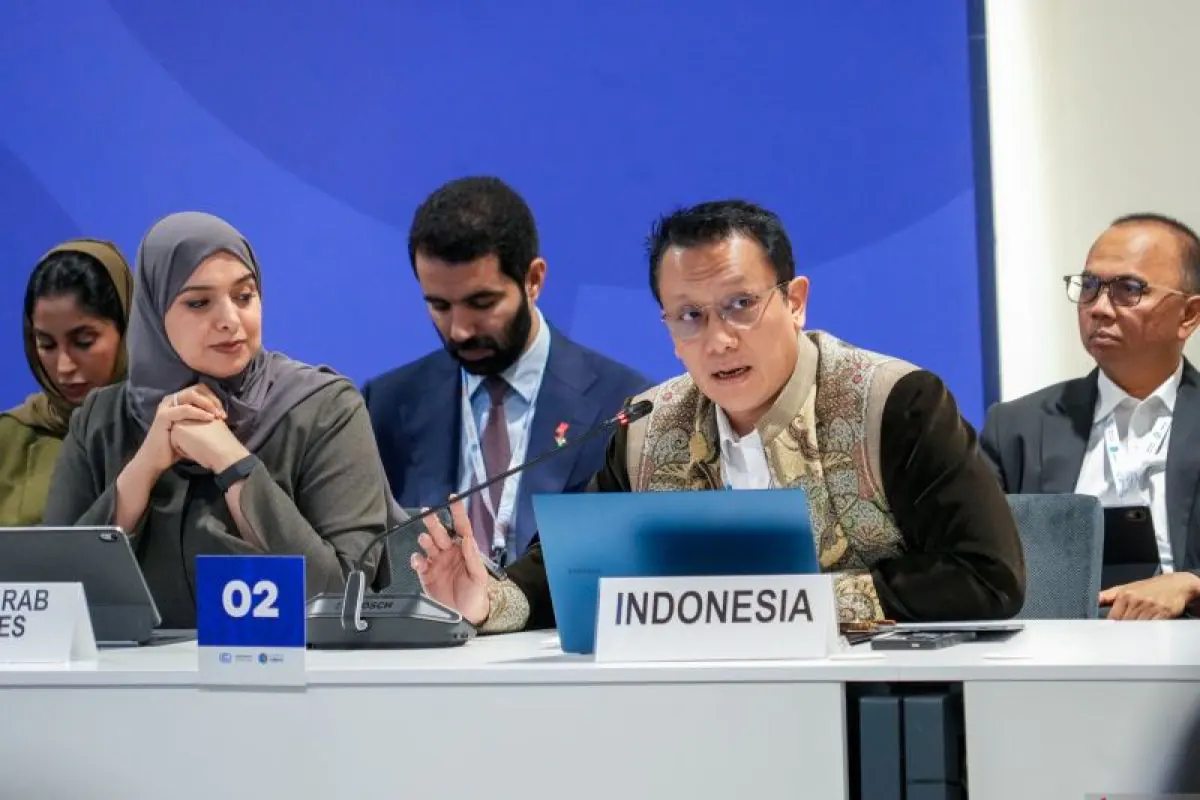
Indonesia and the United Arab Emirates (UAE) have agreed to develop an artificial intelligence (AI)-based mangrove restoration project and an international research centre in Bali, according to Vice Minister of Environment Diaz Hendropriyono, who presented the plan at the 4th Mangrove Alliance for Climate (MAC) Ministerial Meeting on the sidelines of COP31, the UN climate summit, in Antalya, Turkey, as reported by the state news agency ANTARA.
At the high-level meeting, Diaz praised the UAE for its consistent leadership and said MAC had turned conservation ideas into concrete action. According to ANTARA, Indonesia and the UAE officially agreed on a flagship coastal restoration project, including an AI-based mangrove pilot in Purworejo Village in Demak, Central Java.
The cooperation also covers the construction of the International Mangrove Research Center in Bali, which is projected to become a global research and knowledge reference centre. Diaz said the partnership should rest on three pillars: scientific cooperation, exchange of advanced technology and mobilization of predictable funding, including public-private investment and blended finance.
MAC history since COP27
MAC is not a new forum. Indonesia and the UAE launched it at COP27 in Sharm el-Sheikh, Egypt, in 2022, and it has since grown into a transnational platform for strengthening mangrove action. Its members include India, Sri Lanka, Australia, Japan and Spain. The alliance aims to raise global awareness of coastal ecosystems as natural carbon sinks, known as blue carbon.
Mangroves occupy a special place in climate discussions because they store carbon in their biomass and sediments while protecting coastlines from waves, erosion and storms. For Indonesia, an archipelago with a very long coastline, mangroves also support the livelihoods of fishers, fish ponds, coastal tourism and settlements that border the sea directly.
Mangrove restoration cannot be reduced to planting trees and leaving them. Success depends on selecting suitable species, understanding tidal conditions, salinity and sedimentation, giving local communities access and maintaining long-term monitoring. International partnerships that bring technology, research and funding are therefore essential to turn commitments into projects that survive on the ground.
AI can help map mangrove cover, detect changes in the coastline, identify the most suitable planting sites and monitor plant survival rates. But digital tools do not replace field governance. Data must be followed by maintenance, protection from land conversion and community participation. The research centre in Bali can also become a place to share methods, monitoring standards and training for researchers, local governments and coastal communities. If the pilot succeeds, it could serve as a model for other regions facing similar coastal pressures. Such synergy shows that climate diplomacy can run alongside local capacity building, and cross-country cooperation can shorten the distance between climate research and restoration practice.
What it means for Indonesia's coastal recovery
For Indonesian readers, the agreement matters because mangroves are not merely green landscapes along the sea. They act as natural barriers that absorb wave energy, slow erosion and maintain the productivity of waters where many families earn a living. When restoration works, fishers, aquaculture farmers, tourism operators and coastal residents can feel the benefit of more stable environmental protection, especially when mangrove areas are connected to traditional fish ponds, evacuation routes and shorebird habitat.
The use of AI and a research centre can also improve project accountability. Better monitoring data can help local governments, researchers and communities assess whether planted trees survive, whether sites are suitable and whether budgets are used effectively. Open information is important because climate promises are often measured by planted area, while the decisive factor is surviving area. With clear data standards, project success can be verified through satellite imagery, field surveys and community reports rather than reported only as numbers.
Sustainability will be the key test ahead. The pilot in Demak must be followed by maintenance, protection from land-use conversion and space for local communities to take part and gain economic benefits. If it works, the Indonesia-UAE partnership model could become a reference for other regions facing coastal erosion, degradation and climate pressure. Blended finance, public-private investment and carbon schemes should support long-term care, not just initial planting. Local governments must also ensure that the rights of indigenous communities and coastal residents are respected, particularly where restoration touches land used for daily livelihoods.
Related news
Indonesia and the United States repatriate World War II soldier remains in Halim
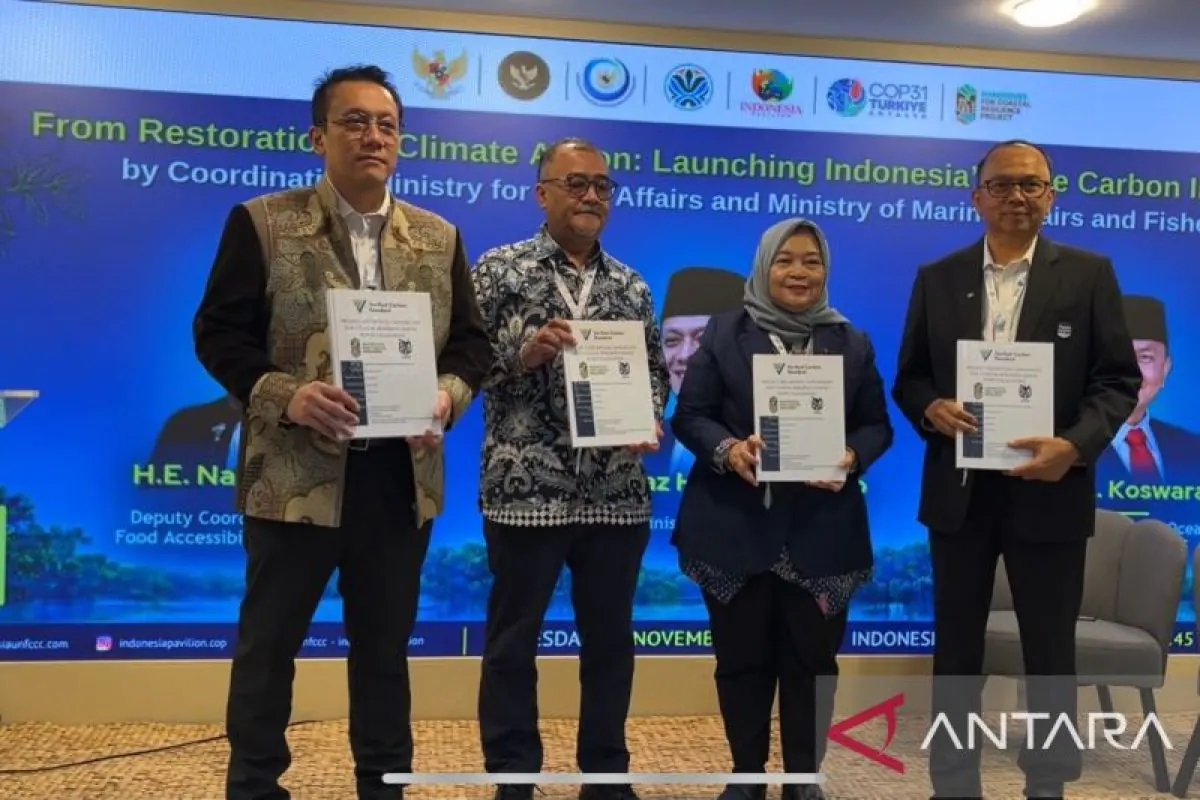
Government launches three blue carbon projects at COP31
Ministry of Home Affairs says civil servant oath is a moral commitment