Agriculture ministry says oil palm partnerships can lift national productivity
The Agriculture Ministry said partnerships between large plantations and smallholders could speed up good cultivation practices and raise national oil palm productivity.
The Agriculture Ministry has positioned partnerships between large plantations and smallholder farmers as a central strategy for raising national oil palm productivity. According to Antara, the ministry said stronger partnerships could accelerate the adoption of good cultivation practices, helping the industry better withstand global uncertainty.
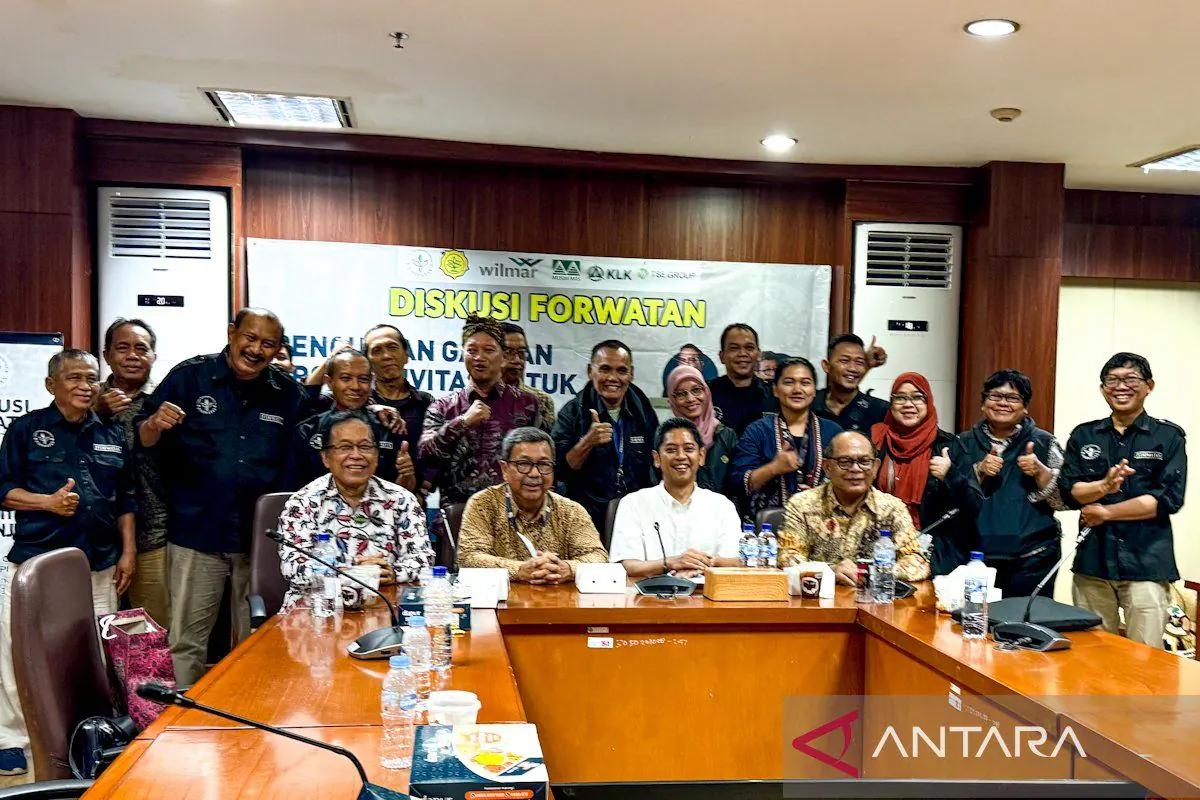
Mula Putra, coordinator for oil palm development at the Directorate General of Plantations under the Agriculture Ministry, made the remarks at a Forum Wartawan Pertanian (Agricultural Journalists Forum) discussion in Jakarta on Wednesday, 18 November. He said partnerships allowed experience, field data and good cultivation standards to spread more quickly to smallholder plantations and large plantations. In the ministry's view, oil palm productivity would be higher if achieved through partnerships, even though some smallholders are able to manage their plantations independently.
Beyond partnerships, Antara reported that the government is pushing to expand the domestic market so the oil palm industry is less dependent on exports. The targets mentioned include productivity of 30 to 40 tonnes of fresh fruit bunches per hectare and an oil extraction rate of 23 to 25 percent. The ministry also assessed that an increase of one tonne of crude palm oil equivalent per hectare each year could add up to 14 million tonnes to national production and support the biodiesel programme moving from B40 to B50. It said the additional production needed to support the biodiesel mandate was about 9 million tonnes.
Spreading cultivation standards in oil palm plantations
Oil palm productivity is shaped not only by land area but also by seedling quality, plant age, fertilisation, pest control and harvesting methods. Smallholder plantations often face limited capital, limited access to technical information and uncertain selling prices. Partnerships can therefore provide a route for transferring knowledge from large companies or cooperatives to farmers, for example through field mentoring, better-organised fruit purchasing and the application of good cultivation standards.
Good Agricultural Practices relate to efforts to help plants produce fresh fruit bunches more consistently. Fresh fruit bunches, or TBS, are the main raw material processed into crude palm oil, or CPO. The oil extraction rate is important because it measures how much oil can be obtained from a given amount of fresh fruit bunches. In this context, higher productivity is not simply about increasing fruit volume; it also means improving harvest quality and processing efficiency. These standards also help plantations produce more uniform fruit, allowing factories to process it more efficiently. Improvements upstream therefore raise not only tonnage but also the quality of oil reaching the market.
More broadly, oil palm touches many economic activities, from plantations and factories to transport, downstream industries and energy. When productivity rises, raw material supply can become more predictable. This matters for industries that depend on CPO, including food, oleochemicals and biofuels. However, production growth must also follow sustainability principles so it does not create new pressure on land, the environment and communities.
Effective partnerships also require clear rules. Farmers need to understand their rights over prices, fruit quality, credit access and technical support. Companies need supply certainty and compliance with environmental standards. Without fair governance, partnerships risk becoming a slogan that does little to change smallholder productivity in practice.
Impact on prices, energy and smallholders
For Indonesian readers, oil palm productivity is linked directly to food prices, energy costs and smallholder incomes. Cooking oil, industrial raw materials and biodiesel blends use CPO. If raw material supply is more stable, pressure on domestic prices may ease, although global markets, distribution and government policy will continue to influence prices.
The biodiesel programme also makes oil palm part of energy independence. Raising the blend from B40 to B50 means more palm-based raw material is needed for energy. As a result, the productivity of smallholder and large plantations will help determine whether the programme can proceed without disrupting supply for other uses.
The most direct impact for farmers is the potential for better yields and market certainty. But those benefits will only be felt if partnerships provide access to quality seedlings, fertiliser, mentoring and fair prices. For consumers, the issue to watch is the balance between production, sustainability and prices. More productive oil palm does not automatically mean stable prices if supply chains and policies are not working well.
Related news
Government sets strict conditions for Javan rhino relocation; Ministry of Home Affairs says civil servant oath is a moral commitment; Government launches three blue carbon projects at COP31.