Madiun Immigration monitors 974 foreign nationals, Malaysian Islamic boarding school students largest group
The Madiun Immigration Office said 974 foreign nationals are under supervision in East Java, with Malaysian Islamic boarding school students forming the largest group, and four were deported from January to November 2026.
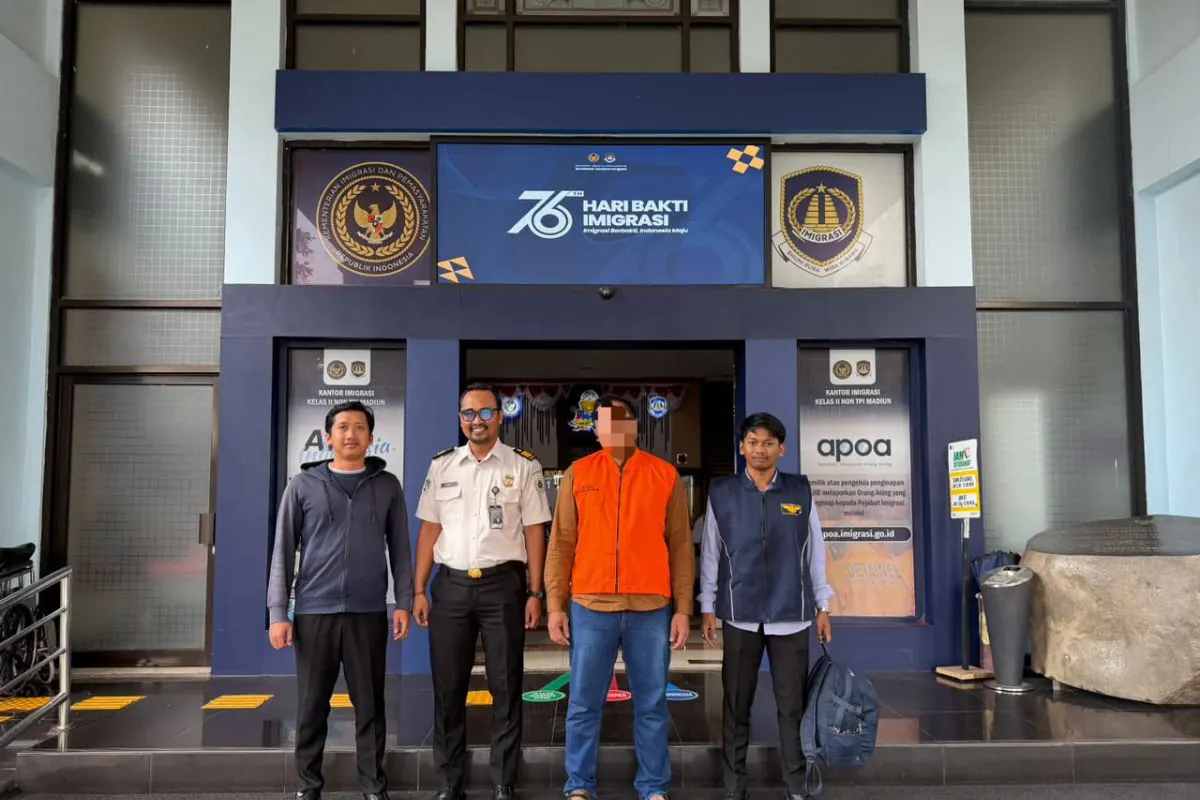
The Madiun Class II Immigration Office is supervising 974 foreign nationals living in its East Java jurisdiction, with the largest group being santri, or Islamic boarding school students, from Malaysia. The office is a non-TPI office, meaning it is not a Tempat Pemeriksaan Imigrasi, or immigration inspection point, at a border entry. Head of the office Arief Adi Prayogo said the number was dynamic because foreign nationals regularly entered and left the area, according to a report by news agency ANTARA.
Of the total, 228 were Malaysian nationals, 220 Chinese nationals and 121 Cambodian nationals, while the remainder came from other countries. Arief said, “Most foreign nationals are santri active around Islamic boarding schools, such as Temboro and Gontor,” while others are foreign workers in industry.
From January to November 2026, the Madiun office deported four foreign nationals, three Chinese and one Malaysian, for exceeding their permitted stay or misusing residence permits. Arief said the supervision was aimed at preventing immigration violations, not at discouraging investment. Immigration has also formed Foreigners Supervision Teams, known as Tim Pora, down to the subdistrict level to receive reports from residents.
Role of a non-TPI immigration office and Tim Pora
A Class II non-TPI immigration office differs from immigration offices located at airports or seaports. The non-TPI status means the office is not an immigration inspection point at the country's entry gates, but it still has authority to check immigration documents, provide residence permit services and supervise foreigners living in its jurisdiction. In Madiun, that supervision covers areas that are not major national entry points but host religious education institutions and industrial zones.
Supervision of foreigners in Indonesia rests on the Immigration Law, which distinguishes visit residence permits, limited stay permits and permanent stay permits. Each type of permit has a purpose that cannot be quietly changed. A foreign national entering on a visit visa may not work, while foreign workers generally must have employment documents and a limited stay permit matching their position and sponsoring company. Such violations are commonly described as misuse of residence permits, while staying beyond the permitted period is known as overstay. In employment practice, companies usually arrange a plan for the use of foreign workers and the permits attached to it. A mismatch between the permit and the actual work becomes a starting point for immigration checks.
To widen coverage, immigration forms Tim Pengawasan Orang Asing, or Tim Pora, involving local government, security forces and subdistrict officials. This approach matters because foreigners living in pesantren or industrial villages are not always visible through airport traffic. Tim Pora is a coordination channel so resident reports, field monitoring and administrative action can proceed together before cases become large.
The presence of foreign santri in the Madiun area is also linked to the reputation of several large pesantren in East Java. Temboro in Magetan and Gontor in Ponorogo have long attracted students from Malaysia and neighboring countries who want to study Arabic, Islamic jurisprudence and Quran memorization programs. The dominance of santri among the foreign nationals therefore reflects religious education activity rather than labor migration alone.
What it means for investment and residents
For readers in Indonesia, the Madiun data shows that supervision of foreign nationals is not the same as closing the door to foreign capital. The government still needs skilled workers and investors, but document compliance remains the boundary. Companies employing foreign nationals must ensure their residence permits, job positions and actual activities in the field are aligned. If they are not, administrative sanctions up to deportation can disrupt projects, add costs and weaken the confidence of business partners.
For communities around pesantren and industrial zones, the presence of Tim Pora down to the subdistrict level makes reporting closer to residents. People do not need to speculate or take matters into their own hands when they see a foreign national working without clear status. The recommended step is to report to the village office, subdistrict office or local immigration office so that documents can be checked. In that way, the presence of foreign nationals can remain part of local education and the economy without causing social resentment or legal risk.
Going forward, the figure of 974 foreign nationals should be read as a temporary snapshot, not a final list. The movement of santri, academic holidays and industrial needs can quickly change the mix of nationalities. The public and businesses should follow official information from immigration and ensure that every foreign national they sponsor has a clear basis for staying.