Kemenko Kumham Imipas and Human Rights Ministry Discuss 46 Coordination Agendas
The Coordinating Ministry for Law, Human Rights, Immigration and Corrections (Kemenko Kumham Imipas) logged 46 coordination agendas with the Ministry of Human Rights from 2025 through November 2026, covering gross human rights violations, regulations and agreements.
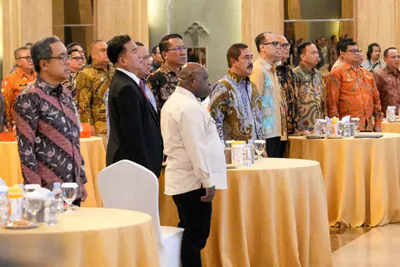
The Coordinating Ministry for Law, Human Rights, Immigration and Corrections (Kemenko Kumham Imipas) and the Ministry of Human Rights recorded 46 coordination agendas in Jakarta from 2025 through November 2026, according to TVRI News.
A recap of invitation letters, attendance lists and activity documentation showed 23 agendas took place in 2025 and 22 in 2026. One preparation agenda for identifying development problems and the Human Rights Index did not list a date. The issues discussed included the non-judicial settlement of gross human rights violations, victim recovery, mainstreaming human rights in regulations, human rights education for civil servants (ASN), protection of vulnerable groups, reporting on international human rights instruments, and agreements on the transfer of prisoners between countries.
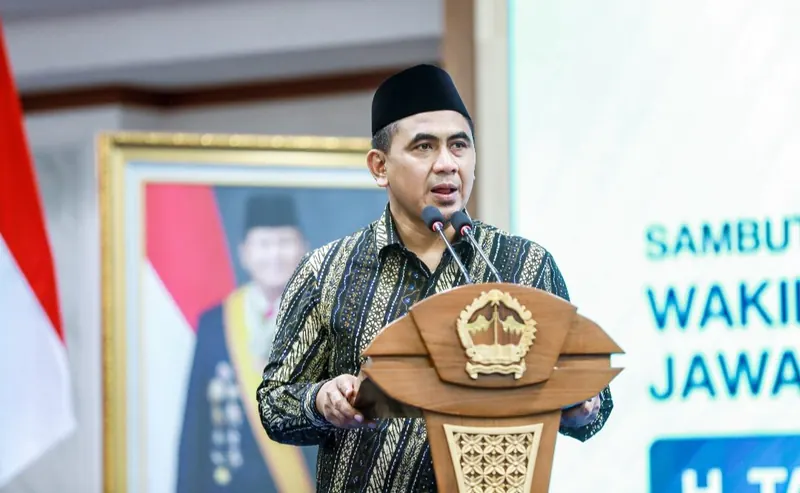
The Minister of Human Rights attended a leadership-level coordination meeting on 20 March 2025 and a minister-level meeting on the Draft Law on the Transfer of Sentenced Persons on 19 August 2025. Deputy Minister of Human Rights Mugiyanto attended a synchronisation meeting on mainstreaming human rights in law-making. Mamur Saputra, head of the Public Relations and Information Technology Bureau of Kemenko Kumham Imipas, said, as reported by TVRI News on Thursday, 19 November 2026, “This synergy is an important part of ensuring that human rights policies can be discussed and harmonised across ministries.”
In discussions on the Transfer of Sentenced Persons, the Ministry of Human Rights was involved from the initial draft of the bill in June 2025, through an Inter-Ministerial Committee meeting in July 2025 and a minister-level meeting in August 2025, to talks on the Indonesia-Malaysia agreement in September 2026.
Mapping inter-agency coordination on human rights
Kemenko Kumham Imipas functions as a coordinator of cross-ministry and cross-agency policy in law, human rights, immigration and corrections. In the government structure, coordinating ministries do not always directly deliver technical services. Their main task is to align planning, implementation and policy evaluation so that they do not overlap with technical ministries. Routine meetings between Kemenko Kumham Imipas and the Ministry of Human Rights can therefore be read as an effort to keep the direction of human rights policy clear.
The Ministry of Human Rights holds the technical role in issues traditionally attached to legal and human rights affairs. Gross human rights violations, for example, are not only criminal matters. Non-judicial handling usually includes victim recovery, truth-seeking, guarantees of non-repetition and improved public services for affected groups. That route runs alongside the judicial route focused on criminal accountability, but both require cross-sector coordination because they involve victim data, budgets, rehabilitation and regulations.
International agreements, such as the transfer of prisoners between countries, also require coordination. The scheme involves criminal law, consular affairs, immigration, corrections and foreign relations. Without harmonisation, implementation can be hampered by legal procedures, prisoners’ rights, oversight by the home country and protection for victims. Discussions from the initial draft to the bilateral agreement therefore form part of broader human rights policy governance.
The Human Rights Index should also be understood as a measurement tool, not merely an administrative report. Such an index is usually used to assess progress in fulfilling citizens’ rights across different fields. If data are not aligned between agencies, policy can miss its target. Coordination agendas involving technical officials and ministry leaders are therefore important to ensure that data, regulations and programmes move in the same direction.
How coordination affects the public
For the general public, the impact of this coordination is not always as immediate as changes in prices or daily services. But some of the agendas touch matters close to citizens, especially when a person deals with the state as a victim, witness, prisoner or seeker of justice. Protection for vulnerable groups, legal aid posts (Pos Bantuan Hukum) and mechanisms for recovering victims of gross human rights violations can determine whether the state is present in both administrative and substantive terms when citizens need it.
The international prisoner transfer agenda is also relevant for families of Indonesian citizens serving sentences abroad. If agreements and procedures are harmonised, citizens can gain the opportunity to serve their sentences in their home country with clearer oversight. Slow coordination, by contrast, leaves families waiting for legal certainty. The public therefore needs to monitor whether coordination meetings lead to legal products that are accessible and enforceable.
For state institutions, human rights education and the mainstreaming of human rights in regulations affect how public services are designed. Rules that are not aligned with human rights can trigger administrative disputes, discrimination or access barriers for certain groups. The 46 coordination agendas mark the rhythm of policy, but their results will only be felt when they enter services, budgets and enforcement on the ground.