Explosion at PPSDM Migas oil plant in Cepu kills one worker
An explosion at the PPSDM Migas oil processing plant in Cepu, Blora Regency, killed a third-party worker during maintenance on 18 November 2026, while the cause remained under investigation.
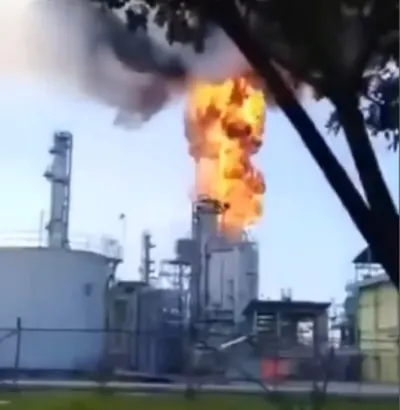
An explosion occurred at the oil processing plant of the Human Resources Development Center for Oil and Gas (PPSDM Migas) in Kecepatan, Cepu, Blora Regency, on Wednesday, 18 November 2026. According to TVRI News, the state broadcaster’s news service, one worker died.
Blora police chief AKBP Inggal Widya Perdana said the explosion happened at about 9.30 a.m. WIB (Western Indonesia Time), when the plant was idle and undergoing maintenance. Sparks were suspected to have appeared while a worker was grinding, but the exact cause remained under investigation.
The fire did not have time to spread and was extinguished by the PPSDM Migas fire brigade in less than 30 minutes. The victim was a third-party worker who suffered burns over about 90 percent of the body and died on Wednesday evening.
Inggal said there were indications of residual gas inside the plant, but its type and source could not yet be confirmed.
Risks in oil plant maintenance
Maintenance at oil and gas facilities does not stop at mechanical work such as cleaning, welding or grinding. In an industry that handles hydrocarbons, the most decisive step happens before workers touch equipment: making sure the workspace is truly free from flammable vapors or gas. Maintenance work therefore usually follows work-permit procedures, atmospheric testing and safety supervision.
The term ‘idle plant’ needs to be understood carefully. Idle does not always mean risk-free. Tanks, pipelines or processing units can retain residual liquid, sludge deposits or vapors that evaporate again. When metal is ground or cut, sparks can appear. If those sparks meet a fuel-air mixture within certain limits, an explosion can occur even though the equipment appears not to be operating.
PPSDM Migas in Cepu is known as a center for developing human resources competencies in the oil and gas sector. The Cepu area of Blora has long been associated with upstream oil and gas activities and industrial training. In environments like this, maintenance facilities, process units and training areas often serve as places to simulate field work. The incident in Cepu shows that safety risks are not limited to large-scale production but also attach to maintenance activities that may appear routine.
The involvement of a third-party worker adds a layer of coordination that must be maintained. In maintenance projects, facility owners, contractors and safety supervisors need to ensure every worker understands work-area boundaries, personal protective equipment and hazard signs. Investigations usually examine whether those procedures were followed, including whether there were gas checks, cleaning, ventilation and control of ignition sources before grinding. The exact cause of an explosion cannot be concluded from initial statements alone. An investigation team needs to review work records, witnesses, equipment and laboratory tests of residual gas or vapors. Without those steps, the public can only wait for an official conclusion. In industrial cases, conclusions are often technical and involve several agencies, not only law enforcement. Oil and gas workplace safety demands high discipline because small mistakes can trigger major consequences.
What it means for contract workers
The accident is closely tied to workplace safety issues in the energy and maintenance services sector. Many field jobs are carried out by contractors or third parties, while safety responsibility remains in the same area as the facility owner. The Cepu incident is a reminder that procedures considered formal – work permits, gas testing and spark monitoring – can determine whether workers live or die.
The direct impact on oil prices, energy supply or national policy is likely small because reports described the plant as small-scale and not operating. However, incidents like this remain important because training and maintenance facilities sit at the heart of the oil and gas industry. Weak safety standards at one point can reduce public and partner confidence in industrial practices in the region. At the local level, workplace accidents also affect the sense of safety among residents around the facility and workers’ families. They have a stake in knowing whether the surrounding area is truly under control and whether there is no further danger.
What needs to be watched in the coming period is the result of the official investigation: whether residual gas was present, whether grinding was carried out according to procedure, and how coordination worked between the plant owner and the third-party worker. For the community of Blora and oil and gas workers, answers to those questions are more useful than speculation, because they will show whether prevention has been adequate or needs to be tightened.