KPK Warns Jakarta Regional Enterprises on Limits of Business Decisions
The Corruption Eradication Commission (KPK) told boards of Jakarta's regional state-owned enterprises that independence in business decisions must remain within legal and governance limits.
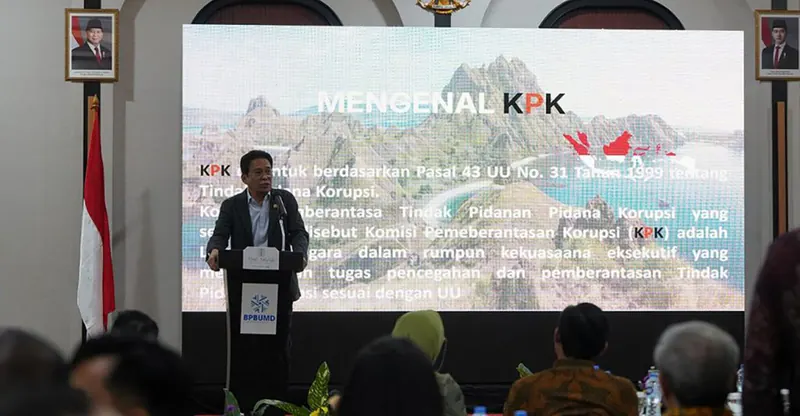
The Corruption Eradication Commission (KPK) reminded the directors, commissioners and supervisory boards of Jakarta's regional state-owned enterprises (BUMD) that the speed of business decision-making must remain within the boundaries of law and good corporate governance. The warning was delivered during a capacity-building programme for BUMD leadership, as reported by InfoPublik on Sunday, 15 November 2026.
KPK Vice Chair Johanis Tanak said, “The board of directors is indeed given independence to manage the company.” However, according to a written statement received by InfoPublik, he warned that independence must not be used to pursue personal desires. Every strategic decision must be grounded in the articles of association, internal rules and prevailing laws and regulations.
Tanak explained that the Business Judgment Rule (BJR) can protect directors from legal problems when decisions are made prudently, in good faith and free from conflicts of interest. However, the BJR is not legal immunity; the principle does not justify acts that exceed authority, ignore procedure or prioritise personal interests.
The KPK also referred to the risk of ultra vires acts, meaning actions by managers that go beyond their authority. As an example, the granting of credit facilities by a regional bank outside procedures and without approval from competent authorities can give rise to liability if the elements of a legal violation are met.
Syaefuloh Hidayat, head of the Jakarta Regional Enterprise Development Agency (Badan Pembinaan BUMD DKI Jakarta), welcomed the governance strengthening effort with the KPK. He said aligning perceptions among BUMD leaders was important so business decisions are professional, risk-managed and within authority limits. The strengthening is carried out through the Directorship Program to improve leadership capacity and governance of Jakarta's BUMD.
Dual role of BUMD in regional development
Regional state-owned enterprises occupy a distinctive position in Indonesia's economy. On one hand, BUMD must operate like companies pursuing business performance so that capital invested by local governments is not eroded. On the other hand, many BUMD provide services that meet residents' needs, such as clean water, transport, markets or regional financing. Therefore, business decisions are judged not only by profit but also by service impact and the use of public assets.
Good corporate governance distinguishes reasonable business decisions from risky ones. In corporate practice, managers are expected to work with transparency, accountability, responsibility, independence and fairness. Transparency means processes and important information can be examined. Accountability requires every action to be explainable. Responsibility ties decisions to their legal and social consequences, while independence protects managers from pressure by particular parties. Fairness ensures shareholders, workers, customers and the public are not ignored.
The Business Judgment Rule is often understood as protection for directors when a business decision made in good faith ends in losses. Such protection is usually conditional: decisions need to be made after reviewing available information, within the limits of authority, without conflicts of interest and not made recklessly. Without those conditions, managers cannot shelter behind the label of a “business decision”. The ultra vires principle reminds that acts beyond authority can still give rise to liability.
For BUMD, oversight also comes from regional shareholders, internal mechanisms and the public. BUMD leaders are generally appointed through processes governed by the articles of association and shareholder policy. Because these positions manage separated regional assets, professionalism becomes an important measure. Understanding procedures, risk assessments and decision documentation helps distinguish reasonable business failure from violations that harm the public.
What the public should watch
For residents, BUMD governance is not an abstract issue. When regional companies operate in water, transport, markets or financing, board decisions can change tariffs, service quality and public access. Unmeasured investment decisions can also affect jobs, supply of goods and operating costs that customers ultimately feel.
BUMD losses arising from irregular decisions can burden local finances. Capital that should circulate for public services risks becoming a budget burden, especially if it has to be recapitalised. The impact can spill over to other local spending, while residents' trust in government-owned companies also declines.
Therefore, the public needs to periodically monitor performance reports, audit results, conflict-of-interest disclosures and internal oversight mechanisms. At the same time, every alleged violation must still be viewed through the presumption of innocence until a court decision has final legal force. What can be confirmed today is the need for BUMD to maintain procedures in a measured way so that business decisions do not turn into legal risk.