KPK summons Onny Hendro and Andaya as witnesses in LPEI financing corruption case
The Corruption Eradication Commission (KPK) has summoned two private-sector witnesses in the investigation into alleged corruption in export financing by the Indonesia Eximbank, or Lembaga Pembiayaan Ekspor Indonesia (LPEI), with the state suspected of losing Rp11.7 trillion.
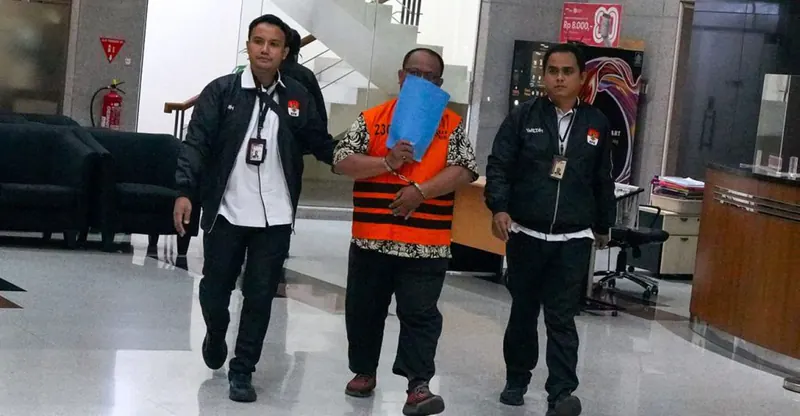
The Corruption Eradication Commission (KPK) has scheduled questioning of businessman Onny Hendro Adhiaksono, also known as Kaji Edan, and another private-sector witness, Andaya Swastanta, on Friday, 20 November 2026, at Gedung Merah Putih, the KPK building in Jakarta. According to a report by Radio Republik Indonesia (RRI), they will be questioned as witnesses in an alleged corruption case involving the granting of financing facilities by Lembaga Pembiayaan Ekspor Indonesia (LPEI), commonly known as Indonesia Eximbank.
KPK spokesperson Budi Prasetyo confirmed the schedule. He said the questioning was part of an alleged corruption case involving LPEI financing. The case is also linked to financing extended to the company PT Petro Energy. It is suspected of causing state financial losses of Rp11.7 trillion, or roughly US$700 million. The KPK has not disclosed what it plans to probe with the two witnesses.
Role of LPEI in export financing
The Indonesia Eximbank, officially known as Lembaga Pembiayaan Ekspor Indonesia (LPEI), is a state agency that facilitates financing, guarantees and insurance for export activities. Its focus is to help domestic businesses compete in overseas markets, including when they need working capital, project financing or protection against payment risk from foreign buyers. Such schemes are commonly used for infrastructure, energy, manufacturing and high-value commodity export projects.
In export financing, institutions such as LPEI face more complex risks than consumer lending. Exporters can fail because of exchange-rate swings, weak global demand, trade disputes or non-payment by overseas partners. For that reason, disbursement decisions usually go through feasibility analysis, collateral valuation and monitoring of how the facility is used. Independent appraisers, credit committees and internal audits are typically among the links investigators examine to see whether any step was bypassed. These documents matter because they can show whether financing was granted on business grounds or involved irregularities.
Investigations into financing at state institutions often rely on private-sector witnesses who can explain how processes worked on the ground. Such witnesses may come from recipient companies, consultancy firms, notaries, appraisers or others with knowledge of document preparation. Witness status does not mean a person is accused of a crime; they are summoned to give information about what they heard, saw or experienced. Calling private-sector witnesses can therefore clarify how applications were made, how funds were disbursed and how they were used.
In this field, terms such as collateral, debtor and manipulation of analysis documents are key. Collateral is security provided by the recipient of financing, such as land, machinery or receivables. A debtor is the party receiving the facility. If collateral is overvalued or documents are prepared to meet requirements, financing may still be disbursed despite the risk of failure. When this happens at a state institution, losses to state finances can arise if the funds cannot be recovered. This is where the distinction between business negligence, administrative violations and criminal conduct must be proven.
What it means for business and the public
For Indonesian readers, export financing cases are not only a matter for law enforcement. State financing institutions help exporters obtain capital, guarantees and risk protection. If funds are channeled improperly, businesses that should have qualified may lose competitiveness, while the risk of default ultimately falls on the state. Over the long term, this can make financing institutions stricter in disbursing credit, slowing export processes. Exporters that rely on guarantees may also face higher costs if state institutions tighten requirements.
The most tangible impact on the public is the potential loss of state finances. Money that is not recovered reduces fiscal space for other programs, such as infrastructure, education or social assistance. Questioning private-sector witnesses is therefore important to trace whether any party helped prepare documents, value collateral or benefit from fund flows. However, until a case has a final and binding ruling, everyone summoned must still be treated according to their status: witness, suspect, defendant or convicted person.
For the business world, the case is a reminder that export financing demands compliance with documents, collateral and governance. Companies relying on state facilities need to prepare financial reports, export contracts and proof of how funds were used. For the public, developments in the case should be followed until a court rules, because witness testimony alone is not enough to declare someone guilty.