KPK Strengthens Integrity of 5,938 Barantin Staff in Quarantine Services
KPK has begun anti-corruption education for 5,938 staff of the Indonesia Quarantine Agency (Barantin) to prevent corruption risks in quarantine services.
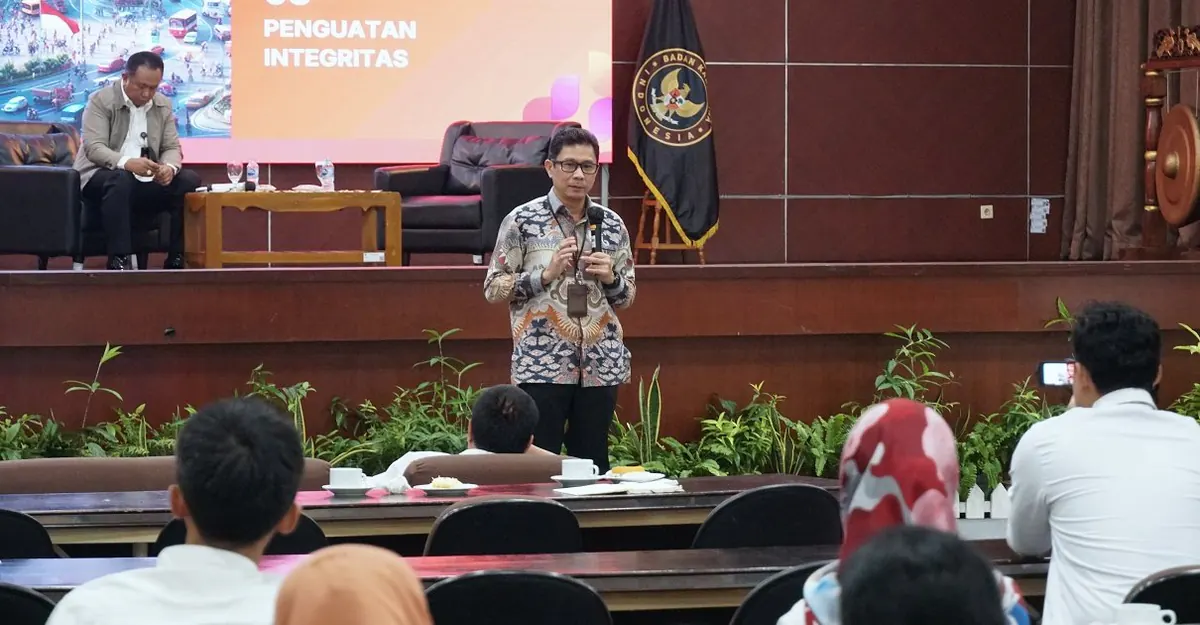
The Corruption Eradication Commission (KPK) has begun anti-corruption education for 5,938 staff of the Badan Karantina Indonesia (Barantin), the Indonesia Quarantine Agency, through the Program E-Learning ASN Berintegritas, an integrity e-learning programme for state civil apparatus (ASN). The activity started on Wednesday, 11 November, at the auditorium of Barantin's Pusat Pengembangan Sumber Daya Manusia (PPSDM), the Human Resource Development Centre, in Bekasi Regency, West Java.
According to a KPK report, the programme targets staff working in quarantine services because the agency's inspection, supervision and public-service functions directly touch the public. KPK Director of Anti-Corruption Education and Training Yonathan Demme Tangdilintin said corruption-prone points needed to be anticipated, from intervention in inspection results, gratuities and illegal levies to manipulation of administrative documents.
He said the three-day online learning was designed according to staff duties and closed with an evaluation. “The inspection results must reflect the actual conditions,” Yonathan said.
Head of Barantin Abdul Kadir Karding said the programme was part of the apparatus's commitment to carry out duties professionally, transparently and in accordance with regulations. Its main targets are staff handling document verification and quarantine seal inspections.
The head of Barantin's PPSDM, Wisnu Wasisa Putra, described the programme as a collaboration between Barantin and KPK and a pilot project for strengthening integrity among state civil apparatus. The KPK said the programme would be expanded until 2029, and agencies that meet participation targets are encouraged to continue phased learning.
Integrity Risks at the Quarantine Service Gate
Quarantine services sit at a point sensitive to economic interests. Officers check documents, seals and the condition of goods about to enter or leave a certain area. A quarantine seal marks that something has passed the required process, so opening it without reason can create an opportunity for wrongdoing. When inspection results determine whether something can be circulated, imported or exported, that decision can trigger attempts to influence officers. In that context, gratuities, illegal levies and administrative manipulation are risks often discussed in preventing corruption in the public sector.
Anti-corruption education for state civil apparatus places integrity as a work habit, not merely a slogan. For field staff, integrity means refusing requests made outside official channels, recording findings as they are and keeping the inspection flow the same for all applicants. Training that reaches many staff online can therefore help align understanding across dispersed units. Platform-based learning also makes it easier for agencies to reach staff in various regions without gathering them in one place.
On the other hand, integrity strengthening does not stand alone. The KPK has a preventive role through education, while public-service agencies need to improve systems: clear procedures, internal supervision and complaint mechanisms. Digitalisation can reduce direct contact that opens room for transactions, but digital systems also must be audited so they do not create new vulnerable points. Without procedural updates, training becomes only a record of participation that does not change behaviour at the service desk.
The quarantine agency also works in functions that protect biological resources, so officers' decisions are not merely administrative. Negligence or deliberate failure in inspection can affect biosecurity, health and public trust. In this context, “integrity” is closer to technical discipline: following procedures, refusing intervention and making records that can be checked again.
What It Means for Quarantine Service Users
For service users, quarantine officers' integrity is not merely an administrative issue. Honest inspections help ensure animals, fish and products in circulation do not carry health or pest risks. If the process can be bought, consumers and compliant businesses are harmed because problematic goods may pass through while legitimate goods are held up. Public trust in government services is also shaped by consistency among officers at points like these.
For businesses, especially importers, exporters and inter-island shippers, certainty over inspection timing affects logistics costs. Illegal levies and document manipulation can raise prices of animal or fish products because unofficial costs enter the supply chain. Conversely, objective and transparent services help businesses calculate costs and distribution schedules. For buyers, the effects can be felt in the availability and quality of products reaching the market.
The ASN learning programme is also relevant because Barantin staff are dispersed across regions. Building the same work culture can reduce differences in treatment between service locations. What needs to be watched going forward is whether training is followed by system improvements, such as internal supervision, complaint channels and digital audits, so prevention does not stop at a certificate.
Related news
- KPK Strengthens Global Cooperation to Drive Recovery of Corruption Assets
- KPK Strengthens Oversight of South Sulawesi Regional Budget, Highlights Pokir Budget Proposals to Procurement
- KPK and MIND ID Integrate Whistleblowing System