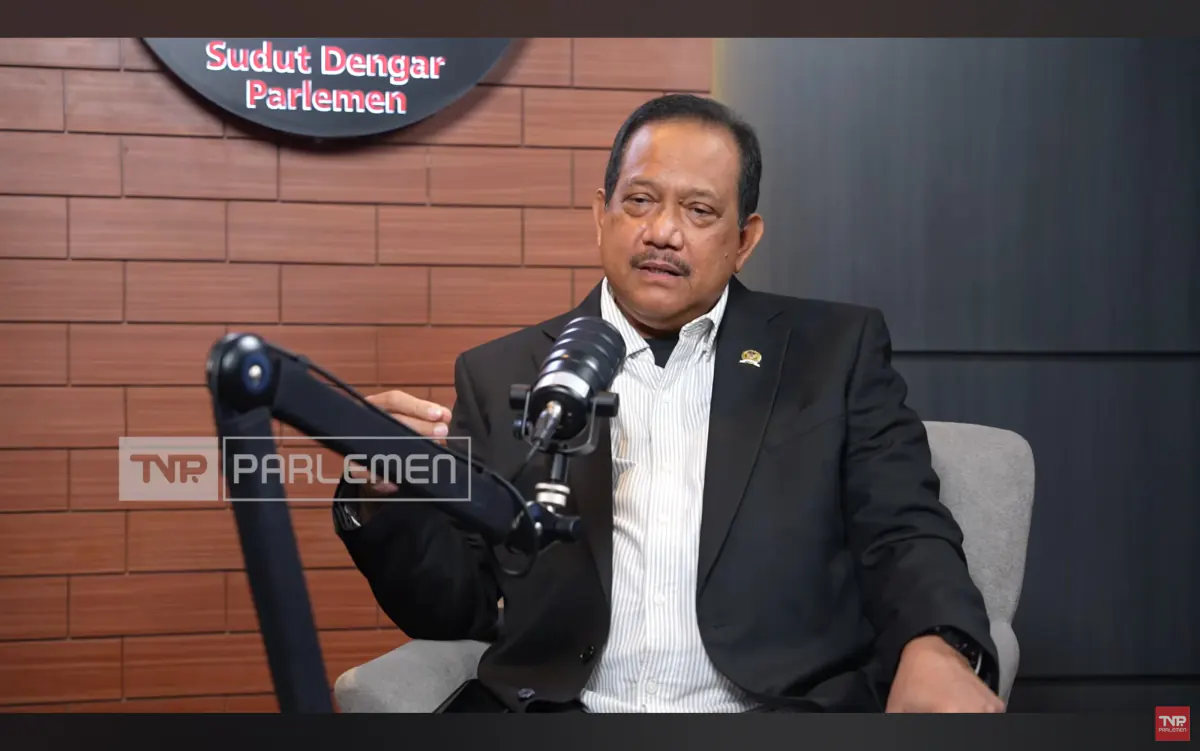
KPK leadership stresses asset forfeiture law must be implemented
Corruption Eradication Commission Deputy Chair Johanis Tanak says the asset forfeiture law approved by the House of Representatives must be implemented, while objections can be tested at the Constitutional Court.

Deputy Chair of the Corruption Eradication Commission (KPK) Johanis Tanak said the Asset Forfeiture Bill approved by the House of Representatives (DPR) must be implemented without delay. According to a report by state broadcaster RRI on Thursday, 19 November 2026, he said parties who do not accept its provisions can seek judicial review at the Constitutional Court (MK).
“Once it has been officially enacted, there is no choice but to implement it,” Tanak said. His remarks came after a plenary session of the DPR at the parliamentary complex in Senayan, Jakarta, approved the Asset Forfeiture Bill on Corruption and Other Crimes, turning it into law.
The session was led by DPR Speaker Puan Maharani. Habiburokhman, chair of the DPR’s Commission III, which oversees law and security matters, said the approval ended an 18-year wait by the public. All participants declared their agreement.
The long road to asset forfeiture rules
Asset forfeiture is often imagined as the seizure of evidence in a criminal case. In broader legal practice, assets can mean money, land, buildings, vehicles, shares, receivables or other items of value believed to come from criminal conduct. Asset forfeiture rules therefore are not only about punishing individuals; they are also about cutting off the profits of acts that harm the state and society.
In Indonesia, discussion of this instrument has emerged because conventional criminal punishment is often seen as too slow to recover assets. Criminal proceedings must pass through investigation, prosecution, trial and a final, binding verdict. During those stages, assets can be transferred, hidden or lose value. The asset forfeiture mechanism is designed to provide another route for recovering assets, while the rights of affected parties are still tested in court.
Globally, the idea of asset recovery aligns with principles in the global anti-corruption convention, which asks states to build systems to prevent, trace and return proceeds of crime. In that context, asset forfeiture laws usually set out rules on evidence, the roles of state institutions, protection for third parties acting in good faith, and the use of forfeited assets. Such rules are also part of procedural law reform because they touch the boundary between state authority and citizens’ property rights.
Approving a bill is an important political and legal step, but it is not the end of the work. After enactment, the government and law enforcement agencies need to prepare implementation details, inter-agency coordination and oversight mechanisms. That readiness also includes investigator training, updates to asset recording systems and coordination with financial transaction reporting centres. Without that preparation, the new norms risk remaining only text. The KPK leadership’s emphasis on implementation and the constitutional review path reflects an awareness that the law will soon be tested in practice.
Impact on state asset recovery
For the public, asset forfeiture rules can change how the state chases profits from corruption and other crimes. Until now, many state losses could only be recovered after criminal verdicts were complete. If the new mechanism works, assets declared to come from criminal conduct can return to the state treasury faster or be used to compensate victims. The effect is not merely symbolic: asset recovery can create more fiscal space for public services, education, health or development. But that will happen only if assets can be traced from the start and do not get lost in the recovery bureaucracy.
For businesses and ordinary citizens, the rules demand caution in large transactions. Purchases of land, vehicles, shares or other assets derived from crime can lead to legal disputes, even when buyers believe they did not know the origin. Protection for third parties acting in good faith therefore becomes important. Oversight of ownership records, compliance by financial institutions and transaction transparency will determine whether the new norms protect society or create uncertainty. Land certificates, shareholder registers and suspicious transaction reports need to become accessible entry points for investigators.
The success of the law also depends on consistency among law enforcement institutions. The KPK, the Indonesian National Police (Polri), the Attorney General’s Office, courts and relevant ministries must work with the same data, clear procedures and public accountability. If implementation is carried out openly, the public can assess whether forfeited assets truly return to the common good rather than remaining only a line in state agencies’ reports. Without transparency, public trust in anti-corruption efforts can be eroded. The public has a right to know how much has been recovered and how it is used.
Related news
- Government stresses strict conditions for Javanese rhino relocation
- Ministry of Agriculture stresses palm oil partnerships for national productivity
- Ministry of Home Affairs stresses civil servants’ oath is a moral commitment