KPK Chairman Proposes Mediation Body for Regional Leadership Disputes
KPK chairman Setyo Budiyanto has proposed a mediation body to resolve working disputes between regional heads and deputy regional heads.
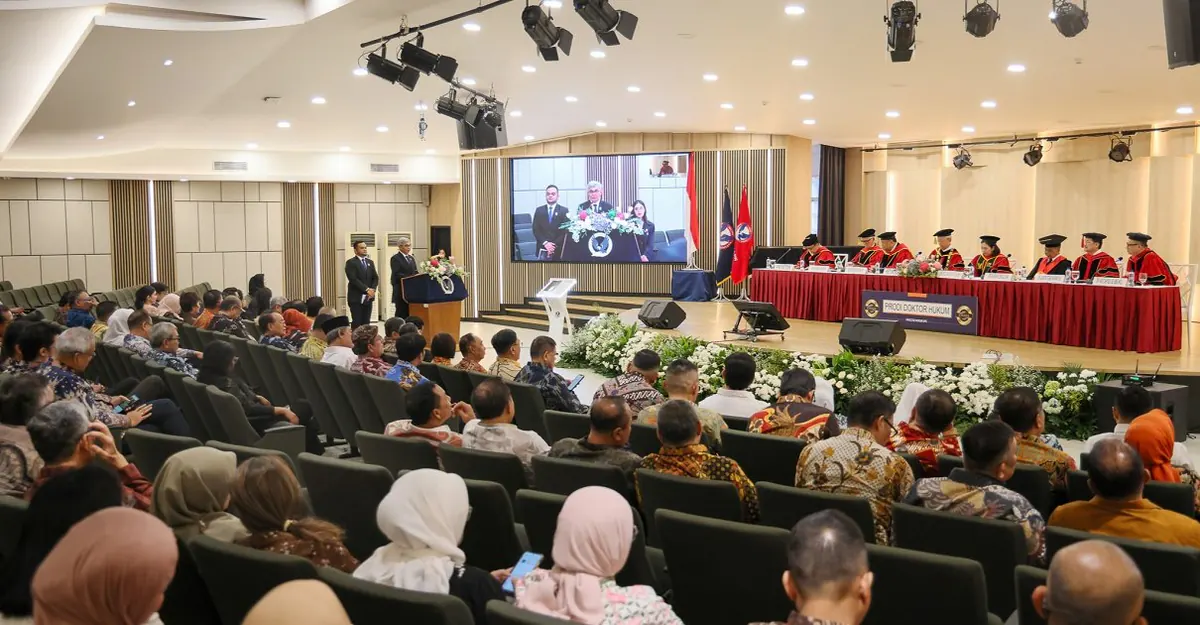
Setyo Budiyanto, chairman of the Corruption Eradication Commission (KPK), has proposed creating a Regional Government Mediation Body (Lembaga Mediasi Pemerintahan Daerah) to resolve working disputes between regional heads and deputy regional heads. The proposal appeared in his doctoral dissertation, defended in the Doctor of Law Program at Universitas Pelita Harapan, according to a KPK report.
In a KPK statement dated 14 November 2026, Setyo said conflicts between the two offices, which are elected as a single ticket, can disrupt public services and regional development. He said nearly 60 percent of working relationships between regional heads and deputy regional heads across various regions showed signs of disharmony.
He argued that the root of the problem was not simply personal character or differing political affiliations, but an unclear regulatory design. He pointed to the word “membantu” (assist) in Article 66 paragraph (1) of Law No. 23 of 2014 on Regional Government as a source of uncertainty over the role of deputy regional heads (WKDH) relative to regional heads (KDH).
“The problem is that, in regional government practice, deputy regional heads are usually positioned as ‘assistants’ to regional heads,” Setyo said. In his research, he described this condition as Pseudo Authority: an official has political legitimacy, but the boundaries of their functional authority are not clearly established by law.
Legal design of the relationship between regional heads and deputies
In Indonesia, regional heads and deputy regional heads are elected as a single pair, giving both a political mandate from voters. Yet the division of authority within government is not always defined as clearly as it is for other structural positions. Normatively, deputy regional heads assist regional heads, while regional heads remain the highest policy decision-makers in their regions. In many regions, deputies may be assigned to coordinate specific sectors, but those assignments do not always come with adequate authority.
The ambiguity often becomes apparent when the two leaders disagree. In the regional government system, personal conflicts can turn into disputes over authority, for example over the signing of policies, the division of tasks or representation at government forums. Without a quick resolution channel, such disputes risk affecting decision-making, including budget preparation and program implementation. When no official forum exists, mediation usually depends on senior figures, supporting parties or other informal channels.
Mediation in this context differs from adjudication by courts. It relies on a neutral third party to help the sides reach an agreement, rather than deciding who is right. The proposed regional government mediation body can be seen as an attempt to move conflict resolution away from informal channels, which depend heavily on personal relationships, toward a more orderly and documented mechanism. That approach could also reduce the risk of prolonged conflicts that spill into budget politics or administrative disruption.
Setyo’s research also treats legal culture as part of the problem. A well-designed regulation will not automatically produce harmonious cooperation if bureaucratic practice still places deputy regional heads in an assistant role without a clear space of authority. For that reason, he argued, the idea of a strategic partnership is important to connect political legitimacy with an accountable division of functions. Resolution should not stop at personal reconciliation but should also update the rules of the game in regional government.
What it means for regional public services
For residents, conflict between regional heads and deputies is not just an elite affair. Uncertainty over authority can slow permit approvals, project implementation, aid distribution or responses to basic needs such as health and education. When the two offices hold each other back, the bureaucracy beneath them can split, and public services become the casualty. The social cost becomes visible when residents are forced to wait for decisions that should have been made quickly.
The proposal is also relevant to corruption prevention in the regions. Corrupt practices often grow in gaps left by unclear authority, especially when strategic decisions are taken without firm accountability. A mediation mechanism would not replace law enforcement, but it could reduce prolonged conflicts that weaken oversight. If a mediation channel were available, the parties could settle differences without prolonging the uncertainty that hampers bureaucratic work.
What remains to be seen is whether the idea will be taken up as formal policy or remain an academic recommendation. Without regulatory change and commitment from stakeholders, a mediation body could remain only a discourse. The public can monitor how far the division of tasks between regional heads and deputies becomes more transparent and accountable.