Industry Minister Presses BYD to Accelerate Technology Transfer and Local Content
Indonesia's Industry Minister Muhammad Sarmuji urged BYD to speed up local hiring, technology transfer and domestic component use during a visit to the company's Subang facility on 13 November 2026.
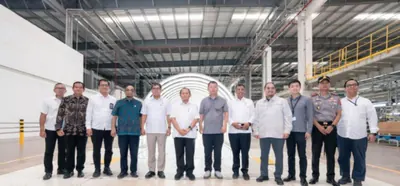
Indonesia's Industry Minister Muhammad Sarmuji pressed BYD to accelerate investment, expand local hiring and raise the share of domestically made components in Indonesia. He made the remarks while inspecting the facility of PT BYD Indonesia, BYD's Indonesian company, in Subang, West Java, on Friday, 13 November 2026.
According to a report by TVRI News, Indonesia's public broadcaster, Sarmuji said BYD's presence should deliver real benefits to the automotive industry and to human resources. BYD currently employs about 6,000 Indonesian workers, while the company has committed to hiring up to 20,000. The government is pushing for faster expansion so that more local workers can master electric vehicle technology.
Beyond employment, Sarmuji highlighted the Tingkat Komponen Dalam Negeri (TKDN), or domestic content requirement. The government has set a minimum TKDN target of 40 percent for electric vehicles through 2026, rising to 60 percent for 2027 to 2029, and at least 80 percent from 2030. He also welcomed BYD's plan to build a battery plant in Indonesia.
Luther Panjaitan, Head of Public Relations and Government at BYD Indonesia, said the company had sent nearly 500 skilled workers abroad for training. They are expected to become instructors for other workers after returning. Luther said the 60 percent TKDN target for 2027 could be met. Sarmuji also plans to meet BYD's management in China to follow up on investment commitments, TKDN and local hiring.
Preserving the value added of electric vehicle investment
Indonesia frames the electric vehicle industry as part of its agenda to add value to natural resources through downstream processing. Nickel, a key raw material for batteries, has long been exported largely in raw or semi-finished form. Government policy in recent years has encouraged processing inside Indonesia so that the battery production chain, from smelters to precursor, cathode, battery cell and vehicle assembly, can grow gradually.
In that framework, investment in an electric vehicle plant is not judged only by the number of units assembled. The government also looks at how much value added stays in Indonesia, from component spending and local hiring to mastery of production processes. TKDN is one measure used to assess the involvement of local industry in the supply chain. The higher the TKDN, the more components are made domestically rather than imported.
Technology transfer is closely linked to TKDN. Electric vehicle components, especially batteries, electric motors and control systems, require technical expertise that is not readily available in Indonesia's labor market. Training local workers, sending skilled employees abroad and building internal instructor teams are therefore ways to close the technology gap. Without such mechanisms, a plant can operate while technical knowledge remains with expatriate teams or foreign suppliers.
Regional competition also matters. Indonesia is competing with Thailand, Vietnam and Malaysia to attract electric vehicle investment. Those countries have longer automotive component ecosystems. Indonesia has a resource advantage but still needs to build component suppliers, quality standards and workforce capacity so that investment does not stop at assembly. Commitments on employment and TKDN are indicators of whether investment truly strengthens industrial independence.
What it means for consumers and workers
For readers in Indonesia, the issue touches two parts of everyday life: jobs and vehicle prices. Greater hiring at factories would create direct employment, but also indirect work in component manufacturing, logistics, vehicle maintenance and after-sales services. If technology transfer works, local workers can move beyond operator roles into more valuable technical positions.
For consumers, competition among electric vehicle makers can widen model choices and put downward pressure on prices. But price is shaped not only by brand, also by the depth of the local supply chain. The more components made in Indonesia, the greater the chance of reducing import costs, spare parts prices and long-term repair expenses.
What matters going forward is not only investment promises, but staged execution: how many local workers are hired, how many component suppliers enter the supply chain, and whether training produces real instructors and technical staff. For the government, TKDN targets need to be tested through component audits, support for small and medium-sized enterprises (SMEs), and available incentives.