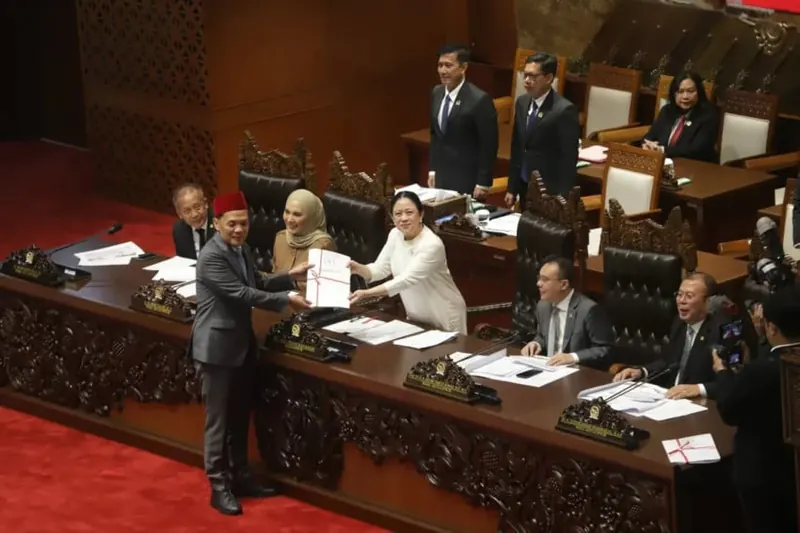
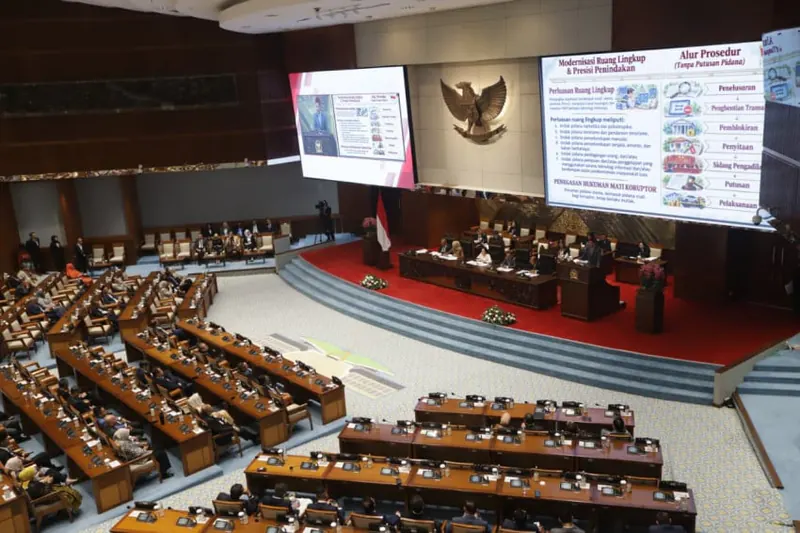
Indonesia's parliament plans independent agency to manage forfeited assets
The House of Representatives (DPR) is discussing an asset forfeiture bill that would create an independent agency to manage forfeited goods and report directly to the president.
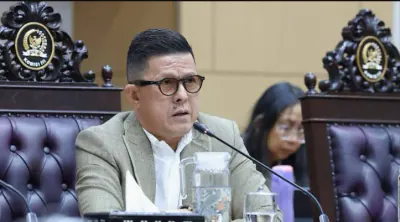
The House of Representatives (DPR) in Jakarta is discussing the creation of a Forfeited Asset Management Agency under an asset forfeiture bill, according to a press release received by public broadcaster RRI on Thursday, 19 November 2026. The agency is planned to report directly to the president.
Rudianto Lallo, a member of the DPR's Commission III, a parliamentary panel dealing with legal affairs, said a separate agency would make the governance of forfeited assets more directed, transparent and accountable. He said the agency would be directly responsible to the president.
Soedeson Tandra, vice chair of a working group (Panja) on the Asset Forfeiture Bill, said the provision was part of the discussions. Under the plan, the president would determine and appoint the agency's leadership after receiving the DPR's approval.
He explained that the government had initially proposed a council, while the DPR pushed for the term agency so the leadership's authority would be clearer. Tandra said the head of an agency could direct its staff, making coordination more effective.
The agency would manage the storage, maintenance and sale of goods forfeited in criminal cases.
Long-standing debate over asset recovery
The Asset Forfeiture Bill is not a new idea in Indonesia's legal agenda. It stems from the need to recover assets suspected of coming from crimes, especially when criminal proceedings drag on and the value of evidence can decline because goods are not managed. The issue also touches public trust: seized assets that are left unmanaged can raise new questions about state accountability.
Under the current system, asset forfeiture is usually attached to criminal cases. That means the state must first prove the elements of a crime and then decide which assets are forfeited to the state. Because of that, some lawmakers have looked for a faster route to preserve the value of assets, for example through more orderly and professional governance. Schemes like this are commonly discussed in comparisons with foreign law, although the final form must fit Indonesia's bureaucratic structure.
The proposal to create a special agency also reflects a debate over institutional design. A council tends to be collective and more advisory, while an agency can be easier to command because a head is responsible for operations. The choice of name affects coordination speed, accountability and how assets are managed while their legal status is still being settled. A special agency could also serve as a single point for asset data storage, making it easier for the state to track goods from seizure to sale.
On the other hand, an agency that reports to the president could sit close to executive power. Public oversight, audits and reporting mechanisms therefore become important so that asset management does not turn into a space for political intervention. The independence mentioned in the bill's discussions should be read as professional conduct, not immunity from control. The management of forfeited assets also involves economic value: vehicles, land, bank accounts and luxury goods can lose value if they are not maintained or sold at the right time.
What the public should watch
For ordinary readers, the bill does not yet directly change prices or service fees. Its impact works on the governance of state money: assets that should return to the state treasury would not remain as seized goods with unclear management. If passed and implemented well, asset recovery could reduce budget leakage and improve state revenue from goods already forfeited. For taxpayers, this is relevant because well-managed state assets can become a source of non-tax revenue, although the scale cannot yet be determined.
What the public should pay attention to is oversight. A special agency close to the president must have periodic reports, audits and clear access to information. Without that, authority to manage physical assets and transfer them could create new risks, including conflicts of interest in sales or valuation. The public can also monitor whether assets are sold through open market procedures rather than closed transactions that are difficult to audit.
For parties whose property is involved in cases, the rules also touch the presumption of innocence. The state needs to distinguish assets that have acquired final legal force, assets in judicial process, and the rights of good-faith third parties. Public review and explanation of appeal or objection mechanisms are therefore important before the bill takes effect. While the bill is still being discussed, the public does not need to worry about sudden changes in property ownership; what matters is ensuring the discussion remains open and does not weaken legal protections.