Indonesian Lawmaker Urges Review of Proposed Court Police
Yulius Setiarto of Commission III of the House of Representatives has asked the Indonesian National Police and the Judicial Commission to review a proposed court police unit.
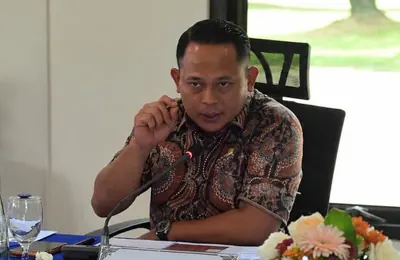
Yulius Setiarto, a member of Commission III of the House of Representatives (DPR), has asked the Indonesian National Police (Polri) and the Judicial Commission (KY) to review a proposal to create a special police unit inside courts. He made the request in Jakarta on Tuesday, 17 November 2026, after the proposal surfaced following a meeting between KY Chair Abdul Chair Ramadhan and National Police chief (Kapolri) Police General Suyudi Ario Seto.
According to a report by SINDOnews, Yulius said law enforcement and judicial institutions already have a constitutional basis and implementing rules. He argued that plans to create a new unit should not rest only on assumptions about threats.
He also noted that the public has not been given details on the unit’s name, organisational structure, budget requirements or legal basis. Yulius further stressed the separation of police and judicial functions.
“Good intentions cannot justify creating a new structure whose urgency has not been proven,” Yulius said.
Protecting judges without blurring functions
The proposed court police should be read as part of a long-running debate over judges’ safety. Judges often face risks when hearing sensitive cases, including physical threats, intimidation and psychological pressure. In many court environments, those risks rise when corruption, land disputes or sexual violence cases are tried. The state therefore needs to provide adequate security. But when security is designed as a new unit, the questions are not only about judges’ safety; they also concern the limits of authority, accountability and potential conflicts of interest.
In Indonesia, security and judicial functions have different natures. The police operate within the executive branch under a command structure, while courts exercise judicial power that requires independence. That independence is meant to ensure that rulings are not subject to intervention by any power. Tension can arise when security personnel interact directly with judges, court clerks, legal counsel or courtroom visitors. If security personnel go too far into courtrooms, the public may ask whether they protect judges or become an instrument of influence over hearings.
The Judicial Commission is known in Indonesia’s state architecture as the body that oversees judges’ conduct and ethics. Its role is important for preserving the dignity of the judiciary, but not for controlling cases. Therefore, the idea of placing a special police unit under or around courts must be explained clearly: who gives orders, how oversight works, and how the rights of defendants and people seeking justice remain protected through adequate training and human resources. The public has a right to know whether the unit would work to protect hearings or to supervise judges.
Experience in other countries shows that court security can be managed through prisoner escort units, judicial security officers or court special forces. The forms vary, but the principle is the same: security should attach to the judicial process, not to political interests or particular offices. Without clear rules, such units risk creating confusion on the ground. In Indonesia, similar challenges include limited court security personnel, cramped courtrooms and high caseloads. Adding personnel must be matched with training, operational standards and open audits.
What it means for people seeking justice
For citizens, the issue can feel distant until they come before a court. When judges feel safe, hearings are more likely to proceed in an orderly manner and rulings can be made without pressure. Conversely, if a new unit is unclear, there is a risk that procedures become complicated, security costs rise, or courtrooms become a tense environment for witnesses and defendants. An intimidating atmosphere can make witnesses reluctant to appear and victims afraid to assert their rights.
Another impact that needs close scrutiny is public trust. Society demands not only safe courts, but courts free from the impression of intervention. The proposal for a special police should therefore be opened to public discussion, accompanied by a needs assessment, budget review and complaint mechanism. Transparency also matters because security budgets come from public money and must be accounted for to the people. Without that, security policy could be read as a symbolic step that does not address the root of the problem.
For readers seeking justice, the most practical concern is whether courts remain open, fast and not intimidating inside the courtroom. If the proposal moves forward, civil society, lawyers and legal aid organisations should help monitor it so that judges’ security does not come at the expense of people seeking justice.