Hinca Proposes That Prabowo's Two Vice-Presidential Candidates Present Ideas at MPR Plenary
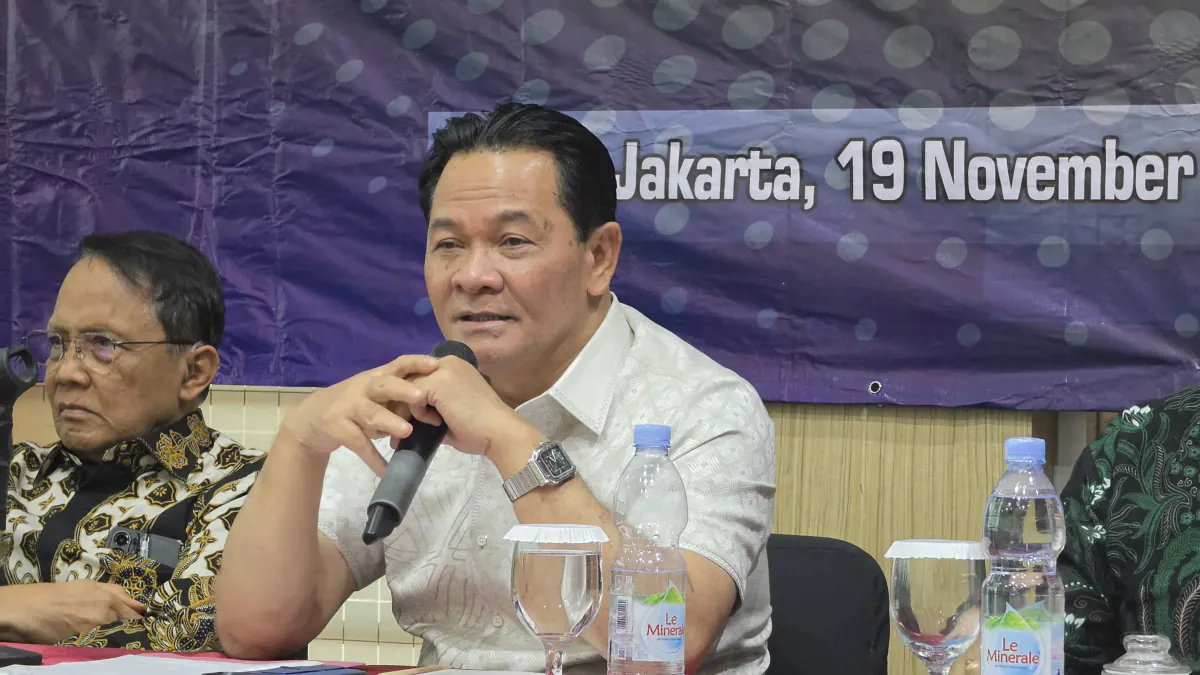
MPR member Hinca Panjaitan proposed giving President Prabowo Subianto's two vice-presidential candidates time to present their ideas at a plenary session of the People's Consultative Assembly.
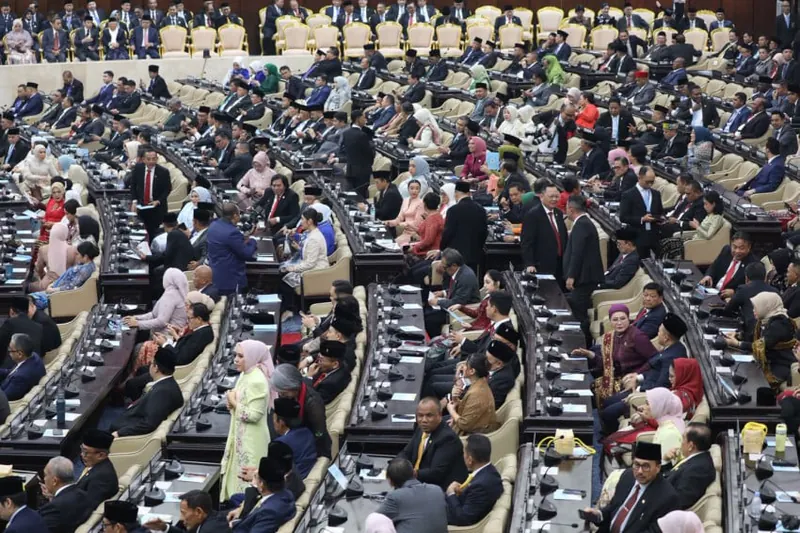
A member of the People's Consultative Assembly (MPR) from the Partai Demokrat caucus, Hinca Panjaitan, proposed that the two vice-presidential candidates put forward by President Prabowo Subianto be given dedicated time to present their ideas at an MPR plenary session on Friday, 20 November 2026, at the Kompleks Parlemen parliamentary complex in Senayan, Jakarta.
According to SINDOnews, Hinca suggested that the presentations be broadcast live so the public can follow the candidates' thinking. He said the idea was important because the vice-presidential election through the MPR is indirect, unlike campaigns that bring candidates directly to the public. He also described the situation as a peculiarity of Indonesia's constitutional system.
“It is necessary to listen to who he is and what he thinks,” Hinca said.
Indirect election and the MPR's role
The MPR brings together members of the House of Representatives (DPR) and the Regional Representative Council (DPD), so political decisions taken inside it proceed through representative mechanisms, not directly through the people's ballot box. In the situation described by the report, a plenary session becomes the most formal space to ratify the political choices of the assembly's elite members. The proposal to give vice-presidential candidates a platform for their ideas therefore touches a crucial point: how the public can judge a choice they do not make themselves. It also distinguishes the process from direct presidential and vice-presidential elections, when the public can hear campaign promises themselves before voting.
The main difference between direct and indirect elections lies in the distance between candidates and voters. In direct elections, the public can hear candidates' visions, programs and leadership style through campaigns, debates and social media. In indirect elections, public access to candidates' thinking can be more limited if no forum is deliberately opened. Presentations of ideas at an MPR session, especially if broadcast, can serve as a bridge that reduces that distance. An open forum also gives candidates a chance to show their ability to answer difficult questions.
Etymologically, “paripurna” means complete or final. A plenary session is usually used for the highest decision-making in a legislative body or assembly. The candidates' presence in that forum signals that the political process does not stop at elite agreement, but also requires a public explanation. For vice-presidential candidates, a presentation at a plenary session can be a test of rhetoric, substance and readiness to face questions from assembly members. Such presentations can also become a record of political history, because candidates' ideas are preserved in official recordings.
A proposal of this kind is also relevant to parliament's oversight tradition. When MPR members choose a candidate, they bear the responsibility to assess track record, ideas and capacity. A presentation space makes that assessment easier to justify to constituents. Without an open forum, the public receives only the final result—a choice already determined—while the reasons behind it remain in a small circle of political talk. Thus, transparency is not mere pleasantry, but a tool of accountability.
Transparency's impact on the public
For Indonesian readers, this idea touches a daily habit in following politics: the public is increasingly accustomed to judging officials by their explanations, not only by their offices. If an open session can be watched, citizens can also understand the policy direction a vice president will pursue. This is important because the vice president is not only a symbol, but also plays a role in coordinating programs, political communication and government decision-making. In the social media era, recordings of the session can circulate easily and become material for public discussion.
Such transparency can also reduce the information gap between elites and the public. In indirect politics, decisions can appear sudden because the process of shaping them is closed. With presentations of ideas, the public has material to assess whether a candidate has a vision suited to regional needs, the economic sector, education, health or public services. This assessment remains political, but is no longer based only on gossip or fragments of statements. If there is no such space, the public can judge only from party names or closeness to power.
What needs attention going forward is consistency in implementation. The proposal to give dedicated time will be meaningful if the format is clear: duration, questions, media access and objection mechanisms. Without agreed rules, an open space can turn ceremonial. Conversely, if carried out seriously, the forum can become a marker that indirect elections can still be overseen by the public.
Related coverage: Prabowo asked to consider DPD leaders as vice president; Prabowo says national wealth must be enjoyed by the people; Prabowo to determine vice-presidential replacement for Gibran after APEC.