Hidayat Nur Wahid Steps Down as Vice Chair of Indonesia's MPR, PKS Cites New Assignment
PKS Secretary General Muhammad Kholid said Hidayat Nur Wahid stepped down as vice chair of the People's Consultative Assembly (MPR) because of a new assignment as chair of the Inter-Parliamentary Cooperation Body (BKSAP) of the House of Representatives (DPR).
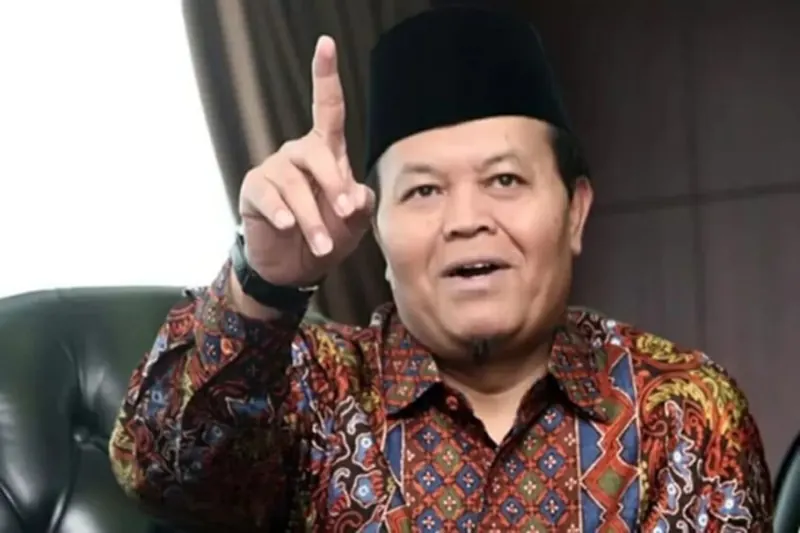
Hidayat Nur Wahid has resigned as vice chair of the People's Consultative Assembly (MPR), SINDOnews reported from Jakarta on Tuesday, 10 November 2026. Muhammad Kholid, secretary general of the Prosperous Justice Party (PKS), said the resignation was linked to Hidayat's new assignment as chair of the Inter-Parliamentary Cooperation Body (BKSAP) of the House of Representatives (DPR).
Kholid said the assignment was intended to strengthen Indonesia's parliamentary diplomacy in international forums. He said Hidayat's experience, ability and overseas network could be used to build relations with parliaments in other countries.
“PKS has assigned Mr Hidayat Nur Wahid to strengthen Indonesia's parliamentary diplomacy,” Kholid said in the SINDOnews report.
Kholid also said Hidayat's focus would include strengthening ties with parliaments in Muslim-majority countries and expanding cooperation across regions. He stressed support for Palestine as a humanitarian responsibility.
Parliamentary diplomacy and BKSAP
The BKSAP, or Badan Kerja Sama Antar-Parlemen, is a DPR body that handles relations with other countries' parliaments, international parliamentary forums and cross-border cooperation. In Indonesia's constitutional practice, it acts as a bridge between the government's foreign policy and legislative aspirations, because issues raised by parliament often cross national borders: peace, trade, migration, the environment and humanitarian concerns. Forums such as the Inter-Parliamentary Union (IPU) and the ASEAN Inter-Parliamentary Assembly (AIPA) are among BKSAP's working spaces.
Parliamentary diplomacy differs from executive diplomacy. The government negotiates through the foreign ministry and embassies, while parliament builds networks through official visits, bilateral meetings, committee cooperation and multilateral forums. That role is considered important because lawmakers can voice Indonesia's position in the public sphere of other countries while also absorbing domestic views that may not always be represented through official channels. Through that route, parliament can send political signals without waiting for formal intergovernmental negotiations.
In the MPR, the vice chair position is part of the leadership of the institution, which consists of members of the DPR and members of the Regional Representative Council (DPD). MPR leaders usually carry out state agendas, coordinate sessions and represent the institution in official activities. Resigning from an MPR leadership post and moving to an assignment with BKSAP marks a shift from national institutional work to cross-border work that deals more with inter-parliamentary relations. Such shifts also show that leadership positions in state institutions are not always seen as final posts, but can be part of a rotation of political assignments.
For political parties, placing cadres in leadership positions in state institutions is not only about office. Internal assignments are usually read as part of strengthening image, expanding networks and managing the party's ranks. When a senior lawmaker is moved to inter-parliamentary affairs, the party can position itself as an actor attentive to global issues, especially if those issues are close to its voter base. At the same time, the public can examine whether the assignment produces concrete cooperation or merely strengthens the party's image on the international stage.
What the public should watch
For general readers, this change does not immediately affect prices of basic goods, wages or health services. Its impact is more visible in the direction of foreign policy and how Indonesia presents its interests in forums of other countries. When parliament is active in diplomacy, issues such as protection of migrant workers, Indonesian students, educational cooperation, humanitarian aid and positions on conflicts can gain an additional channel beyond government routes. In that context, inter-parliamentary positions can complement, rather than replace, official government policy.
What should be watched going forward is whether BKSAP can make parliamentary diplomacy more measurable, rather than merely a ceremony of visits. The public can assess the transparency of meeting outcomes, follow-up on cooperation and consistency of Indonesia's position on issues that affect citizens, such as migrant protection, trade and humanitarian aid. The shift from an MPR leadership post to an inter-parliamentary assignment can also be read as a sign that the party is paying attention to global networks, but the practical benefit still depends on how the duties are carried out.
At the household level, the influence may only be felt if parliamentary diplomacy opens cooperation that leads to jobs, scholarships or legal protection for Indonesians abroad. The clearer the reports and follow-up, the easier it is for the public to judge whether parliamentary diplomacy delivers real benefits.
Related news
- MPR: Foreign worker violations require a strong prevention system
- Palace respects DPR's motion to state opinion on Vice President Gibran's impeachment
- 50 DPR members reportedly sign motion to state opinion on Gibran