Golkar's Solo branch officially backs Sekar Krisnauli Tandjung for regional head election
Golkar's Solo branch has officially endorsed Sekar Krisnauli Tandjung for the city's regional head election and will explore cross-party coalitions.
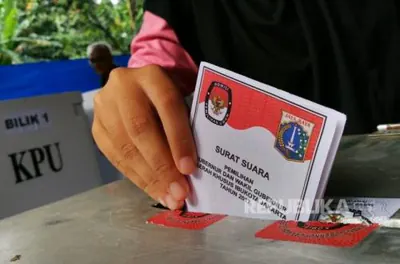
The Solo city branch of the Golkar Party has officially endorsed Sekar Krisnauli Tandjung to run in the city's regional head election, or pilkada, as reported by Indonesian news outlet Republika on Wednesday, 29 May 2024. Taufiqurrahman, secretary of the branch's second-level regional executive board (DPD II), said the party did not open a public registration and instead assigned two names more than a year ago to conduct political lobbying.
The two names were Sekar, the daughter of Akbar Tandjung, and Aris Munandar, chairman of the advisory council of the Solo branch's second-level regional board. After a plenary meeting, Taufiqurrahman said Aris expressed support for Sekar, so Solo Golkar put forward only one name. He said Sekar was ready to compete fully in the contest.
On whether Sekar would run for mayor or deputy mayor, Taufiqurrahman said the decision would depend on political dynamics. Solo Golkar will also encourage Sekar to lobby other prospective candidates, including Teguh and Astrid, and to explore communication with parties that hold seats in the regional legislative council (DPRD). According to Republika, the step was taken because Solo's Golkar branch won only three seats in the 2024 general election.
Candidate assignment and coalition thresholds
Political parties can choose candidates through internal mechanisms such as assignment, rather than open registration. This pattern is common when parties want to keep control over candidates while speeding up cross-party lobbying. The mechanism also saves time because assigned candidates can begin building communication with other prospective candidates and parties earlier, without waiting for a lengthy selection process. However, assignment does not automatically guarantee victory because candidates must meet candidacy requirements set by law.
Rules for regional head candidacy allow a party or coalition of parties to propose a candidate pair after meeting a seat threshold in the regional legislative council or a vote threshold in the previous legislative election. Therefore, the number of seats a party wins in an election becomes a key asset in regional head elections. Parties with few seats usually cannot stand alone and must seek coalition partners, both to meet administrative requirements and to expand their support base on the ground.
In local politics, figures who are known to the public, carry a political family name or are close to national figures are often factors considered by parties. That capital can help voters recognize a candidate, but it does not always translate into votes. Voters in areas with lively political competition tend to assess track records, governance capacity and a candidate's ability to maintain relationships with community groups and local elites. In areas with broad access to information, voters are also increasingly critical of campaign promises and demand evidence of performance.
The direction of coalitions in regional head elections also does not always follow patterns from legislative elections. Parties that oppose each other at the national level may cooperate locally because local interests are more decisive. This makes cross-party lobbying important, especially when a candidate does not yet have a clear vote base. For small parties, the role of nominating party also becomes a bargaining tool to obtain positions or influence in the next government. Therefore, voters can watch whether the coalition being built truly offers policy alternatives or merely shares posts.
What Solo voters should watch
For readers in Indonesia, this development is relevant because regional head elections determine who manages budgets, public services, licensing and the direction of city development. Changes in leadership can affect local spending priorities, such as road repairs, transport, green open spaces and support for micro, small and medium enterprises (UMKM). Regional head policies also relate to ease of doing business, job creation and the quality of basic services.
However, the direct impact of endorsing one name cannot yet be confirmed. The public needs to wait for the candidate pair, vision and mission, and the coalition that forms. The most important thing is to see whether a candidate can explain realistic programs, open space for citizen participation and keep public services running during the campaign period. A competitive regional head election also gives voters an opportunity to compare ideas, rather than simply choosing based on a big name or party affiliation.
When a political family name appears, voters can assess whether the candidate has organizational experience, bureaucratic capacity or is relying only on an electoral legacy. Transparency over the sources of campaign funds, budget plans and commitment to public services becomes a more important measure than political symbols alone.
Related news
Gibran conveys intention to resign to Prabowo, no official letter yet; Heroes Day 2026: Minister of Social Affairs scatters flowers at graves of BJ Habibie and Agus Salim; Ministry of Industry expands digital industrial vocational cooperation with China.