Finance Ministry brings state budget education to students in Sulawesi Tenggara
The 11th Kemenkeu Mengajar program was held in Sulawesi Tenggara on 10 November 2026 to introduce students to how Indonesia's state budget (APBN) is managed.
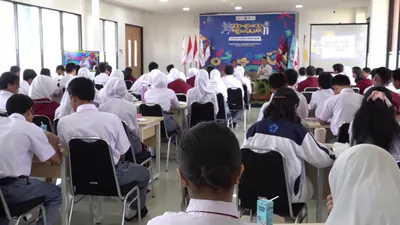
The Ministry of Finance (Kemenkeu) brought the 11th edition of its Kemenkeu Mengajar (Finance Ministry Teaching) program to Sulawesi Tenggara on Tuesday, 10 November 2026, to introduce students to the management of Indonesia's state budget (APBN), as reported by TVRI News.
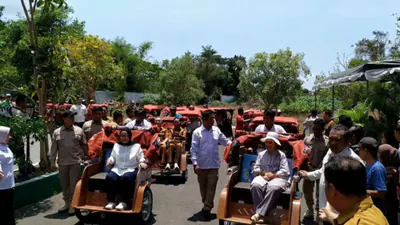
The annual program is held in various regions around Republic of Indonesia Money Day (Hari Oeang Republik Indonesia). In Sulawesi Tenggara, the event was centered at SMA Unggul Garuda Konawe Selatan, a senior high school, and Sekolah Yayasan Ummusabri, a foundation-run school. Head of the Secretariat of the Ministry of Finance's Sulawesi Tenggara representative office, Mokhamad Arifin, said the program aims to improve students' understanding of state finances. He said it educates the public about how the APBN is collected, spent and accounted for. The materials covered the duties and functions of the Ministry of Finance, sources of state revenue, the budgeting process and how state spending is used for development. The activities were carried out without APBN funds, with Ministry of Finance staff volunteering as teachers for one day. Vice principal of SMA Unggul Garuda Konawe Selatan, Fatah Nasikh, said the program gave students a more technical learning experience.
About the Kemenkeu Mengajar program
Kemenkeu Mengajar is an educational activity that places Ministry of Finance staff as volunteer teachers in schools. It is not a rigid public lecture but a one-day class designed to make fiscal terms understandable through familiar examples: where teachers' salaries come from, who pays for roads and why taxes matter for public services. In that way, the APBN stops being only a set of figures in a policy document and becomes a story about shared public money managed by the state. The volunteer model also makes the message more personal because students deal directly with practitioners, rather than only reading brochures.
In Indonesia's state financial system, the APBN is an annual plan drafted by the government and approved by the Dewan Perwakilan Rakyat (the House of Representatives, DPR). The document sets out revenue, such as taxes, customs and excise, and non-tax state revenue, as well as spending, such as civil servant salaries, social assistance, infrastructure development and transfers to regional governments. Students who follow this process are learning a basic principle: state money does not belong to one institution, but is public funds that must be accounted for.
Programs like this also fill a gap that textbooks often leave. State finances are usually taught in normative terms, while students rarely see the process: how budgets are discussed, how taxes are supervised and how financial reports are audited. When staff who work in those fields enter the classroom, they bring practical experience that makes fiscal policy feel more grounded.
Placing the activity within Hari Oeang also carries symbolic meaning. Hari Oeang commemorates the issuance of Republic of Indonesia currency as part of economic sovereignty. From that commemoration, the message brought to schools is that managing state money, including the APBN, is linked to sovereignty, public trust and the continuity of services that people receive every day. Students therefore learn not only fiscal terms, but also the history and responsibility behind them.
What students and the public should note
For readers in the regions, activities like this do not immediately change the prices of basic goods or create jobs. But their impact can be felt in how residents engage with public policy. Students who understand the APBN are better prepared to ask questions when roads are damaged, schools lack books or social assistance is misdirected. They also learn to distinguish state money, regional funds and private money. That can strengthen public oversight, which matters because regional budgets also come from shared public money.
For parents and teachers, the moment can be used to build fiscal literacy early. Classroom discussions can continue with simple practices: calculating household income and expenses, understanding fees and recognizing taxes embedded in the prices of goods. Such habits matter because state finances depend on citizen participation, especially through taxes.
Looking ahead, the issue is the program's sustainability. A one-day lesson is not enough to make students budget-literate if it is not followed by school projects, visits to public institutions or regular classroom materials. But when the state enters the learning space, it plants the idea that the budget is not merely a matter for bureaucrats, but a tool to ensure public services work. In that way, fiscal awareness can grow from the classroom into daily life.
Related news
Asahan Regency earns special category in the Corruption Eradication Commission (KPK) Ber-Aksi assessment.